
Social Comparison and Your Students: What the Latest Research Says About Social Media and Self-Worth
Key Takeaways
- Social comparison is not new — but social media has made it constant, curated, and inescapable in a way that has no historical precedent.
- The research linking heavy social media use to anxiety, depression, and low self-worth in adolescents has grown significantly stronger.
- Girls are disproportionately affected, particularly around body image and social belonging.
- The research points to a specific mechanism: upward social comparison at scale. Understanding this is the starting point for any meaningful intervention.
- Schools that address this proactively — through explicit skill instruction on digital awareness — produce students with stronger self-worth and more intentional device use.
Social comparison is one of the oldest human behaviors. Humans have always measured themselves against others — it's part of how we assess social standing, calibrate effort, and understand where we fit. In small doses and in natural contexts, it's not inherently destructive.
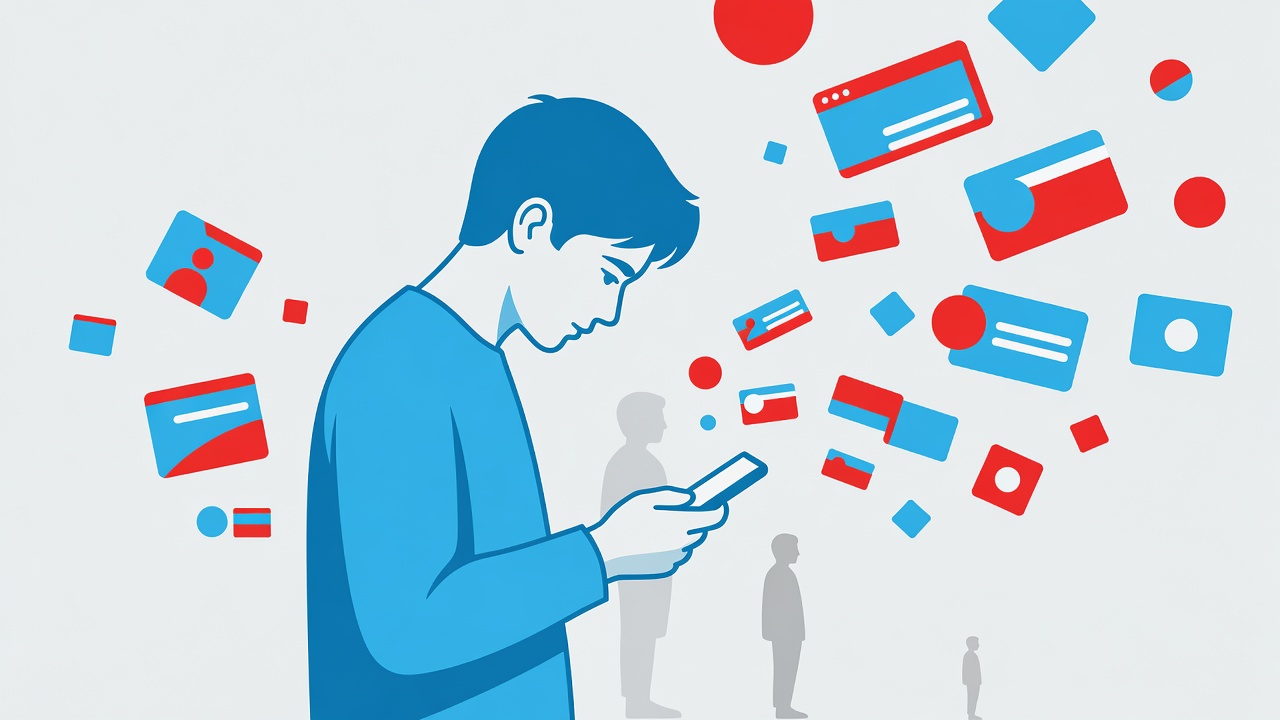
What's happening to adolescents now is something different. The comparison never stops. It's not with people they know in real life — it's with the curated highlight reels of thousands of people, many of them optimized for maximum aspiration and envy. And it happens in private, at 2am, in the dark.
The research on what this does to adolescent mental health has been accumulating for years. In 2026, it's no longer contested. The question for school leaders isn't whether this is a problem — it's what to do about it.
What the Research Shows
The link between heavy social media use and poor mental health outcomes in teenagers has been documented across multiple large-scale studies. The most consistent findings: adolescents who spend more than three hours per day on social media show significantly higher rates of anxiety and depression symptoms. Girls are disproportionately affected. The effects are strongest around body image and social belonging.
The mechanism is not complicated, even if the data took years to assemble. Social media platforms are optimized to show users content that drives engagement — and content that drives engagement for teenagers is content that triggers aspiration and comparison. The feeds are not random. They are algorithmically tuned to show students bodies, lifestyles, and social situations that are maximally out of reach.
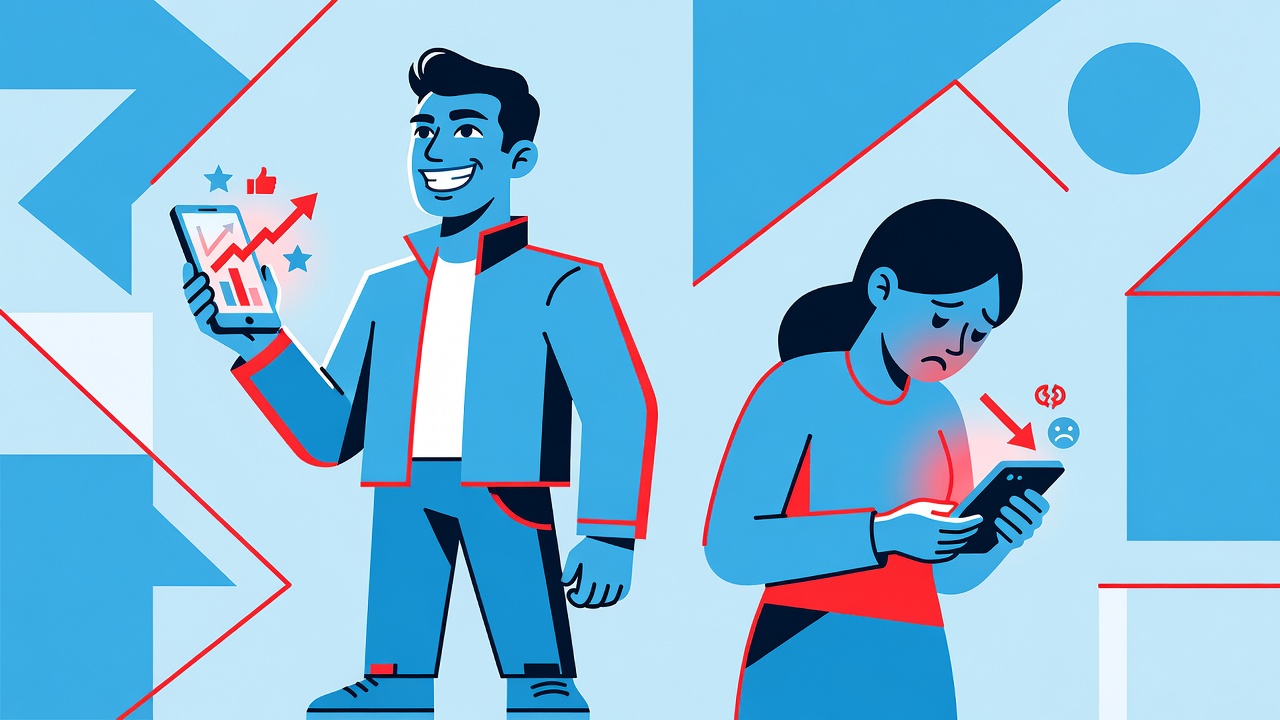
The result is what researchers call upward social comparison at scale. Students are not comparing themselves to one popular kid at school. They're comparing themselves to thousands of curated versions of perfect simultaneously. There is no way to "win" that comparison. And students are running it constantly — not in designated social time, but in the margins of every moment of every day.
Why This Is Different From Any Historical Parallel
Every generation has faced social comparison. Every generation has also had off moments — time when the comparison stopped, when the student was just themselves in a space that wasn't social.
That off time is gone. Students carry the comparison in their pockets. It follows them into their bedrooms, into their bathrooms, into the two minutes before they fall asleep. The cumulative exposure has no precedent. No previous generation of teenagers has experienced anything like it.
This matters because the interventions that worked for previous generations — "just ignore what other people think," "focus on yourself" — were calibrated for a world where comparison had natural limits. A student could actually choose to stop comparing if they tried hard enough. Today, choosing to stop requires a level of intentional device management that most students have never been taught.
You can't just tell students to ignore social comparison. You have to teach them the skill of managing their relationship with the thing that's doing the comparing for them.
What School Leaders Should Actually Do
The instinct to ban phones is understandable — and as I've written elsewhere, the research on phone bans shows real academic benefits. But the self-worth piece requires more than removal. It requires skill instruction.
Students who understand the comparison mechanism are better equipped to interrupt it. When a student knows that the content in their feed is curated for maximum aspiration — when they understand that what they're seeing is not what other people's lives actually look like — it changes their relationship to the comparison. Not perfectly, not overnight, but measurably.
At Boost, we address this through two wellbeing skills: "You vs. Phone — Distraction" and "Biochemistry Hijack." Together, these skills give students a framework for understanding what's actually happening when they scroll — not just the time they're losing, but the psychological mechanism that makes the comparison feel so real and so personal.
Gratitude is the third piece. Not as a feel-good add-on, but as a specific cognitive practice that redirects attention from upward comparison to appreciation for what exists. Research on gratitude as an intervention for social comparison is consistent: students who practice structured gratitude show lower rates of social comparison and higher baseline self-worth. It's a skill with a specific practice, not a vague instruction to "be more grateful."

The Honest Conversation Schools Need to Have
Here is the thing I hear from school leaders most often when this topic comes up: "We don't have time to address mental health. That's not our job."
I understand the frustration behind that statement. Schools are being asked to do more with less every year. Adding another responsibility feels like another unfunded mandate from a society that doesn't want to face hard problems.
But here's the reality: students who are in the grip of social comparison anxiety cannot learn effectively. The mental bandwidth consumed by constant comparison is bandwidth that's not available for instruction. Addressing this is not a distraction from academic outcomes — it's a prerequisite for them.
Schools that have built explicit wellbeing skills into their programming report calmer school cultures, fewer behavioral incidents, and students who show up to class more present. Not because they solved the social media problem entirely — but because they gave students tools to navigate it.
That's achievable. And it's where the next investment of school time and resources should go.
Frequently Asked Questions
Is social media actually causing mental health problems in teenagers, or is there just a correlation?
The research has moved substantially toward causation over the past several years. Longitudinal studies tracking the same students over time, along with natural experiments created by platform outages and phone bans, show that reduced social media use corresponds to improved mental health outcomes — not just in correlation, but in direction and timing. The evidence is not perfectly definitive, but it's strong enough to act on.
Why are girls more affected by social media than boys?
Girls' social media use tends to be more image-focused and more tied to social belonging cues — platforms like Instagram and TikTok surface appearance-based comparison more than the gaming platforms boys use more heavily. The upward comparison effect is particularly strong around body image and perceived social status, both of which are more salient in adolescent girls' peer groups.
Should schools ban social media access entirely?
Phone bans during the school day produce real academic benefits. But they don't address what happens after 3pm. The more durable intervention is teaching students the skills to manage their own relationship with social media — understanding the comparison mechanism, building intentional use habits, and developing the self-worth that makes the comparison less destabilizing.
What does gratitude practice have to do with social media?
Gratitude and social comparison operate on the same cognitive resource: attention. Comparison directs attention toward what you don't have. Gratitude directs attention toward what you do. Students who practice structured gratitude — not vague thankfulness, but a specific practice of identifying concrete things they value — show lower rates of social comparison and more stable self-worth. It's a cognitive counterweight, not a feel-good exercise.
How does Boost address social comparison and self-worth?
Through three wellbeing skills taught explicitly: "You vs. Phone — Distraction" (understanding the design of attention-capturing platforms), "Biochemistry Hijack" (how notifications and comparison affect brain chemistry), and Gratitude (a structured practice for redirecting attention). Students learn what's happening and why — then practice the skills that give them agency over it.
Ready to Give Students Tools for the World They Actually Live In?
Schedule a free discovery call and see how Boost teaches wellbeing skills that address social comparison, digital distraction, and self-worth — explicitly and practically.
Schedule a Discovery Call