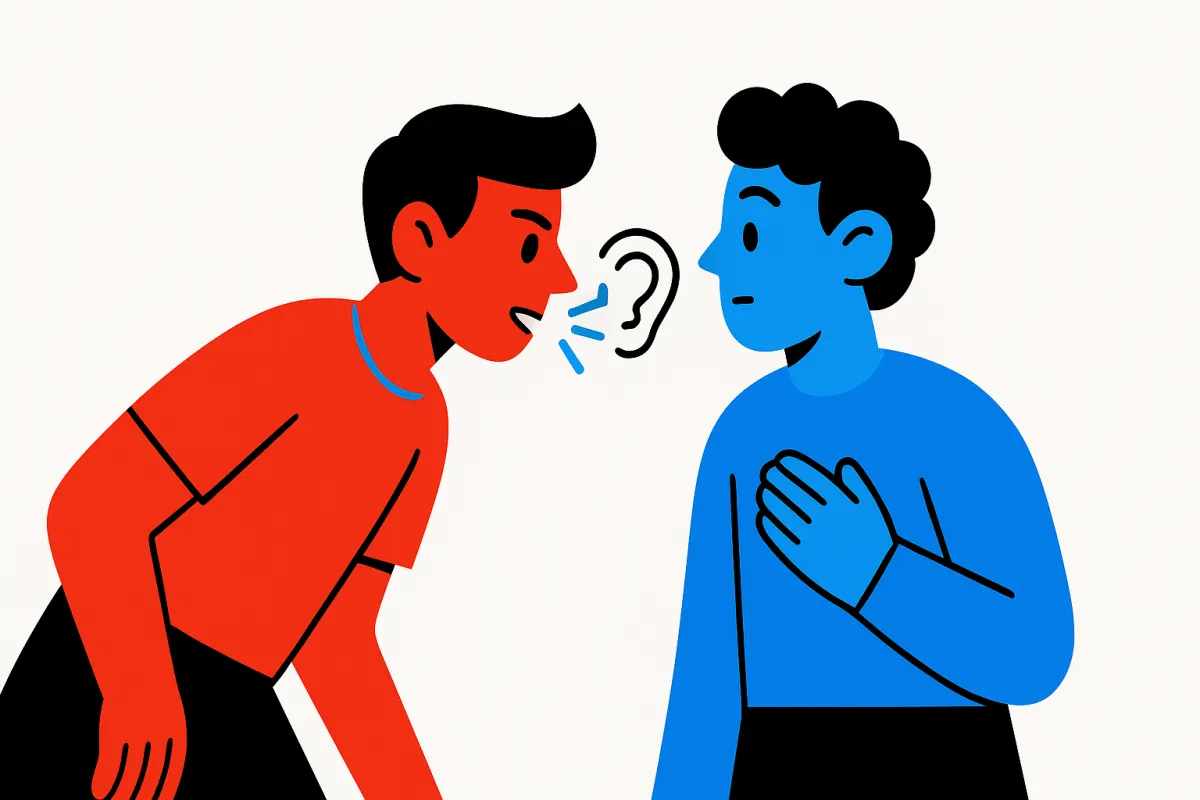
Active Listening Isn't a Personality Trait — It's a Skill Almost No School Teaches
- Students spend roughly 45% of their school day listening, and most of what they know they learned that way — yet almost no one teaches listening directly, according to the International Listening Association.
- Most classroom "listening instruction" stops at posture — eye contact, quiet hands, don't interrupt. That's a compliance behavior, not the actual skill, and it doesn't transfer to a real argument, interview, or group project.
- The trainable piece is reflective listening — paraphrasing back what you heard before you respond — and it's almost never practiced on purpose in a classroom.
- Employers rate communication as one of the two most important hiring competencies (96.1% call it very or extremely important, per NACE), but rate new graduates only 53.5% proficient at it — a 42.6-point gap.
- The Boost Program treats active listening as a specific, drillable skill inside its People Skills pillar, practiced through paired roleplay and repetition — not a poster on the wall.
A ninth-grade coach in one of our partner districts ran the same two-minute exercise with every section she taught last fall: one student talks about something that actually happened to them that week, the other has to repeat back what they heard — not agree with it, not fix it, just repeat it accurately — before they're allowed to respond. In a class of 28, she told us, maybe six kids could do it cleanly on the first try. Most paraphrased their own opinion instead of the other person's point. A few just waited for their turn to talk and couldn't reconstruct a single sentence of what they'd just heard.
That's not a discipline problem or an attention problem, at least not primarily. It's a skills gap, and it's one almost nobody names directly, because "listening" sounds like something you either do or don't do — a trait, not a trainable behavior. It isn't. Active listening is a specific, teachable skill, and most schools spend a lot of time asking students to display the posture of it without ever teaching the mechanics.
Why Listening Gets Skipped in Favor of Speaking Skills
Walk into most schools and you'll find plenty of instruction aimed at how students express themselves — presentations, essays, debate, public speaking units. Almost none of it is aimed at how they receive someone else. That's a strange gap given how much time listening actually occupies. According to the International Listening Association's research, cited in K-12 Dive, students spend roughly 45% of their school day listening, and around 85% of what they know they picked up that way — not by reading it or writing it, but by hearing it. Despite that, listening is rarely taught as its own subject with its own skill progression, the way writing or math is.
Part of the problem is that listening research has never been flattering. Classic work by listening researcher Ralph Nichols at the University of Minnesota — often credited as the founder of the academic study of listening — found that people typically retain only about half of what they hear immediately after hearing it, and that figure keeps dropping over the next two days. That's not a teenager problem specifically. It's a human-attention problem that gets worse, not better, the more a person is used to skimming instead of tracking a full thought.
What "Active Listening" Actually Means, Beyond the Poster
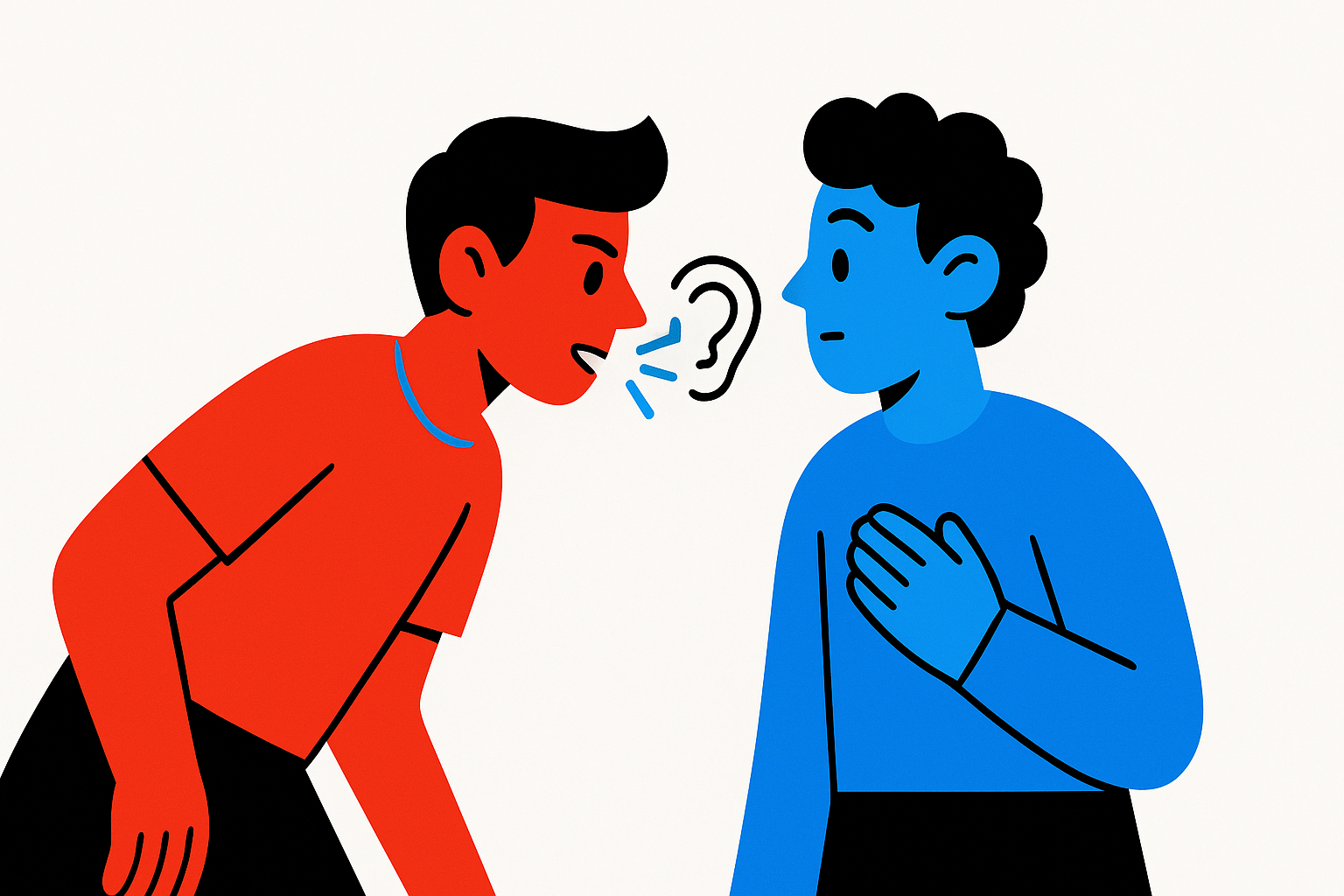
Most classroom posters on listening list the same four things: eye contact, face the speaker, don't interrupt, nod along. Those are real and worth practicing, but they describe how a good listener looks, not what a good listener does. A student can hit every item on that list and still not understand a word of what was said.
The piece that's missing is reflection — taking what you just heard and repeating it back, in your own words, before you respond to it. That single move does two things at once: it forces you to actually process the content instead of just waiting your turn, and it gives the other person a chance to correct you if you got it wrong, before the conversation moves forward on a misunderstanding. It's the difference between a student who can recite "I made eye contact" and one who can say "so what you're saying is — " and then actually get it right.

This is also where the skill starts to pay off outside the classroom. A parent-teacher conference, a group project disagreement, a job interview, a fight with a friend over text that escalated because nobody actually confirmed what the other person meant — all of these go differently when one person in the room can accurately reflect back what they just heard before reacting to it. It's a de-escalation tool and a comprehension tool at the same time, which is part of why it's worth teaching on purpose rather than hoping it develops on its own.
The Environment Teenagers Are Actually Practicing In
It's worth being honest about what teenagers are practicing instead. Pew Research Center has found that 55% of teens text with friends every day, compared with only 25% who spend time with friends in person daily, and about half say texting is their first choice for talking to their closest friend. Text-based communication has real value, but it strips out tone, pacing, and the back-and-forth confirmation that in-person listening requires. A text thread lets you reread, edit, and never actually confirm you understood the other person before you reply — the opposite of the reflective habit that makes listening work.
None of that makes a teenager a worse communicator by nature. It means the specific practice reps that build listening skill — sitting across from someone, tracking a full thought, reflecting it back accurately — are shrinking as a share of how teenagers actually spend their communication time. If school isn't deliberately building those reps back in, very few other parts of a teenager's day will.

Why Employers Notice This Gap First
The gap doesn't stay inside the building. According to the National Association of Colleges and Employers, communication is one of the two most valued competencies employers look for — 96.1% rate it very or extremely important, tied with critical thinking for the top spot. But employers rate new graduates only 53.5% proficient in it, a 42.6-point gap between what's valued and what shows up in practice. Listening is the half of communication that's hardest to fake in an interview or on the job, because it shows up the moment someone has to respond to feedback, take instructions correctly the first time, or resolve a disagreement with a coworker without escalating it.
Researchers who study adolescent-adult relationships have found something similar from a different angle. Search Institute's Developmental Relationships Framework identifies being genuinely listened to and understood by the adults around them as one of the core experiences tied to stronger outcomes for young people — motivation, responsibility, and social competence among them. The skill isn't just something teenagers need to deploy on other people. It's something they need adults to model for them consistently, which is a harder ask in a building running on bell schedules and 45-minute periods.
How We Teach Listening Inside Boost
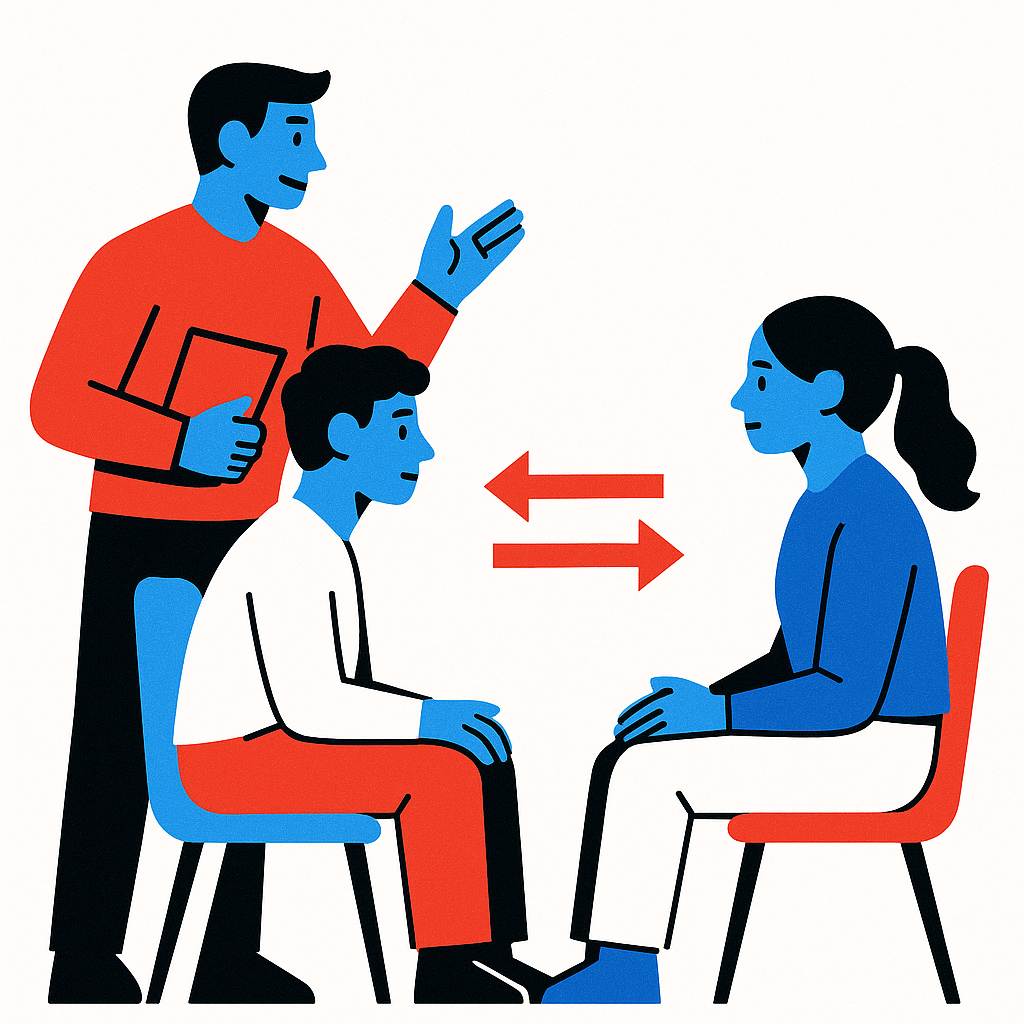
Inside the People Skills pillar of Boost's 26-skill curriculum, active listening isn't a single lesson — it's a drilled skill with its own practice structure, the same way a layup gets drilled separately from a full scrimmage. Students pair off and run structured rounds: one talks, the other reflects back what they heard before responding, and the coach resets the pair if the reflection missed the point. Over the course of the 8 weeks, the same structure gets applied to progressively higher-stakes material — a neutral topic first, then a mild disagreement, then something closer to a real conflict — so the skill is built under increasing pressure rather than practiced once in a low-stakes setting and assumed to transfer.
That structure matters because the 14–24 brain window — the stretch when the brain is unusually responsive to skill-building — is exactly when habits like this either get installed or don't. A student who drills reflective listening at 15 carries a different default into a college interview, a first job, and their own future relationships than one who was only ever told to make eye contact.
What to Try This Week, With or Without a Formal Program
You don't need a full curriculum to start building this. Try a two-minute version of the same drill in an advisory period or at home: one person talks for 60 seconds about something real, the other has to reflect it back accurately — not respond, not fix it, just repeat it — before the conversation continues. Notice how often the reflection is close but not quite right, and treat that gap as the actual skill to practice, not a failure. Do it three times a week for a month and most people, teenagers included, get noticeably better at catching what they would have missed before.
The Takeaway
Listening is not a personality trait some students have and others don't. It's a specific, learnable behavior — reflect before you respond — that almost no school teaches on purpose, even though students spend nearly half their day doing it and employers rank it near the top of what they're hiring for. The fix isn't a poster. It's structured, repeated practice, the same way any other skill gets built.
Frequently Asked Questions
What Is Active Listening and Why Does It Matter for Teenagers?
Active listening is the practice of fully processing what someone says and reflecting it back accurately before responding, rather than simply waiting for your turn to talk. For teenagers, it matters because it directly affects conflict resolution, group work, family communication, and later job performance — areas where communication is consistently rated among the most valued skills by employers.
Can Active Listening Be Taught, or Is It a Personality Trait?
It can be taught. Active listening is a behavioral skill built through repeated, structured practice — particularly reflecting back what you heard before responding — not a fixed personality trait. Like any skill, it improves with deliberate repetition and gets worse with disuse.
What Are the Signs of Poor Listening Skills in Students?
Common signs include responding to what they assumed someone said rather than what was actually said, interrupting before a thought is finished, being unable to accurately summarize a peer's point in a discussion, and defaulting to text-based communication even in situations that call for a real-time conversation.
How Do Employers View Communication and Listening Skills in New Hires?
Very highly in importance and much lower in observed proficiency. NACE data shows 96.1% of employers rate communication as very or extremely important — tied for the top competency — while only 53.5% rate new graduates as proficient in it, a substantial gap between what's valued and what shows up in practice.
What Activities Build Active Listening Skills in a Classroom?
Paired exercises where one student talks and the other must accurately paraphrase what they heard before responding are among the most effective, especially when repeated regularly and applied to progressively higher-stakes topics rather than practiced once and left alone.