How to Actually Measure Whether Your Soft Skills Program Is Working
- More than 8 in 10 U.S. schools now report implementing some form of social-emotional or soft skills programming, according to a 2024 RAND Corporation report prepared for CASEL, but far fewer can point to outcome data beyond attendance sheets and satisfaction surveys.
- CASEL's own SEL Assessment Guide and the Institute of Education Sciences' 2025 fact sheet on measuring students' soft skills both exist because so many districts were asking the same question: implementation is trackable, but is anything actually changing?
- Administrators evaluating a soft skills provider should ask for evidence at three levels — fidelity (was it delivered as designed), perception (do students believe the skill applies to them), and behavior (has anything measurably changed) — not just a single end-of-year survey.
- Vague, self-reported "confidence" gains are the easiest data to collect and the least useful for a school board asking whether a program is worth renewing.
- Boost builds pre/post measurement into every 8-week cohort rather than treating evaluation as an afterthought, and we say plainly where our own pilot data is strong and where it still needs independent replication.
A curriculum director we spoke with this year put it bluntly: "We've bought three different soft skills programs in six years. I couldn't tell you which one worked, because we never actually measured any of them." Her district wasn't unusual. It's the norm. Schools adopt SEL and soft skills programming at a remarkable rate — the CASEL-commissioned RAND report found more than 80% of U.S. schools now have something in place — and then almost never build a real system for knowing whether it's doing anything.
That gap matters more the moment a school board asks for a renewal budget, or a new administrator inherits a program someone else picked, or a parent asks a direct question: how do you know this is working? Most schools discover in that moment that they've been measuring the wrong thing, or nothing at all.
Why Most Schools Can't Answer the Measurement Question
It isn't that administrators don't care about outcomes. It's that soft skills are harder to measure than a math test, and most districts default to whatever data is easiest to collect rather than what's actually informative. An end-of-year satisfaction survey asking students whether they "enjoyed" a program tells you almost nothing about whether they can now navigate a disagreement with a classmate, sit through a job interview without freezing, or manage frustration without shutting down. It tells you whether the assembly was fun.
CASEL, the field's leading research clearinghouse, maintains an entire assessment guide specifically because districts kept picking instruments that measured the wrong construct or weren't validated for their age group. The Institute of Education Sciences' Regional Educational Laboratory Mid-Atlantic published a 2025 fact sheet on research-based instruments for measuring students' soft skills for the same reason: the tools exist, but most schools never hear about them before a vendor's own survey becomes the only data point anyone reviews.
That's not a minor gap. A program's own marketing survey is not independent evidence, and treating it as such is how districts end up renewing contracts based on vibes.
Three Levels of Evidence Worth Actually Asking For
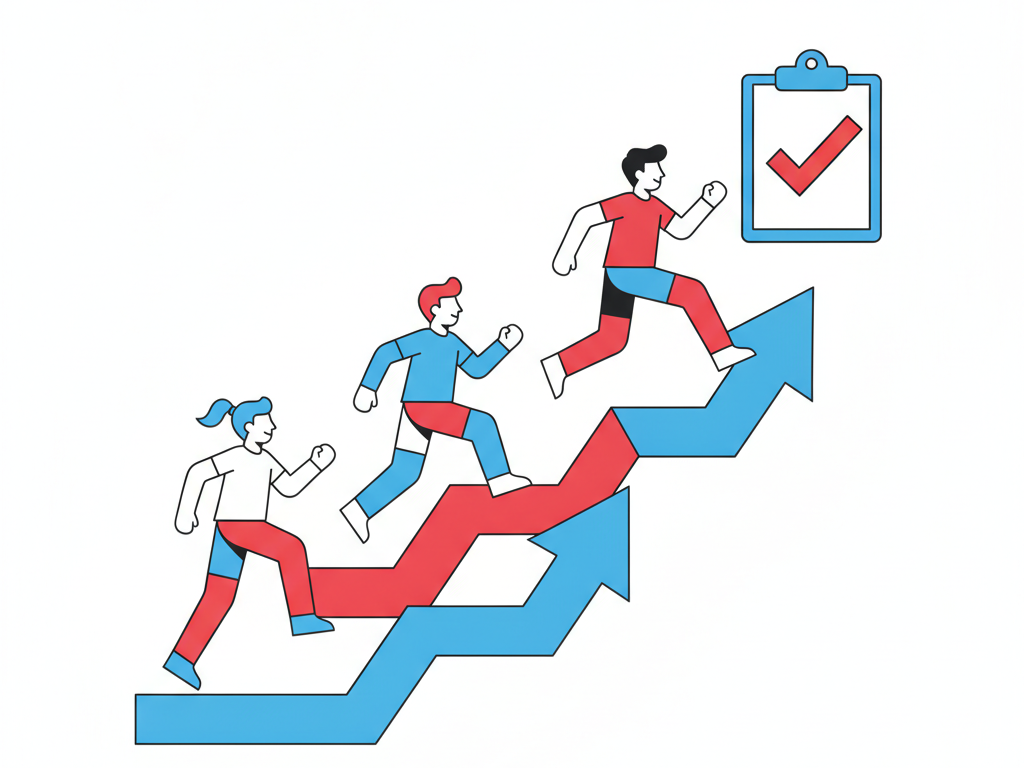
When we talk to administrators evaluating Boost or any other soft skills provider, we push them toward a specific framework instead of a single yes/no question. Ask for evidence at three separate levels, because a program can look strong on one and be hollow on the others.
Fidelity data answers whether the program was actually delivered the way it was designed. This sounds basic, but it's the level most often skipped. A curriculum can look excellent on paper and still get delivered as a rushed 20-minute assembly instead of a structured, repeated course. Ask a provider: how do you know your coaches or teachers actually ran the lessons as written, in every classroom, every week? If the honest answer is "we hope so," that's useful information.
Perception data is the most common thing schools collect, and it's genuinely useful, but only as one layer. Do students believe the skill applies to them? Do they understand it as something learnable rather than a fixed trait? In our own pilot cohort of roughly 30 students, 87% could clearly articulate that skills like this are learnable and practiceable by the end of an 8-week course, compared to about 20% who said the same at the start. That's a real, meaningful shift in belief — and we're explicit that it's self-reported data from one cohort, not an independently replicated study. Perception data is a floor, not a ceiling.
Behavior data is the hardest to collect and the most convincing. Has anything measurably changed — fewer disciplinary referrals for conflict, better attendance in group activities, teacher-observed changes in how a student handles frustration, employer or internship-supervisor feedback on a student's professionalism? Few soft skills vendors, Boost included, can currently offer large-scale independent behavior data, and any provider who claims otherwise deserves a follow-up question about methodology. The honest state of the field is: this level of evidence is still being built, district by district, and administrators should treat a vendor's confidence about it with appropriate skepticism.
What This Looks Like Inside an 8-Week Program
Inside Boost's 8-week course, we build a simple pre/post structure into every cohort rather than treating measurement as something bolted on at the end. Students complete a short assessment in week one and the same assessment in week eight, covering both belief ("is this a skill I can build?") and self-reported behavior ("have I used this in the last two weeks?"). Coaches also log fidelity — which lessons ran, on schedule, as designed — so a school isn't just trusting that the curriculum happened.
One district administrator running Boost across two high schools told us the pre/post comparison changed how her team talked about the program internally: "Before, renewal conversations were about how much people liked it. Now we actually have a number to look at year over year, even if it's still an early number." That's the right posture for any school evaluating this category right now — build the measurement system alongside the program, not after someone asks a hard question in a budget meeting.
None of this means schools should wait for a perfect, peer-reviewed instrument before adopting anything. The field genuinely doesn't have one yet at scale. It means asking providers direct questions before signing a contract, and continuing to ask them every year after: what specifically are you measuring, at which of the three levels, and what would make you say this isn't working?
Frequently Asked Questions
How Do You Actually Measure If A Soft Skills Program Is Working?
Look for evidence at three levels: fidelity (was the curriculum delivered as designed), perception (do students believe the skill is learnable and relevant to them), and behavior (has anything measurably changed in how students act). Most programs only offer perception data, so ask specifically about the other two.
What Should Administrators Ask A Soft Skills Vendor Before Signing A Contract?
Ask how fidelity is tracked across classrooms and coaches, what specific instrument is used for pre/post measurement, whether any data is independent of the vendor's own survey, and what result would cause the vendor to say the program isn't working for a given school.
Are There Validated Tools For Measuring Student Soft Skills?
Yes. CASEL maintains an SEL Assessment Guide, and the Institute of Education Sciences' Regional Educational Laboratory Mid-Atlantic published a 2025 fact sheet on research-based instruments for measuring students' soft skills. Both exist because most schools default to informal, unvalidated surveys instead.
Why Do Most Schools Only Collect Satisfaction Survey Data?
Satisfaction surveys are the easiest data to collect and require no independent instrument, no pre/post design, and no follow-up. They measure whether students enjoyed a program, not whether their behavior or skill level changed, which is why they're a floor for evidence, not a ceiling.
How Does Boost Measure Its Own Program's Effectiveness?
Every 8-week cohort completes a pre/post assessment covering belief in the skill's learnability and self-reported use of it, and coaches log lesson-by-lesson fidelity. Our pilot cohort data (87% vs. 20% believing skills are learnable) is self-reported and from one cohort — we say so directly, and we're building toward independently validated behavior-level data over time.