Self-Discipline Isn't a Personality Trait. Here's How to Teach It
- In a long-running New Zealand study of more than 1,000 people, children with lower self-control scores had worse outcomes as adults, and children whose self-control increased with age tended to do better than predicted.
- A review of 49 randomized trials covering 23,098 young people found that 66% of self-regulation interventions improved self-regulation, and 76% of curriculum-based ones did.
- Duckworth and Seligman found self-discipline accounted for more than twice as much variance as IQ in eighth-grade outcomes, while a marshmallow-test replication warns against oversimplifying.
- Treat self-discipline as an untaught skill: define it, give students a plan, practice it in small repetitions, and track it.
Every school has the student everyone describes the same way. "Smart kid, just no discipline." The sentence sounds like a diagnosis, and it tends to end the conversation. If you have been looking for self-discipline skills high school students can actually learn, start by retiring the idea that discipline is a personality trait some students arrive with and others lack. The evidence points to something more useful: it is a set of behaviors, and behaviors respond to instruction and practice. This deep dive covers what the skill is made of, what practice looks like week to week, and how to tell whether it is working.

Why Is Self-Discipline a Skill and Not a Trait?
Self-discipline is a skill because it changes with experience and instruction, and the research on this is encouraging with some real limits. The Dunedin Study, which followed more than 1,000 people born in one New Zealand city from childhood to age 32, found that "children whose self-control increased with age tended to have better adult outcomes" than their early scores alone predicted, and that even children with above-average self-control could benefit from universal interventions (Dunedin Study).
Interventions can move it, too. A systematic review and meta-analysis in JAMA Pediatrics pooled 49 randomized trials with 23,098 participants and found that universal self-regulation interventions were effective, with a pooled effect of d = 0.42 on task-based measures. The authors concluded that "different types of interventions can be used to improve self-regulation, and many of these strategies appear effective" (JAMA Pediatrics review via PMC). Note the median participant age was 6, so this is not direct proof for teenagers.
There is a caution worth keeping. A replication of the famous marshmallow test with more than 900 children found the association "was small and disappeared after the researchers controlled for characteristics of the child's family and early environment" (Association for Psychological Science). Waiting for a treat is not destiny. We say the same about students: they are not broken, they are untaught.

What Are Self-Discipline Skills Made Of?
Self-discipline skills are made of smaller behaviors that can each be named and practiced: choosing a goal, writing it down, planning the steps, anticipating what will get in the way, and managing the impulse when it hits. That list is more useful to a teacher than the word "discipline."
Why bother naming it? In a study of 140 eighth-graders, Duckworth and Seligman found that self-discipline measured in the fall "accounted for more than twice as much variance as IQ in final grades, high school selection, school attendance" and other outcomes, and a replication with 164 students confirmed the pattern (Duckworth and Seligman, Psychological Science). It is one pair of studies with modest samples, not the final word, but it supports a plain point: effort habits matter alongside ability.
In our curriculum, the goal-setting lesson teaches two moves that carry most of the load: write the goal down, then list the action steps and the obstacles likely to appear, so students are ready when they do [Internal: Master Spreadsheet of Content]. The pieces sit across our three pillars, People Skills, Character, and Healthy Mindset, and include self-control, responsibility and ownership, and healthy routines [Internal: Boost Brand Bible v2].

A Classroom Practice Sequence for Self-Discipline Skills
A practice sequence works when it moves from why, to a plan, to repetition. Here is how it looks across our 8-week structure [Internal: Boost Brand Bible v2].
Start with the picture. In week one, students describe the life they want to build, so discipline has a purpose beyond compliance [Internal: Boost Bible]. This is the why, and it comes first.
Teach the planning move. In the growth week, students work on goals with action steps and anticipated obstacles, plus grit and the idea that struggle builds ability. We go deeper on this lesson in how to teach students to set goals they actually achieve.
Apply it to a real temptation. In the phone week, students track their own use and build a personal plan, because a phone is the most common daily test of self-control they face.
Close with a blueprint. In the final week, students build a personal development plan and commit to continued growth.

Common Obstacles and How to Handle Them
The most common obstacle is the adult habit of demanding discipline without teaching it. We have written about why telling students to just try harder backfires, and the idea is simple: instructions are not skills.
Three other obstacles come up often. First, students who have been told for years that they lack discipline may see effort as pointless, so start with small wins they can see. Second, inconsistent adult responses make any routine fragile, so agree on shared language across staff. Third, plans fail when they are vague. Ask students to name the cue, the action, and the likely obstacle in plain words.
These are practical suggestions from working with schools, not research findings. They fit the review above, which found curriculum-based interventions the most frequently effective type (16 of 21), but that review does not test these specific tips.

How Do You Know Students Are Improving?
You know by measuring behavior, not by asking whether a student seems more disciplined. Boost's "Striving to 100" assessment has students and an adult sponsor rate the student from 1 to 5 across about 20 skill questions, including goal-setting and technology use, at the start and end [Internal: Boost Brand Bible v2].
You can add lightweight checks of your own. A technology log asks whether a goal was met and how it felt. At the end of our program, students color each of the 26 skills green, yellow, or red; yellow skills get a top-two focus for 30 days, and red skills get one commitment to one small daily practice [Internal: Boost Bible]. A 30-day check-in on those commitments tells you far more than a pep talk.
A word on evidence: in a small Boost pilot of about 30 students, the self-reported results were encouraging, but we have no independent outcome data yet [Internal: Boost Brand Bible v2]. Treat self-ratings as a signal.
How Does Boost Approach the Skill of Self-Discipline?
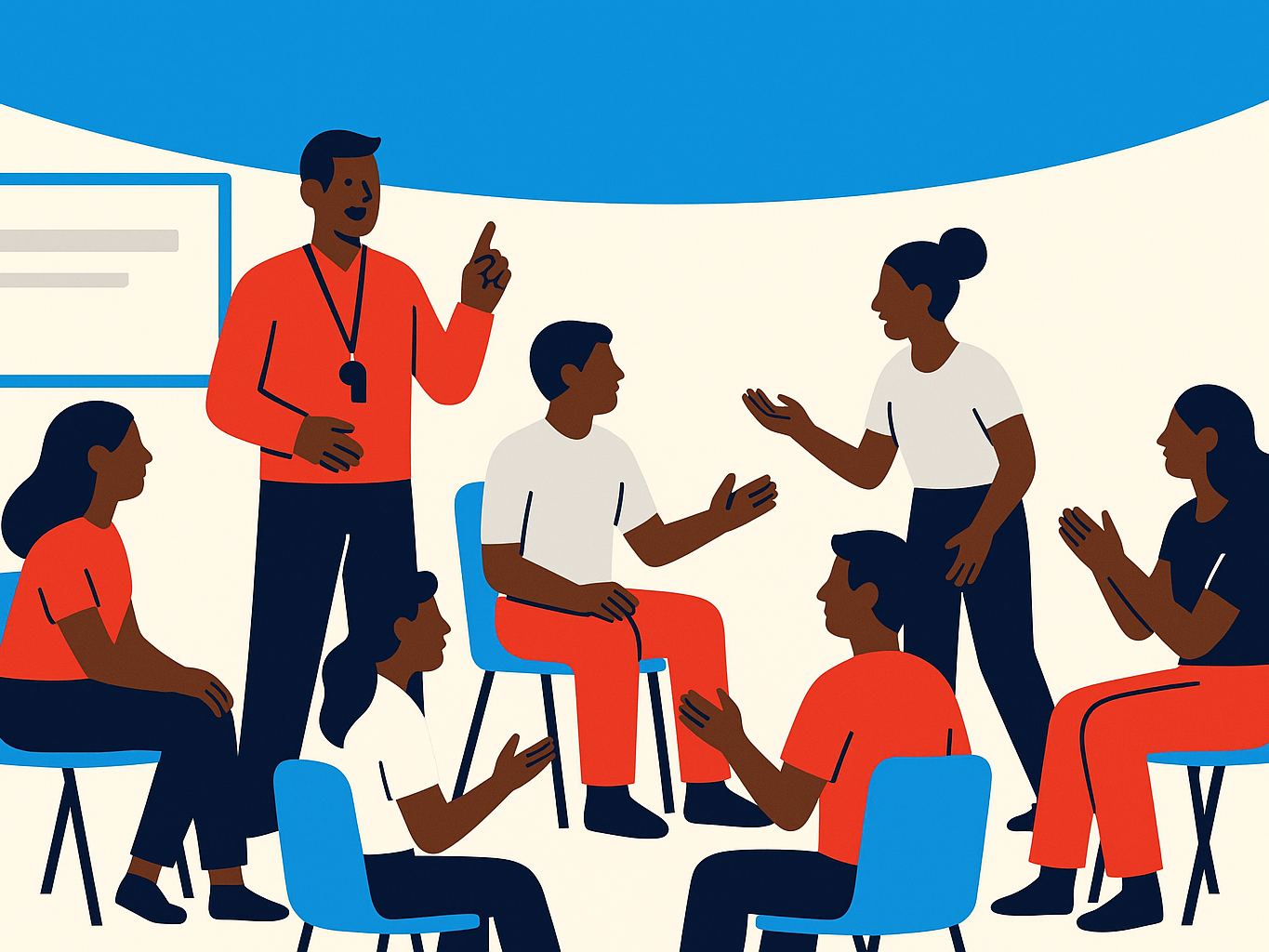
We approach self-discipline the way we approach every Boost Skill: teach the why, then practice. Students first see how the skill connects to the life they want, then they practice it through discussion, worksheets, role-play, and repetition [Internal: Boost Program Research Paper]. The course is delivered by certified Boost coaches or trained staff, as a dedicated 8-week curriculum for high school and young adult students, so the skill gets protected class time instead of hallway reminders.
If you would like to talk through how this could fit your schedule, you can schedule a discovery call and bring your questions.

Frequently Asked Questions
Can Self-Discipline Be Taught?
Yes, within limits the research is honest about. A meta-analysis of 49 randomized trials found that 66% of self-regulation interventions improved self-regulation, though most participants were young children.
How Do You Build Self-Discipline in Teenagers?
Make it concrete: write the goal, list the steps and likely obstacles, and practice in small repetitions with a clear reason attached. Track one behavior for 30 days instead of trying to change everything at once.
Why Do Some Students Lack Self-Control?
Often because the skill was never taught or practiced. Family and early environment also shape outcomes, as the marshmallow test replication showed, so avoid treating a student's current habits as a fixed trait.
References
- Dunedin Study, Children with more self-control turn into healthier and wealthier adults
- Effectiveness of Universal Self-regulation-Based Interventions in Children and Adolescents (JAMA Pediatrics)
- Association for Psychological Science, A New Approach to the Marshmallow Test Yields Complicated Findings
- Duckworth and Seligman, Self-Discipline Outdoes IQ in Predicting Academic Performance of Adolescents
- How to Teach Students to Set Goals They Actually Achieve
- The Self-Improvement Paradox: Why Telling Students to Just Try Harder Backfires
Ready to bring Boost to your school?
Schedule a discovery call to see how the Boost curriculum fits your students.
Schedule a Discovery Call