The Soft Skills Gap Is Costing Your Students Their Future — Here's What the Data Says
Executive Summary
- 84% of hiring managers say high school graduates are not prepared to enter the workforce — 80% say today's grads are less prepared than previous generations.
- The gaps employers describe aren't academic. They're interpersonal: communication, active listening, conflict navigation, and accountability.
- The adolescent brain window (ages 14–24) is the most efficient time to build these skills — and most schools aren't using it.
- Schools that treat people skills as a subject — not just a value — are seeing measurable results. The gap is closable.
Every year, thousands of students cross a stage, shake a hand, and receive a diploma that certifies they're ready for the next chapter. Employers have a different read on that.
The résumés look fine. The GPAs hold up. But somewhere between the classroom and the first week on the job, something isn't translating — and the people doing the hiring have started keeping score.
The numbers are stark. A 2025 joint report from the U.S. Chamber of Commerce and the College Board surveyed 500 hiring managers across the country. Four in five — 84 percent — agreed that most high school graduates are not prepared to enter the workforce. Eight in ten said today's graduates are less prepared than previous generations. When asked what skills employees should have learned before walking through the door, 98 percent said communication, 97 percent said decision-making, and 94 percent said collaboration.
None of those are things you learn from a textbook.
The Gap Nobody Talks About Out Loud
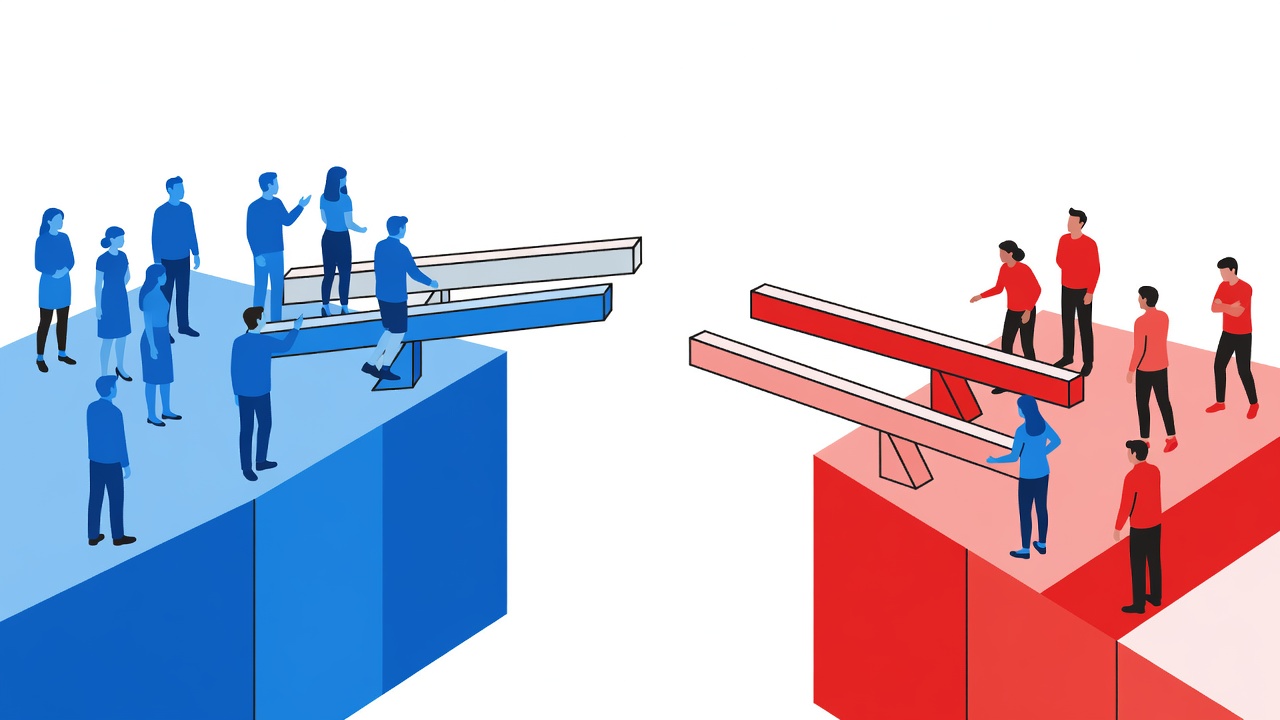
There's a version of this conversation that focuses on academic achievement — test scores, graduation rates, college enrollment. That conversation has its place. But it's a different conversation from the one employers are actually having.
What hiring managers describe, when you get past the careful HR language, isn't a knowledge problem. It's a people problem. New hires who can't navigate a correction from a supervisor. Young professionals who go silent in a team meeting rather than risk being wrong. Entry-level workers who struggle to stay present in a room because their relationship with their phone has trained them to expect constant stimulation.
A Workplace Intelligence study found that 85 percent of recent college graduates wish their college had better prepared them for the workplace. Only 24 percent said they had all the skills they needed for their current role. These aren't people who didn't work hard or don't care. They're people who were never taught what the workplace actually requires.
And the cost isn't abstract. HR leaders estimate saving over $4,500 in onboarding costs per hire when new employees arrive job-ready. Some companies, facing persistent underpreparedness in entry-level candidates, have begun avoiding recent graduates altogether. That's not a hiring market problem. That's a preparation problem — and it starts years before graduation.
Four Skills Disappearing Fastest
Communication tops every list. Not the ability to write a paper, but the ability to speak clearly under pressure, adjust your message for a real audience, and say difficult things without blowing up or shutting down. The Chamber report found 90 percent of hiring managers more likely to hire someone who demonstrates effective communication — and yet most schools have no explicit course in it.
Active listening is the skill most people think they have until they're in a room where it matters. Listening that actually absorbs what someone said — not waiting for your turn to respond, not checking out because the conversation is slow — is a trainable skill that most teenagers are getting less practice at than any generation before them.
Conflict navigation comes in third. A generation raised on the ability to mute, unfollow, and ghost has developed avoidance as a default strategy for disagreement. The workplace doesn't have a mute button. Neither does a marriage, a friendship, or a parent-teacher conference.
Accountability — owning mistakes without blaming, redirecting, or catastrophizing — rounds out the cluster. Employers consistently describe this as one of the hardest things to find in new hires, and one of the most expensive absences when it's missing.
Why Traditional Schooling Misses This
Schools aren't failing. They're doing what they were designed to do — transmit academic knowledge, credential students for higher education, and prepare young people for a world that, in many ways, no longer exists in the same form.
The soft skills crisis isn't a school failure story. It's a design gap story. Academic curricula were built around content. What they weren't built around is the interpersonal operating system that determines whether a person can function well in relationships, organizations, and communities.
And the window to build that system is narrowing. Neuroscience is clear that the adolescent brain — roughly ages 14 to 24 — is uniquely malleable. Neural pathways form faster. Habits and beliefs root more deeply. Identity is actively being constructed. It is, in the most literal sense, the most efficient time in a human life to learn these skills. After that window, skills can still be learned. But they're harder to teach, slower to stick, and more expensive to develop.
What Schools That Get Results Do Differently
There's a meaningful difference between schools that treat soft skills as a value and schools that treat them as a subject.
Values get mentioned in mission statements and hallway posters. Subjects get time on the schedule, structured instruction, deliberate practice, and accountability for outcomes. The schools seeing real movement aren't the ones with better intentions — they're the ones that made a structural decision to treat people skills and character development with the same seriousness as math or English.
The results, when programs are designed this way, are measurable. In an 8-week pilot of the Boost Program, only 20 percent of students began the course believing that "life is skill-based." By the end, 87 percent held that belief. That shift — from feeling stuck to understanding that skills are learnable and gaps are closable — is the foundation every other skill gets built on.
What Administrators Can Do Starting This Year
Name the gap explicitly. Students who understand what employers are actually looking for take these skills seriously. The "why" matters as much as the "what."
Look for programs with structure, not just spirit. A curriculum that teaches communication as a specific, practiced skill is fundamentally different from one that encourages students to express themselves. Look for lesson sequences, practice activities, and measurable outcomes.
Find the time. An advisory period, a semester elective, or an 8-week module integrated into an existing class doesn't require a curriculum overhaul. It requires a decision.
Start before senior year. A junior who learns conflict resolution has two years to use it before graduation. A senior has a semester.
The data isn't going to get more persuasive. The good news — the only good news in all of this — is that these skills are genuinely teachable. Life is skill-based. That means the gap is closable, if schools decide to close it.
Frequently Asked Questions
What exactly is the soft skills gap?
The soft skills gap is the growing disconnect between the interpersonal and character skills employers need and what students are actually graduating with. Communication, active listening, conflict resolution, and accountability are rarely taught as explicit subjects — yet they consistently determine career success.
Are soft skills actually teachable?
Yes — and that's the most important thing to understand. When taught explicitly with deliberate practice and repetition, students develop them just as reliably as academic skills. The gap is a design problem, not a student capability problem.
How long does it take?
Measurable mindset shifts can happen in 8 weeks. In a Boost pilot, the share of students who believed "life is skill-based" jumped from 20% to 87% in that timeframe.
What's the ROI for schools?
Employers save over $4,500 per new hire when employees arrive job-ready. Schools that produce graduates with strong people skills become the schools employers recruit from.
How does Boost fit in?
The Boost Program is an 8-week structured curriculum teaching 26 specific skills across People Skills, Character, and Healthy Mindset. Schedule a discovery call to learn more.
References
U.S. Chamber of Commerce & College Board. New Hire Readiness Report 2025.
Workplace Intelligence. College Graduate Skills Study.
General Assembly. Soft Skills Gap Widens.