The Self-Awareness Skill Most Teenagers Are Never Taught
- Self-awareness is typically assumed to be an innate trait rather than something that can be directly taught.
- Boost treats self-awareness as a Healthy Mindset skill, teachable through structured self-assessment, not just introspection.
- The "Striving to 100" self-assessment is one concrete example: students rate themselves across 20 skill questions, then repeat the process later to see real change.
- Self-awareness underpins nearly every other Boost skill, since a student can't improve a skill they don't accurately perceive themselves as having or lacking.
- Teaching self-awareness directly, rather than assuming it develops on its own, changes how effective every other lesson becomes.

Why Self-Awareness Is Usually Assumed, Not Taught
"They just need to know themselves better" isn't a lesson plan, it's a wish. Most curricula treat self-awareness as a byproduct of maturity rather than something that can be built directly, which means it rarely gets explicit instruction time. That's a missed opportunity, because self-awareness is arguably the skill every other skill depends on.

What a Teachable Self-Awareness Lesson Actually Looks Like
Boost's approach uses structured self-assessment rather than open-ended introspection. The "Striving to 100" assessment asks both the student and a "sponsor" (an adult mentor) to independently rate the student's current skill level, on a 1-5 scale, across roughly 20 specific skill questions: greeting others, eye contact, listening, honesty, humility, kindness, apologizing, goal-setting, and phone use, among others [Internal: Boost Brand Bible]. Comparing a student's self-rating against their sponsor's rating, taken at the start and repeated at the end of the program, gives a concrete, structured way to build accurate self-perception instead of vague self-reflection.

How Self-Awareness Connects to Every Other Skill
A student can't meaningfully work on a skill they don't accurately perceive themselves as having or lacking. Someone who thinks they're a great listener when they're not will never prioritize improving it. That's why self-awareness sits underneath nearly every other Boost skill: it's the mechanism that determines whether a student even recognizes which skills need attention in the first place.

What This Looks Like Inside Boost
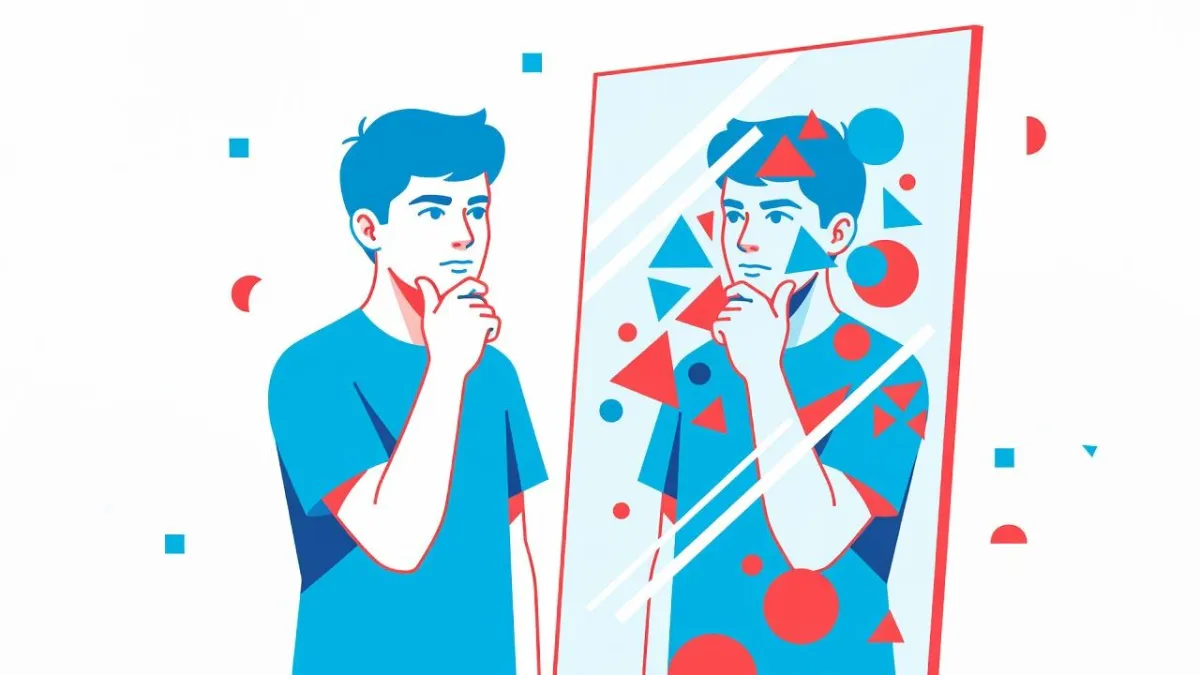
By pairing a student's self-rating against an adult sponsor's independent rating, Boost creates a built-in reality check rather than relying on self-report alone. The gap between the two ratings often becomes the most useful data point in the whole assessment: it tells a student exactly where their self-perception and other people's perception of them diverge, which is usually the first real step toward change.
Frequently Asked Questions
Can Self-Awareness Be Taught?
Yes. Structured self-assessment tools that compare a student's self-rating against an outside observer's rating can build accurate self-perception directly, rather than relying on maturity to develop it naturally.
How Do You Build Self-Awareness in Teenagers?
Through structured, repeated self-assessment, ideally compared against an adult mentor's independent rating, so students get a concrete reality check rather than relying on open-ended introspection alone.
What Is Self-Awareness in Social-Emotional Learning?
It typically refers to a student's ability to accurately recognize their own emotions, strengths, and areas for growth, and it underlies most other social-emotional and character skills.
References
Ready to Bring Boost to Your School?
See how the 26 Boost Skills curriculum works in practice. Schedule a discovery call with our team.
Schedule a Discovery Call