The Self-Improvement Paradox: Why 'Believe in Yourself' Doesn't Build Better Students
- A landmark review by psychologist Roy Baumeister and colleagues, published in Psychological Science in the Public Interest, examined decades of self-esteem research and found little evidence that high self-esteem, on its own, causes better school performance, better job performance, or better behavior.
- The largest meta-analysis of growth-mindset interventions to date (Sisk et al., 2018) found the overall link between mindset and achievement was small, and a 2025 review concluded that the field's bigger early claims were "likely attributable to inadequate study design, reporting flaws, and bias."
- Research on praise published in PNAS found that inflated, trait-based praise ("You're so smart") predicted lower self-esteem over time in children who already doubted themselves, and higher narcissism in children who didn't.
- This is the self-improvement paradox: telling a student to feel more confident, more resilient, or more motivated rarely produces the confidence, resilience, or motivation it names — because none of those are things you can hand a teenager directly. They're downstream of skill.
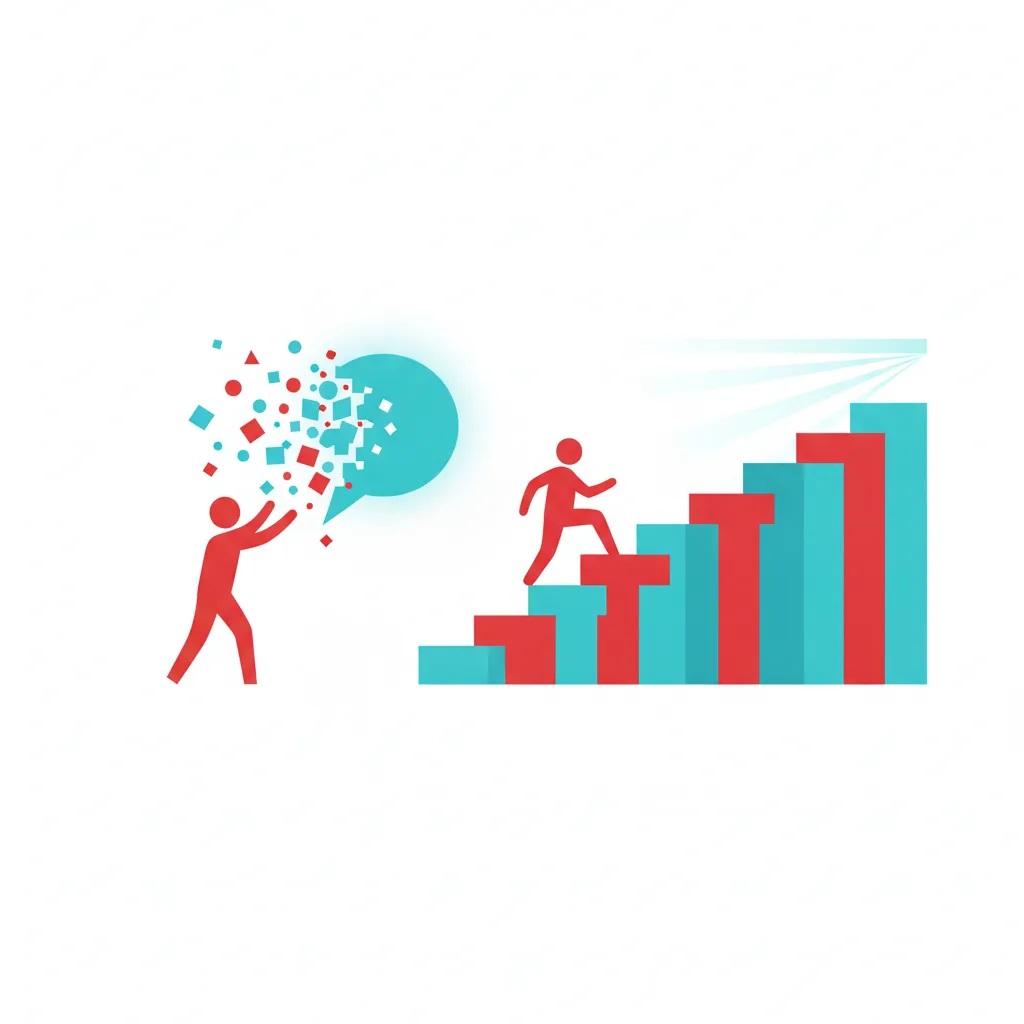
- Boost is built on the opposite bet: teach the 26 underlying Boost Skills across People Skills, Character, and Healthy Mindset through direct instruction and repeated practice, and let confidence show up as a side effect of competence — not the other way around.
Every school has a version of the same assembly. A speaker with a great story tells students to believe in themselves, to have grit, to adopt a growth mindset. The room claps. Three weeks later, the hallway looks exactly like it did before the assembly — same kids avoiding eye contact, same group project meltdowns, same students who shut down the second something feels hard. Nobody did anything wrong. The talk was good. The problem is that the entire approach was built on a premise the research doesn't actually support: that telling someone to feel differently is the same thing as teaching them to act differently.
Psychologists have a name for the gap between what these programs promise and what they deliver. Call it the self-improvement paradox — the more a message focuses directly on building a feeling (confidence, self-esteem, motivation), the less reliably it seems to produce lasting change in the behavior that feeling is supposed to cause. The research on why is more specific, and more useful for administrators, than most schools realize.
The Self-Esteem Movement Didn't Hold Up to Scrutiny
Starting in the 1980s, American schools spent enormous energy on the idea that raising a student's self-esteem was itself the intervention — the thing that would raise grades, reduce misbehavior, and prevent everything from teen pregnancy to drug use. In 2003, Roy Baumeister and a team of psychologists reviewed the accumulated evidence for Psychological Science in the Public Interest and reached a conclusion that reshaped the field: high self-esteem correlates with feeling good, but the evidence that it causes better academic performance, better job performance, or better relationships was thin to nonexistent (see Does High Self-Esteem Cause Better Performance, Interpersonal Success, Happiness, or Healthier Lifestyles?). Students with high self-esteem report liking school more. They don't reliably get better grades because of it.
A separate study on struggling college students made the failure mode concrete. Researchers ran a self-esteem-boosting intervention meant to help academically at-risk students perform better — regular messages affirming their worth and capability. The students who received the boost went on to earn lower subsequent grades than a comparison group, not higher ones (see Attempting to Improve the Academic Performance of Struggling College Students by Bolstering Their Self-Esteem: An Intervention That Backfired). Affirming a struggling student's feelings, without changing what that student could actually do, appears to have removed some of the discomfort that was motivating them to work harder.

Growth Mindset Ran Into the Same Wall
Growth mindset — the idea that framing ability as improvable rather than fixed changes how students respond to challenge — largely replaced the self-esteem movement in schools over the last decade, and it rests on genuinely useful psychology. But when researchers went looking for the achievement gains the popular version of the theory promised, they mostly didn't find them at scale. The largest meta-analysis on the subject, led by Victoria Sisk and colleagues in 2018, found the overall relationship between a student's mindset and their academic achievement was small, and that mindset interventions — the workshops and lessons meant to instill a growth mindset — produced effects that were even smaller and inconsistent across studies (see To What Extent and Under Which Circumstances Are Growth Mind-Sets Important to Academic Achievement? Two Meta-Analyses).
A 2025 review revisiting the broader body of growth-mindset research went further, arguing that many of the field's headline early claims don't hold up under closer scrutiny. As the reviewers put it, the apparent effects of growth-mindset interventions on academic achievement are "likely attributable to inadequate study design, reporting flaws, and bias" (see Reconsidering Growth Mindset Intervention Effects). Even Carol Dweck, the psychologist whose research the movement is built on, has publicly warned schools about what she calls a "false growth mindset" — students who've learned to repeat the language of resilience without any change in how they actually respond to a hard problem. Telling a kid to say "I can't do this yet" instead of "I can't do this" is a vocabulary change. It is not, by itself, a skill.
Why Inflated Praise Can Make Things Worse, Not Better
The instinct to compensate for a struggling student by praising them more is understandable — and the research on praise suggests it can backfire in a very specific, measurable way. A study published in PNAS tracked how parents' praise affected children's self-esteem over time and found that inflated praise — telling a child they're incredibly talented rather than describing what they specifically did well — predicted a drop in self-esteem over time in children who already had lower self-esteem, and predicted higher narcissism in children who already had higher self-esteem (see When Parents' Praise Inflates, Children's Self-Esteem Deflates). Praise that isn't tied to something the student actually did doesn't read as reassurance. It reads, eventually, as unbelievable — and kids are unusually good at detecting when adults are managing their feelings instead of teaching them something.
This is the shared thread running through the self-esteem research, the growth-mindset research, and the praise research: each one, independently, points toward the same correction. Feelings that are handed to a student directly — through a slogan, an affirmation, a compliment untethered to anything real — don't stick, because the student's own experience keeps contradicting them. Feelings that show up as a byproduct of a student actually getting better at something real tend to hold, because they're backed by evidence the student generated themselves.

What This Means for How a School Chooses a Program
None of this means confidence, resilience, or a positive mindset don't matter. It means they're outputs, not inputs — the result of a student having repeatedly practiced a real skill under real conditions, not something a program can install through messaging alone. That has direct implications for how an administrator should evaluate what's being pitched as a soft skills or SEL solution:
- Ask what the student practices, not just what they hear. A curriculum built around lecture, video, and discussion is teaching vocabulary. A curriculum built around structured role-play, repeated scenarios, and coached feedback is teaching a skill. The research consistently favors the second format.
- Be skeptical of any program whose main claim is a feeling. "Builds confidence" and "improves self-esteem" are the wrong headline outcomes to lead with — they're what should happen after the real work, not the work itself. Ask what specific, observable behavior changes: Can the student initiate a hard conversation? Handle disagreement without shutting down? Recover from a setback and try again?
- Praise the process the program teaches, not the personality it promises to reveal. The praise research favors specific, effort-and-strategy-based feedback ("you stayed with that problem and tried a different approach") over trait-based praise ("you're so smart" or "you're a natural leader"). A well-designed program trains staff to give the former.
- Expect repetition, not a single event. One assembly, one guest speaker, one poster on the wall is exposure. The self-improvement paradox exists precisely because a single dose of inspiration can't out-argue weeks of a student's own lived evidence about what they can and can't do yet.
This is the logic behind how Boost is built. The course doesn't ask students to believe they have good people skills, strong character, or a healthy mindset — it teaches the 26 specific Boost Skills across those three pillars through an 8-week sequence of lesson, guided practice, and repetition, delivered by a certified coach or trained staff member. Confidence isn't the curriculum. It's what tends to show up once a student has actually rehearsed the skill enough times to trust it under pressure. In our own pilot cohort of roughly 30 students over 8 weeks, 87% could clearly articulate by the end that life is skill-based — up from a small handful at the start — a shift we'd expect to follow real practice, not a self-report we're claiming as proof of causation on its own.
The Takeaway
The self-esteem movement and the popular version of growth mindset both made the same bet: that changing how a student talks about themselves would change how they act. Three decades of research across self-esteem, mindset, and praise all point the same direction — that bet mostly didn't pay off, and in some documented cases it backfired. The corrective isn't cynicism about students' inner lives. It's sequencing. Teach the skill first, through real practice under real conditions. Let the confidence follow, because at that point it's earned, specific, and durable — not because a program handed it over in a single speech.
Frequently Asked Questions
What Is the Self-Improvement Paradox?
It's the pattern, documented across self-esteem, growth-mindset, and praise research, where messaging aimed directly at building a feeling — confidence, motivation, resilience — tends to produce weaker and less durable change than programs that build the underlying skill first and let the feeling follow as a byproduct.
Does Growth Mindset Actually Improve Grades?
The largest meta-analyses on the topic have found the overall link between a growth mindset and academic achievement is small, and that classroom interventions designed to instill a growth mindset produce even smaller, inconsistent effects. A 2025 review attributed much of the field's larger early claims to study design and reporting issues rather than a strong underlying effect.
Can Praising a Student Too Much Backfire?
Research published in PNAS found that inflated, trait-based praise ("you're so smart") predicted lower self-esteem over time in children who already had doubts about themselves, and higher narcissism in children who already had high self-esteem. Specific, effort-based feedback did not show the same pattern.
Why Doesn't Boosting Self-Esteem Improve Student Performance?
A major review of the self-esteem literature by Roy Baumeister and colleagues found that high self-esteem correlates with feeling good but showed little evidence of causing better academic or job performance. In at least one study, a self-esteem-boosting intervention aimed at struggling students was followed by lower subsequent grades, not higher ones.
What Should a School Look for Instead of a Confidence-Building Program?
A program built around repeated, structured practice of specific, observable skills — communication, conflict handling, decision-making under pressure — delivered through coaching and feedback rather than a single motivational event. Confidence-focused claims should be treated as a secondary outcome, not the core curriculum.
References
- Does High Self-Esteem Cause Better Performance, Interpersonal Success, Happiness, or Healthier Lifestyles?, Baumeister et al., Psychological Science in the Public Interest (2003)
- Attempting to Improve the Academic Performance of Struggling College Students by Bolstering Their Self-Esteem: An Intervention That Backfired
- To What Extent and Under Which Circumstances Are Growth Mind-Sets Important to Academic Achievement? Two Meta-Analyses, Sisk et al. (2018)
- Reconsidering Growth Mindset Intervention Effects (2025)
- When Parents' Praise Inflates, Children's Self-Esteem Deflates, Brummelman et al.