What Employers Actually Mean When They Say 'We Can't Find Good Workers'
What Employers Actually Mean When They Say 'We Can't Find Good Workers'
The hiring crisis isn't about credentials. It's about behaviors — and the data is clear on which ones are missing.
Executive Summary
- 56% of business leaders say weak soft skills are why new hires aren't prepared — vs. only 13% who cite missing technical skills.
- Only 22% of employers consider entry-level workers very or completely ready for the job.
- The five gaps cited most: communication, teamwork, critical thinking, professionalism/work ethic, and adaptability.
- "Can't communicate" and "lacks professionalism" map to specific, teachable behaviors — not character flaws.
- Schools that explicitly teach these skills send students into the workforce with what most employers say they cannot find.
Talk to hiring managers for an afternoon and a clear pattern emerges. They aren't complaining about candidates lacking specific degrees, software skills, or industry knowledge. They're frustrated by something else — something not listed in job postings.
"They can't communicate." "They don't follow through." "They're not ready for a professional environment." "They have great credentials but I can't put them in front of a client."
These are symptoms of a soft skills deficit, though employers rarely name it as such. The issue is tangible, and the data behind it is solid.
What the Numbers Actually Say
The workforce readiness gap is real, measurable, and worsening.
Only 22% of business leaders consider entry-level employees very or completely prepared for their jobs, according to General Assembly's 2025 survey. That's an improvement from 2024, where only 12% felt the same. Even in a better year, nearly 8 out of 10 hiring managers say new workers aren't ready.
Why aren't they ready? 56% of leaders blame weak soft skills. Only 13% cite missing technical skills. When new hires fall short, it's a people problem, not a knowledge problem, at a rate of more than four to one.
LinkedIn data corroborates this: 89% of hiring managers say bad hires typically have poor soft skills, not poor technical skills. A failed hire rarely lacks technical competency.
The Cleveland Fed's 2025 analysis of national job postings adds another layer. Communication is the single most requested skill, appearing in 34% of all postings. Customer service — a proxy for interpersonal skills and professional demeanor — appears in 27%. These aren't niche requirements. They're baseline expectations for nearly every position at every wage level.
Reading Between the Lines
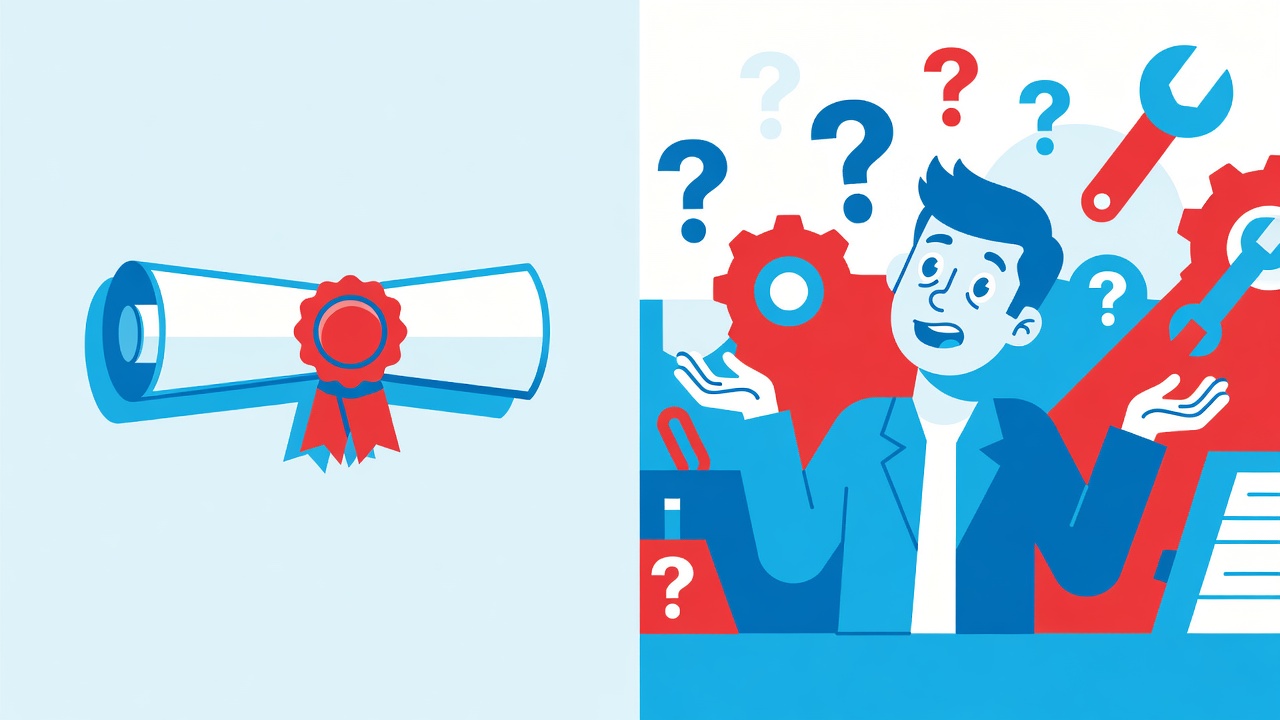
When employers say "can't communicate," they mean specific behaviors. It's not about being quiet or introverted. It's about emails lacking context, skipping critical information, or using casual language with senior stakeholders. Failing to summarize problems clearly. Misunderstanding instructions because no one asked a clarifying question. Conflicts that escalate instead of resolve.
"Lacks professionalism" is equally specific. It means showing up late or calling off last minute without notice. Not following through on commitments. Using a phone during meetings, missing deadlines without advance warning, and treating feedback as a personal attack rather than constructive input.
The Aspen Institute's 2025 Durable Skills study highlights what employers actually want from early-career hires: trustworthiness, attention to detail, teamwork, and integrity. These aren't vague soft skills. They're behavioral habits that are either present or they aren't.
When employers say they can't find good workers, they're saying they can't find candidates with those habits. The credentials are there. The habits aren't.
The Five Gaps Employers Cite Most
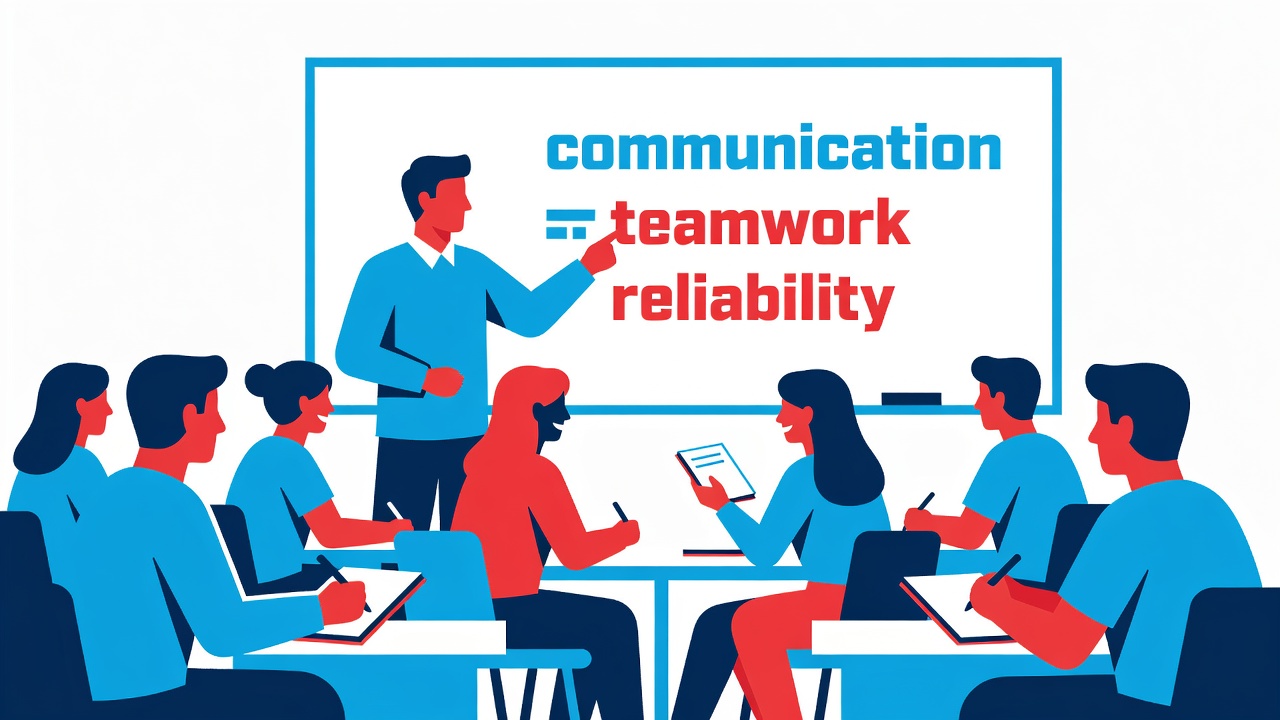
Across surveys and employer studies, the same five deficiencies appear consistently. They're distinct but connected by one thread: none of them are taught explicitly in most schools.
Communication tops every list. The Cleveland Fed data makes this quantitative — it's the most requested skill in national job postings. Employers want people who can write clearly, speak directly, listen actively, and tailor their message for different audiences. Most new hires can string sentences together. Few can do all four consistently.
Teamwork and collaboration is second. Working with diverse styles, disagreeing productively, giving and receiving feedback without defensiveness, holding up your end of a shared project — these require practice, not just coursework.
Critical thinking and problem-solving ranks third in employer priorities but low in new hire competencies. A 2024 OECD report found that over 45% of 15-year-olds in developed countries lack basic problem-solving skills. Those students become the new hires who struggle with anything not covered in training.
Professionalism and work ethic — reliability, follow-through, punctuality, coachability — forms the fourth cluster. The World Economic Forum's Future of Jobs 2025 ranks self-motivation and resilience among the core skills employers need most, ahead of many technical competencies. What they're describing is the drive to show up, stay engaged, and push through difficulty. It's increasingly rare.
Adaptability is fifth. Employers need workers who can handle change, take on new responsibilities, and solve problems they haven't seen before. A rigid, credential-focused education system produces the opposite.
The Education-Employment Disconnect
School administrators have a role to play here — and the data makes clear what that role is.
Only 37% of U.S. high school graduates demonstrate proficiency in critical thinking and problem-solving, according to the National Center for Education Statistics. Over 70% of teachers believe schools aren't adequately preparing students for career readiness, specifically citing a lack of curriculum focus on soft skills.
Teachers know. Employers know. The gap is documented, consistent, and growing. What's missing is a systematic response.
The education system's default answer to "students aren't workforce-ready" has been to add more academic content, raise graduation requirements, or expand technical training. None of that addresses the actual complaint. Employers aren't asking for better-trained technicians. They're asking for people who show up on time, communicate clearly, take ownership, and can function in a professional environment.
These skills are teachable. They're not personality traits, luck, or family background. Communication, follow-through, professional demeanor, the ability to receive feedback — these are learnable. Research is unambiguous: organizations that invest in structured soft-skills development see measurable improvements in retention, performance, and employee readiness.
The question isn't whether these skills matter. The question is whether schools are willing to treat them as curriculum.
What Schools Can Realistically Change
For administrators, the good news is this doesn't require an overhaul. It requires a decision.
Teaching soft skills explicitly means three things. Name them — tell students that eye contact, follow-up questions, clear written communication, and reliability are skills, not personality traits, and that they can be improved. Practice them — build structured activities into the schedule where students rehearse these behaviors in low-stakes settings. Repeat them — return to the same skills across contexts, not checking a box once and moving on.
An 8-week program runs 1.5 hours per week. It fits in an advisory period, a career readiness elective, or a health class. It doesn't require additional teacher training in most delivery models. It doesn't compete with core academics.
What it does is send students into the workforce with the habits employers say they can't find anywhere else.
95% of students who complete The Boost Program's curriculum say they now clearly understand which skills are crucial for their success. That's not just an outcome metric. It's evidence that students who have never been told these skills exist respond immediately when someone explains them.
The employers complaining about a workforce readiness gap aren't wrong. They're describing something real, measurable, and addressable. Schools that decide to address it now are solving a problem that most of their peers haven't recognized yet.
Frequently Asked Questions
What do employers mean when they say they can't find good workers?
The complaint almost always traces to soft skills, not technical skills. Communication, professionalism, reliability, teamwork, and problem-solving are the most commonly cited deficiencies. Only 13% of leaders cite missing technical skills as the reason new hires aren't prepared, compared to 56% who cite weak soft skills.
What soft skills are employers looking for most in 2026?
The top five are communication (requested in 34% of all job postings), collaboration and teamwork, critical thinking and problem-solving, professionalism and work ethic including reliability and coachability, and adaptability. These appear consistently across LinkedIn data, the Cleveland Fed's job-posting analysis, and the World Economic Forum's Future of Jobs 2025 report.
Why are young workers struggling in the workplace?
The data points to a preparation gap, not a motivation gap. Only 37% of U.S. high school graduates demonstrate proficiency in critical thinking. Over 70% of teachers say schools aren't preparing students for career readiness. The behaviors employers expect — showing up reliably, communicating professionally, taking ownership — are rarely taught explicitly.
How can schools prepare students for the workforce?
By treating soft skills as curriculum rather than assumed background knowledge. That means naming the skills explicitly, building in structured practice, and repeating them across contexts. Programs like The Boost Program do this in 8 weeks at 1.5 hours per week, fitting inside existing advisory periods or elective slots without affecting core academic time.
Are soft skills more important than technical skills for getting hired?
By a wide margin. Among leaders who say entry-level employees aren't prepared, soft skills are blamed four times more often than technical skills. 89% of hiring managers say bad hires typically have poor soft skills, not technical ones. Technical skills get a candidate the interview; soft skills determine whether they get the offer and keep the job.
See What a Soft Skills Curriculum Looks Like in Your School
Schedule a free discovery call with the Boost team. We'll walk you through the program, delivery options, and how it fits your existing schedule.
Schedule a Discovery CallReferences
- General Assembly. Entry-Level Workers Still Seen as Unprepared: Soft Skills Gap Widens. 2025. generalassemb.ly
- Federal Reserve Bank of Cleveland. Soft Skills and the Training That Builds Them. 2025. clevelandfed.org
- Goodvoice Group. The Workforce Readiness Gap. 2024. goodvoicegroup.com
- World Economic Forum. Future of Jobs Report 2025. weforum.org
- Express Employment Professionals / Harris Poll. Skills Gap Survey. Fall 2024. expresspros.ca
- National Association of Colleges and Employers. Career Readiness Defined. naceweb.org
- Aspen Institute / Western Governors University. Durable Skills Study. 2025. theqacommons.org