Who Should Teach Soft Skills at Your School: Counselors, Teachers, or Outside Coaches?
- Most schools default to school counselors for soft skills and SEL delivery, but ASCA reports the national average caseload sits at 372 students per counselor for 2024-25 — well above the association's recommended 250:1 ratio, which only four states currently meet.
- A widely cited SEL meta-analysis, reported on by The Hechinger Report, found a counterintuitive result: teachers were the most effective instructors of SEL lessons — when counselors or outside providers led the same lessons, they worked less well.
- That finding runs into a second problem: an EdWeek Research Center survey of 499 teachers, principals, and district leaders found insufficient training and lack of time among the top barriers keeping teachers from delivering SEL and soft skills content well, even when they're the best-positioned adult to do it.
- Some researchers, including critic Max Eden, caution that much of the underlying SEL research doesn't meet the evidence-quality bar set by RAND or the U.S. Department of Education's What Works Clearinghouse — a reason to weigh any single "who should teach it" finding with care.
- The real decision isn't counselor vs. teacher vs. outside coach in the abstract — it's whether whoever delivers the program gets real training, protected time, and a structured curriculum to run. Boost is built around that requirement: delivery by a certified Boost coach or a staff member trained specifically to teach the 26 Boost Skills, not whoever has a free period.
Every administrator evaluating a soft skills or SEL program eventually hits the same question, usually somewhere around the second vendor call: who's actually supposed to teach this? The pitch decks rarely address it directly. Some assume the school counselor will absorb it. Some assume a homeroom teacher will run it off a binder. Some are built entirely around bringing in an outside specialist. Almost none of them tell you that the research on this exact question is more specific — and more surprising — than the sales conversation lets on.
The honest answer is that "who teaches it" changes the outcome as much as what's being taught. Get the delivery model wrong and even a well-designed curriculum turns into forty-five minutes of compliance. Get it right and the same content sticks. Here's what the evidence says about each of the three usual candidates, and what it means for how you staff the decision.
The Default Choice — the School Counselor — Is Already Overloaded
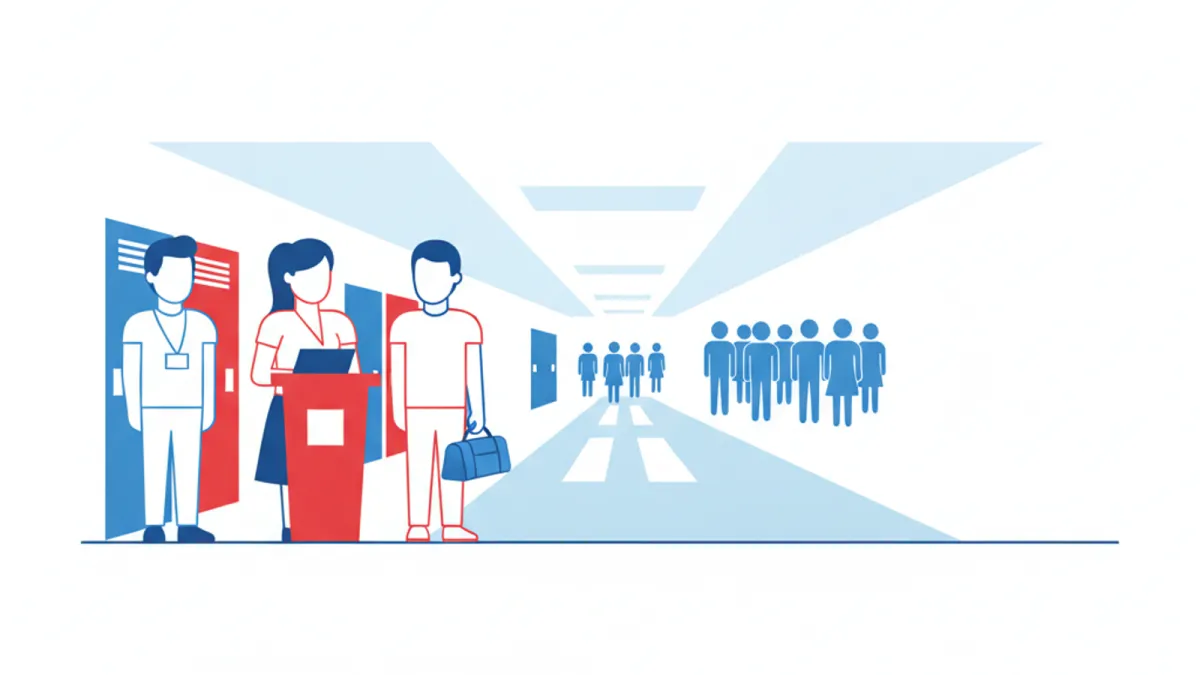
Handing soft skills instruction to the counseling office feels like the obvious move: it's adjacent to their training, and it doesn't touch instructional minutes. The problem is capacity, not competence. The American School Counselor Association has recommended a student-to-counselor ratio of 250:1 since 1965. For the 2024-25 school year, the actual national average was 372 students per counselor — and only four states, Colorado, Hawaii, New Hampshire, and Vermont, currently meet the recommended standard (see ASCA School Counselor Roles & Ratios). A counselor already carrying 370-plus students through scheduling, crisis response, college advising, and mandated reporting doesn't have a standing block of time to run a structured, recurring skills curriculum with any one group of students. Something gets triaged, and it's rarely the fire in front of them.
This isn't a knock on counselors. It's a math problem. A program that depends on counselor bandwidth as its delivery engine is depending on the one role in the building with the least slack to give.

The Research on Teachers Is More Encouraging Than Most Administrators Expect
Here's the part that surprises most people evaluating a program: when researchers actually compared who was leading SEL lessons, classroom teachers came out ahead, not behind. Reporting on a widely cited SEL meta-analysis, The Hechinger Report found that "teachers were the most effective instructors of SEL lessons. When these lessons were led by school counselors or outsiders, they didn't work as well" (see Proof Points: A Research Update on Social-Emotional Learning in Schools). The likely explanation isn't mysterious — teachers already have the relationship, the daily proximity, and the classroom management authority that a rotating outside presenter has to rebuild from zero every visit. Consistency and trust turn out to matter more than specialized outside credentials.
That finding deserves a caveat before anyone treats it as settled. Critic Max Eden, cited in the same reporting, argues that a meaningful share of the underlying SEL studies "are of low quality that would not meet the threshold for rigorous evidence" set by organizations like RAND or the Department of Education's What Works Clearinghouse — and the article also notes that dosage varied wildly across the studies being compared, from five-minute lessons to two-hour blocks, all folded into one average. So the honest read is: teacher-led delivery has real evidence behind it, but the evidence isn't as airtight as a single stat implies, and quality of implementation is doing at least as much work as who's standing in front of the room.
Which raises the actual problem with defaulting to teachers: most of them haven't been given what they'd need to be as effective as the research suggests they could be.
Teachers Are Willing. Most Aren't Trained For This.
An EdWeek Research Center survey of 499 teachers, principals, and district leaders found that even educators who believe in SEL's value cite real, structural obstacles to delivering it well — insufficient professional development chief among them. One middle school teacher in the survey put it plainly: "The PD we have had has been inadequate." A high school teacher in Texas named the other half of the problem: "Time is our greatest issue" (see 6 Reasons Teachers Don't Feel Equipped to Teach SEL). Handed a binder and told to "incorporate SEL" between bell schedules and standardized testing, a teacher without a real curriculum and real training is set up to deliver the same watered-down version of the content a counselor would — just from a different office.
Put the two findings together and the picture sharpens. Teachers appear to be the best-positioned adult to deliver this kind of instruction, because of the relationship they already have with students. But "best-positioned" and "adequately trained and given the time" are two different conditions, and most schools only have the first one.
Where a Trained Outside Coach Actually Earns Its Place
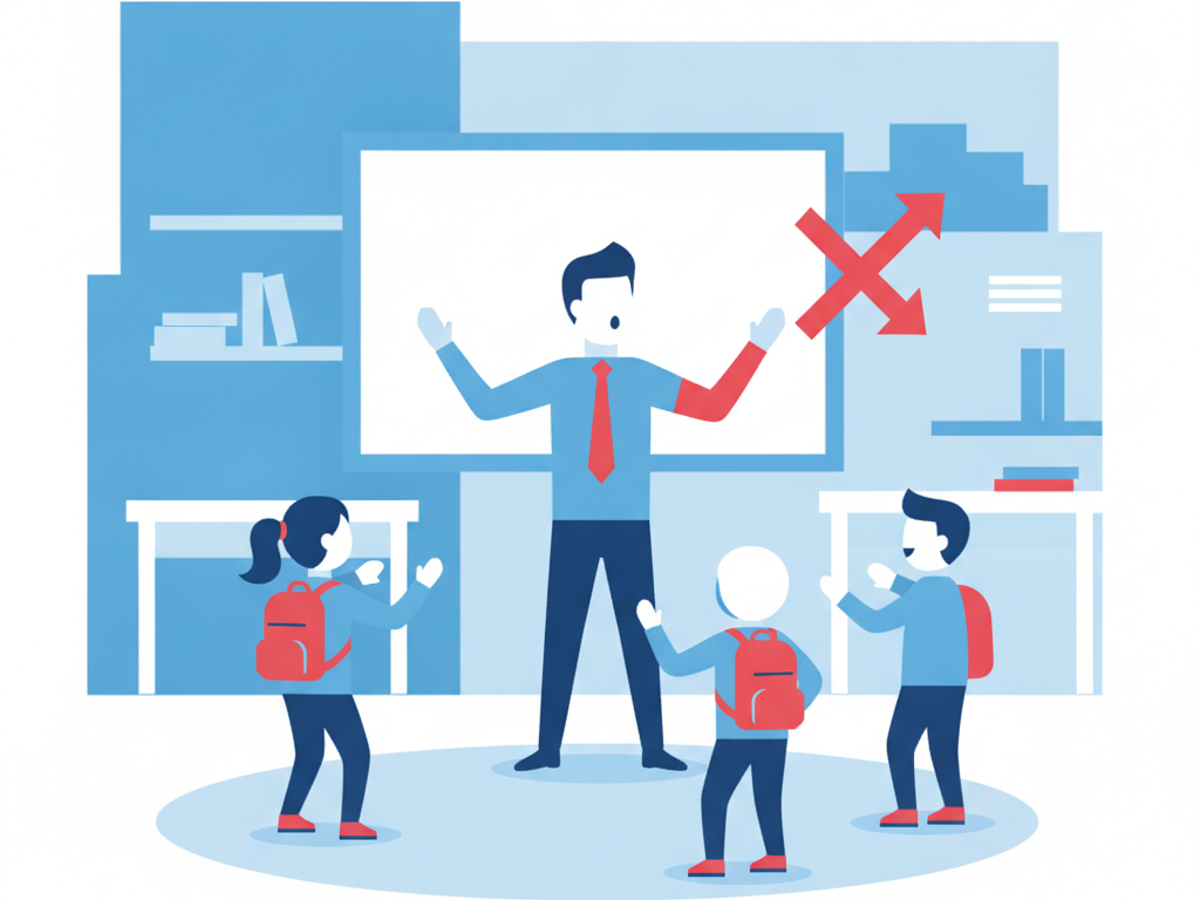
None of this makes an outside coach or specialist the wrong answer — it just clarifies what an outside coach needs to bring to be worth the seat time. The research above didn't find that outsiders are inherently worse teachers of soft skills; it found that a one-off outsider, without the standing relationship and daily continuity a classroom teacher has, has a harder hill to climb. A trained coach who shows up consistently, for the same group, over the same eight or ten weeks, is a different proposition than a single guest presentation — closer, structurally, to what made teacher-led delivery work in the first place: repetition, relationship, and a real curriculum, not novelty.
That's the actual decision in front of an administrator, and it's not "counselor or teacher or coach." It's whether the adult delivering the program — whoever they are — has three things: a structured curriculum they didn't have to build themselves, real training in how to deliver it (not a PD afternoon), and protected, recurring time with the same students. Programs that skip any one of those three tend to underperform regardless of the job title on the person leading it.
- Ask who is trained, specifically, not just who is "assigned." A staff member handed a curriculum with no coaching on delivery is functionally the same as an untrained volunteer.
- Ask about dosage and consistency, not just content. A single semester kickoff or a rotating cast of substitute presenters won't replicate what a stable, recurring instructor built into the schedule can.
- Ask whether the model can flex to your staffing reality. A school with a thin counseling office and a willing teacher needs a different delivery path than a school that wants a dedicated outside presence — a program that only works one way is a program that assumes your staffing looks like everyone else's.
This is the reasoning behind how Boost is structured to be delivered two ways: by a certified Boost coach brought in specifically to run the course, or by a school staff member — often a teacher, sometimes a counselor — trained directly on how to teach the 26 Boost Skills across People Skills, Character, and Healthy Mindset. Either way, the person in the room is working from the same 8-week structured curriculum, with the same training on delivery, not an outline they're expected to interpret on their own. In our own pilot cohort of roughly 30 students, 87% could clearly articulate that life is skill-based by the end of the 8 weeks, up from a small handful at the start — a result we'd attribute to the structure and repetition, not to any one job title standing at the front of the room.
The Takeaway
The question "who should teach soft skills at our school" doesn't have one universal answer, but the research narrows it usefully. Counselors are stretched past the point of being a reliable delivery engine — the national ratio is nearly 50% above ASCA's recommendation. Teachers have the relationship and daily continuity that appears to matter most, but most haven't been given the training or protected time to use it well. Outside coaches can close that gap, but only if they show up with the same consistency and curriculum depth a good teacher would bring, not as a one-time guest. The staffing decision that actually predicts results is training, time, and structure — the job title is secondary.
Frequently Asked Questions
Should School Counselors Teach Soft Skills or SEL Curriculum?
Counselors can be effective, but capacity is the real constraint. ASCA's recommended ratio is 250 students per counselor; the 2024-25 national average was 372:1, meaning most counselors don't have standing time to run a recurring skills curriculum on top of their existing caseload.
Are Teachers Better Than Outside Providers at Teaching SEL?
A widely cited meta-analysis reported by The Hechinger Report found teacher-led SEL lessons outperformed lessons led by counselors or outside presenters, likely because of the existing relationship and daily consistency teachers have with students. Critics note the underlying study quality varies, so this should inform the decision, not settle it alone.
Why Do Teachers Struggle to Deliver SEL Well Even Though the Research Favors Them?
An EdWeek Research Center survey of 499 teachers, principals, and district leaders found insufficient training and lack of time among the most-cited barriers. Teachers may be well-positioned relationally, but most schools haven't given them a real curriculum or real training to deliver it with.
Is an Outside Soft Skills Coach Worth Bringing Into a School?
Yes, when the coach delivers consistently to the same group over multiple weeks with a structured curriculum — not as a single assembly or guest visit. The research suggests continuity and relationship matter more than the outsider's title alone.
What Should Administrators Actually Look for When Choosing Who Delivers a Soft Skills Program?
Three things, regardless of role: a structured curriculum the instructor didn't have to build themselves, real training on how to deliver it, and protected, recurring time with the same group of students.