How to Build a School Culture Where Students Actually Talk to Each Other
- Students who can't talk to each other aren't anti-social. They're unpracticed. The skills required for genuine conversation have to be taught, practiced, and made normal, they don't develop by default in a phone-saturated environment.
- School culture is the product of what happens between students when no one is running a program. It's shaped by the hallway, the cafeteria, the classroom transitions. Most schools have never deliberately designed for what happens in those spaces.
- Three structural elements determine whether students actually talk to each other: intentional mixing (putting unfamiliar students together), conversational structure (giving them a reason and a frame), and adult modeling (adults who do what they're asking students to do).
- The schools that have strong social cultures didn't stumble into them. They built them through design, not inspiration.
- Soft skills instruction is the most efficient investment a school can make in culture, because it changes the behavior of every student at once, rather than addressing one interaction at a time.
What a Low-Conversation School Actually Looks Like
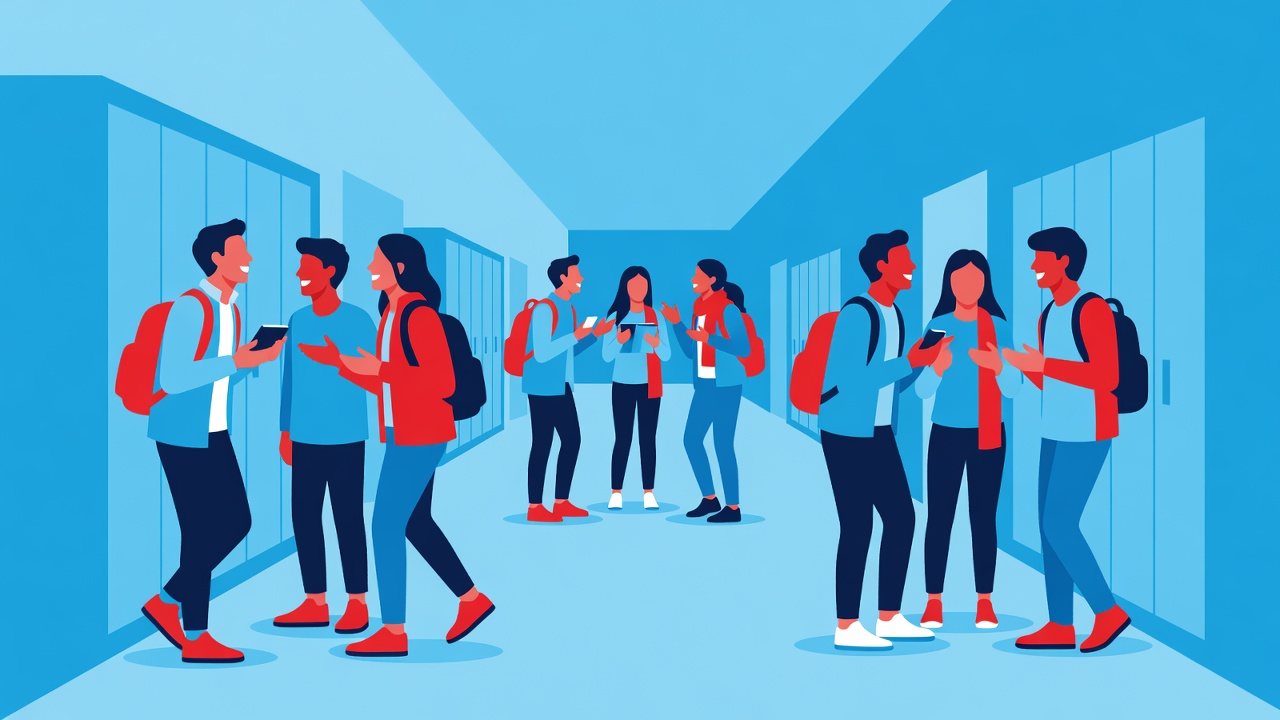
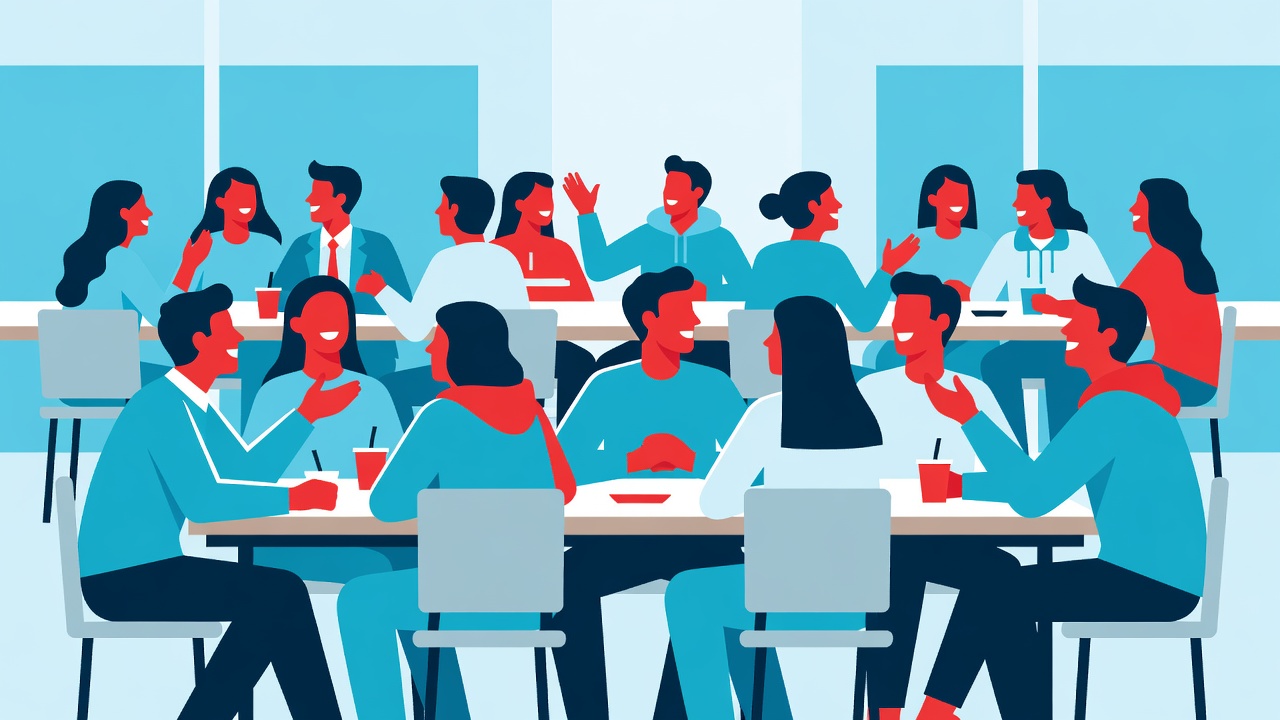
In a low-conversation school, students exist in proximity without making real contact. Hallways are full of people with earbuds in, eyes on phones, moving between spaces without acknowledgment. In class, teacher-directed discussion works, but student-to-student conversation is thin, stilted, or confined to social clusters that never cross. In the cafeteria, tables are segregated not by policy but by discomfort with the alternative.
These schools don't feel hostile. They feel hollow. Students are physically present but socially isolated in a way that feels normal because everyone is doing it.
The research consequences are significant: students in low-social schools report higher rates of loneliness, lower engagement with their education, and fewer of the interpersonal skills that workplace success requires. But the thing most administrators notice first is something less measurable: the energy in the building is flat.
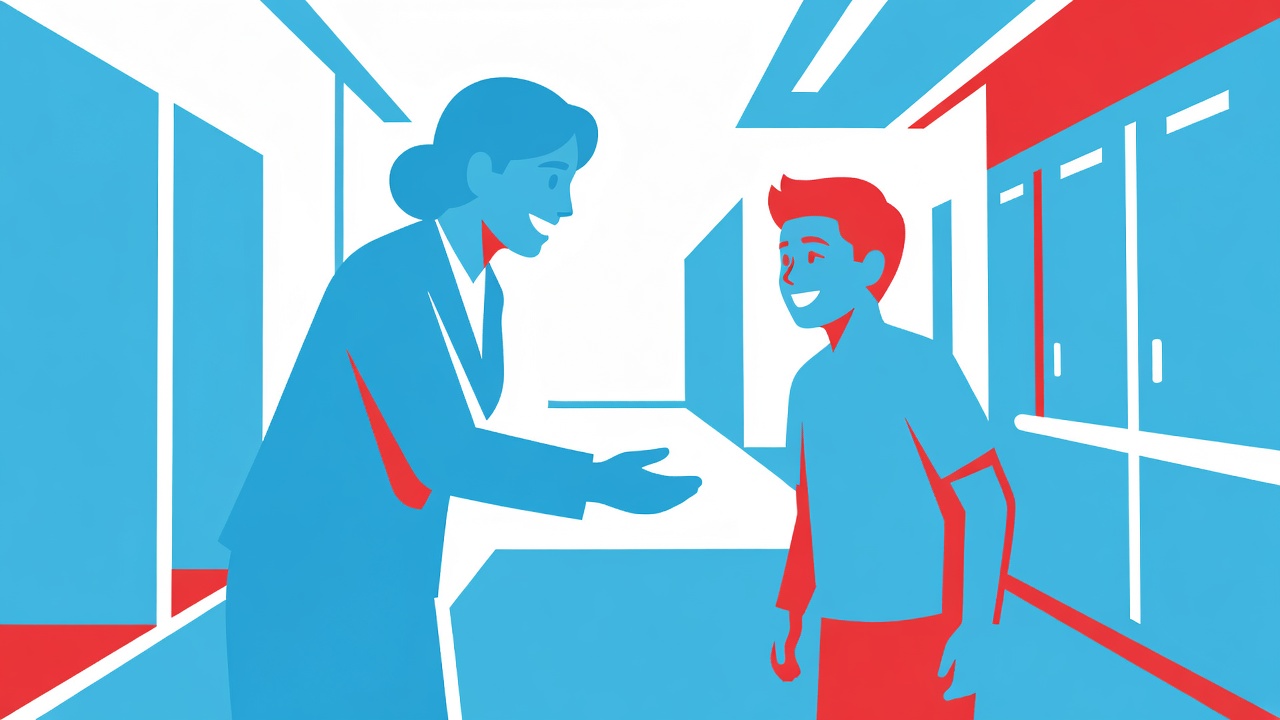
A high-conversation school feels different the moment you walk in. There is warmth in the hallways. Students acknowledge each other. Adults know students by name and act like it. The building feels like a community. That difference doesn't happen by accident.
The Three Design Elements
Intentional mixing. Students default to the familiar. Left to themselves, they gravitate to people they already know, clusters that are comfortable, spaces that are safe. Schools that want different social behavior have to design for it. This means deliberately putting unfamiliar students together in ways that have a purpose: project groups assembled across social clusters, advisory periods that include students from different grades, structured activities that require collaboration with people you didn't choose.
The mixing has to be repeated. A one-time exercise doesn't change the culture. Repeated, structured exposure to unfamiliar people, with enough relational scaffolding that the discomfort is manageable, builds the capacity for genuine connection with a wider circle.
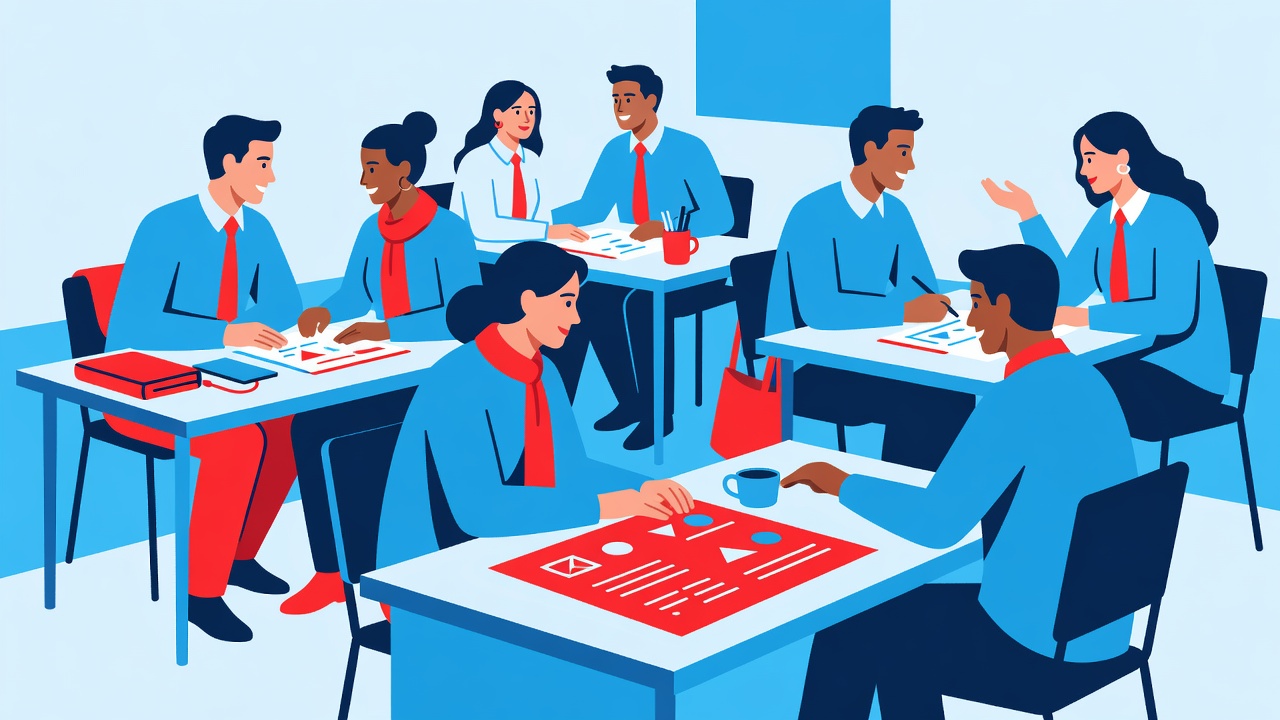
Conversational structure. Putting students in proximity doesn't make them talk. Giving them something to do together does. The best school conversations happen around a task: a shared problem, a project, a question worth arguing about. Structure reduces the social risk of initiating. Students who would never approach someone cold will engage someone who's working on the same thing.
This is why unstructured free time in a low-social school often produces more phone use rather than more conversation. Free time without structure defaults to the lowest-friction option, and the phone wins that contest almost every time. Schools that want real conversation design for it, with activities and tasks that require collaboration as a feature.
Adult modeling. Students watch how adults in the building interact. In schools where teachers know each other, engage each other in hallways, and demonstrate genuine warmth across the full range of people in the building, students notice. In schools where adults are transactional with each other and with students, students notice that too.
The most powerful culture signal a teacher can send is knowing students' names and using them. Not just the students in their class, but students they pass in the hall. This behavior is learnable. It can be part of professional culture, not just individual style.
What Soft Skills Instruction Does for School Culture
The most efficient investment in school culture is teaching students the specific skills that make real conversation possible.
Eye contact, genuine greeting, asking good questions, listening without interrupting, being friendly with a wide social circle, these are the building blocks of real conversation. Students who have been taught them explicitly and have practiced them have a fundamentally different relationship with social interaction than students who haven't. They're more comfortable approaching unfamiliar people. They ask follow-up questions. They listen long enough that the other person feels heard. The conversation that results is qualitatively different.
This is why the school culture effect of a program like Boost extends beyond the students who go through it. When 100 students learn to greet people with warmth and ask real questions, they are having different interactions with every person they encounter: peers, teachers, younger students, adults in the building. The culture shifts because the behavior in the common spaces shifts.
Schools that run Boost report that the change in hallway climate is one of the first things visible. Not because the program targeted hallway behavior, but because the skills it taught change what students do when they encounter each other.
Starting Points for Any School
Not every school has a soft skills program in place. But every school can take steps toward a higher-conversation culture starting now.
Name a person: direct every adult in the building to learn 10 names of students they don't teach or directly work with, and use those names over the next two weeks. Measure the response. Students who are named by adults they don't know well respond in ways that are visible.
Structure one conversation: in every advisory period this week, give students a question worth discussing and 8 minutes to discuss it with someone outside their usual group. Remove the phone option during that window. Debrief what they learned.
Redesign one space: look at a common space where students congregate and identify what would make real conversation more likely. Seating arrangement, acoustic design, the presence or absence of adult engagement. Make one change and observe what shifts.
These are not culture programs. They are design experiments. And they produce data about what works in this specific building with these specific students, which is better data than any consultant can provide.
Frequently Asked Questions
Why do students at the same school feel isolated from each other?
Phone use and social clustering explain most of it. Phones provide a low-friction social substitute that reduces the perceived need to initiate real conversation. Social clustering creates in-group comfort that makes unfamiliar people feel like effort. Both patterns reinforce each other and produce buildings where students are physically together but socially disconnected. Design and deliberate instruction can interrupt both patterns.
What's the difference between a positive school culture and a performatively positive one?
A performative culture has posters, slogans, and scheduled community events. A genuine culture has warm daily interactions between people who actually know each other. The difference is visible in the hallways and cafeteria on an unremarkable Tuesday, not during spirit week. Performative culture is a display. Genuine culture is a default.
How long does it take to change school culture?
Meaningful cultural shifts happen over one to two years of consistent structural change. The initial signs of change can be visible within weeks: a change in hallway energy, different behavior in advisory, students approaching unfamiliar peers more readily. But the deeper change, a default social warmth that doesn't depend on any program or event, takes sustained investment across multiple school years.
Does soft skills instruction actually change school culture, or is it just individual behavior?
Both. Individual behavior is the mechanism of cultural change. When enough individuals in a community behave differently, the culture shifts. Soft skills instruction at scale changes enough individual behaviors simultaneously to produce a visible cultural effect. Schools that run Boost consistently with a significant portion of the student body report changes in overall school climate, because the skills change what students do in every interaction, not just the ones supervised by a coach.
What role do teachers play in building a high-conversation school culture?
A central one. Student behavior follows adult modeling more than any policy or program. Teachers who know students by name, engage them warmly in hallways, and demonstrate genuine curiosity about their students model the behavior they want to see. Schools where teachers are cold, transactional, or disengaged from students outside their classroom produce students who are cold, transactional, and disengaged from each other.
References
- The Real Reason Students Can't Hold a Conversation Anymore
- How to Add Soft Skills Curriculum Without Adding to Teachers' Plates
- Loneliness and school disconnection research: https://www.ncbi.nlm.nih.gov/pmc/articles/PMC6381505/