Your Phone Policy Is in Place. Now What? Moving From Phone Bans to Phone Skills
- Even where phones are not allowed at all, half of students in a December 2025 RAND panel said they still checked a phone during class at least once a day.
- A national study of lockable pouches found phone use fell substantially, while average effects on test scores stayed close to zero.
- In a UK study, students in restrictive schools used phones less during the school day but showed no significant difference in mental wellbeing.
- A policy controls access. Phone skills for students teach them to manage the device once the pouch opens, and that is the layer most buildings have not added yet.
Picture a building that did everything right. The board approved the policy, the pouches arrived, and the first month went smoothly. Then the 3:05 bell rings, every pouch pops open, and students walk out into the one environment your policy cannot reach. If you are asking what phone skills for students look like once a policy is in place, the short answer is this: they are the learnable habits that let a teenager choose where their attention goes, with or without an adult enforcing it. This guide covers what a ban does, what it leaves undone, and how to add the missing layer.
What Does a Phone Ban Actually Do for Students?
A ban reduces phone use inside the building, and that is a real result worth protecting. In a nationwide analysis of lockable pouches, Allcott, Baron, Dee, Duckworth, Gentzkow, and Jacob found that adoption "substantially reduces phone use as measured by GPS pings and teacher reports" (Allcott et al., Stanford). The same paper reports that disciplinary incidents rose in the first year before fading, and that average effects on test scores were "consistently close to zero," with modest gains in high school math and small negative effects in middle schools.
Enforcement also drifts. A USC survey of teens found that phone use during the school day rose from 28% at the start of 2025-26 to 42% by the end, with the increase smaller under strict bell-to-bell policies (25% to 35%) than under flexible ones (32% to over 50%), as reported by K-12 Dive. So policy matters, and it also needs steady upkeep.
None of this says bans fail. It says a ban does one job: it controls access during the hours you control. The authors note they observe outcomes for at most three years, so longer-run effects remain an open question.
Why Phone Skills for Students Matter Beyond the Bell
Phone skills matter because most of a teenager's phone use happens where your policy does not apply. In the UK study by Goodyear and colleagues, 1,127 students aged 12 to 15 in 30 schools showed no significant difference in mental wellbeing between restrictive and permissive schools, even though students in restrictive schools did use phones less during school hours (National Elf Service summary of Goodyear et al., The Lancet Regional Health Europe). The authors concluded that efforts should "focus on reducing phone and social media use beyond school hours, rather than solely restricting in-school usage." The study was cross-sectional and self-reported, so it cannot show cause.
Students are also quietly working around rules. RAND's American Youth Panel found that 56% of students tried at least one tactic to get around cell phone rules, from keeping phones in pockets to using smartwatches (RAND). Compliance that depends on being watched is fragile.
Here is a small signal from our own work. In a Boost pilot of about 30 students, about 21 named phone use as the skill they most wanted to keep working on [Internal: Boost Brand Bible v2]. That is a small, self-reported pilot, not proof, but it points the same direction as the research: students know the phone is a problem. They are not oblivious. They are untaught.
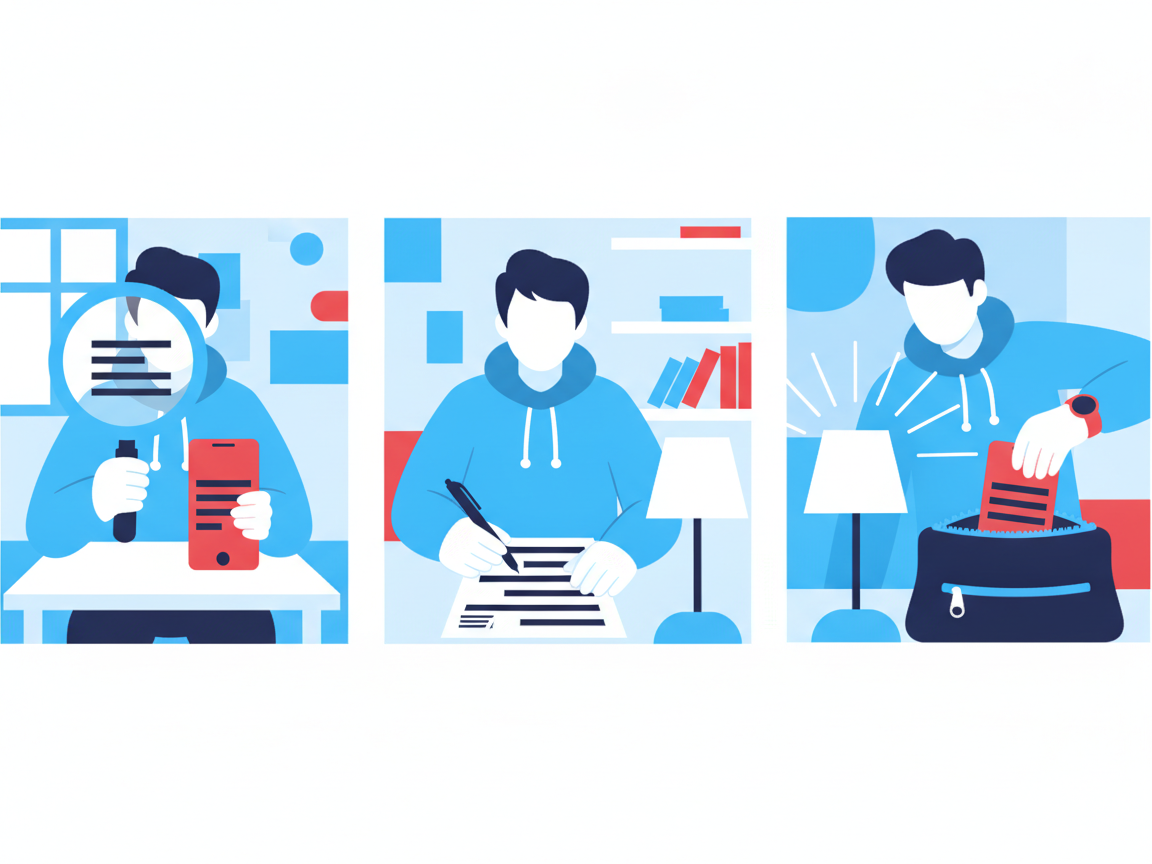
Three Lessons That Build Phone Control
Three lessons do most of the work, and they follow the order we use in our "You vs. Your Phone" week [Internal: Boost Brand Bible v2]. We cover that week in more detail in how Boost teaches phone control without banning a single device.
Lesson one: understand how the design works. Students learn that notifications, infinite scrolling, and autoplay are built to keep them on the screen, and that the brain cannot truly multitask, so texting while doing homework costs focus [Internal: Master Spreadsheet of Content]. The goal is not scare tactics. It is naming the pull so it stops feeling like personal weakness.
Lesson two: measure your own time. Students track their screen time for a day or two on a worksheet. The arithmetic is the lesson: seven hours of screen time in a 16-hour waking day is roughly 40% of the day [Internal: Master Spreadsheet of Content].
Lesson three: build a personal plan. The plan uses concrete moves such as charging the phone outside the bedroom, putting it in a zippered bag during focus blocks (a paper bag works too), and keeping a short technology log that asks whether the goal was met and how it felt [Internal: Master Spreadsheet of Content]. Students own the plan, which is why it lasts.

How Do You Get Students to Buy In?
You get buy-in by teaching the why before the how. Pew's survey of 1,458 teens found that only 41% support banning cellphones during class and just 17% support an all-day ban, compared with 74% and 44% of adults (Pew Research Center). Teens are not sold on the rules, so the rules alone will not carry them.
Our approach is to connect phone control to what students already want. Before teaching a single skill, Boost asks each student to picture the life they want, then shows that every version of that picture depends on the same skills [Internal: Boost Bible]. Ask a student what sleep, focus, and conversation have to do with that picture, and the plan becomes theirs instead of yours.
The conversation itself matters as much as the content. We lay out how to open it in how to have the phone conversation with students that actually changes behavior.

What Staff Routines Reinforce Phone Skills?
The routines that work are the ones every adult in the building repeats the same way. RAND found that only 17% of students with very strict teachers kept phones in their pockets as a workaround, versus 50% of students with minimally strict teachers (RAND). Inconsistency is where evasion lives.
Three habits help. Use the same language for the skill across classrooms, so students hear "that is your plan, are you using it?" instead of a different rule in every room. Name the skill when you see it working. And model it: staff who zip their own phones away during a meeting teach more than any poster. These are practical suggestions from our experience in schools, not findings from a study.

How Do You Measure Progress Beyond Confiscation Counts?
Measure the skill itself, not only the number of phones taken. Confiscations tell you about enforcement. They do not tell you whether a student can manage a phone alone.
Start with a baseline and a repeat. Boost's "Striving to 100" assessment has the student and an adult sponsor rate the student from 1 to 5 across about 20 skill questions, including phone and technology use, at the start and end of the program [Internal: Boost Brand Bible v2]. Pair that with student technology logs, teacher observations of hallway and lunchroom conversation, and your existing discipline data. We have no independent outcome data yet, so treat any self-assessment as a signal, not a verdict.
If you want to add a skills layer to your phone policy, our team is glad to talk through what fits your schedule. You can schedule a discovery call and bring your questions.

Frequently Asked Questions
Do School Phone Bans Work?
They work for reducing phone use during the school day. A national pouch study found substantial reductions in use but average test score effects close to zero, and the authors say longer-run effects are still unknown.
How Do You Teach Students to Control Phone Use?
Teach it like any skill: explain why it matters, have students measure their own use, and let them build a personal plan they practice. In our curriculum that includes a screen-time worksheet, a technology log, and keeping the phone out of the bedroom at night.
What Comes After a Phone Ban?
A skills layer that teaches students to manage the phone on their own, plus consistent staff routines. The policy covers the hours you control, and the skill covers the rest.
References
- Allcott et al., The Effects of School Phone Bans: National Evidence from Lockable Pouches
- K-12 Dive, Cellphone ban enforcement may be waning over school year
- National Elf Service, Smartphone bans in schools are not associated with better mental wellbeing
- RAND, Stricter Cell Phone Policies Associated with Reductions in Student Phone Use
- Pew Research Center, How US teens view school cellphone bans
- How Boost Teaches Phone Control Without Banning a Single Device
- How to Have the Phone Conversation With Students That Actually Changes Behavior
Ready to bring Boost to your school?
Schedule a discovery call to see how the Boost curriculum fits your students.
Schedule a Discovery Call