
Setting Phone Rules at Home That Match What Schools Are Teaching
- 93% of adults in a 2026 Brookings survey preferred a bell-to-bell ban or no phone use during classes for their teens, so most families already back the school rule.
- Only 47% of parents say they limit the time their teen spends on a phone, per Pew Research Center, which leaves a gap between school and home.
- Four simple rules cover most households: phones out of bedrooms overnight, a screen-free window before bed, protected family time, and a written agreement.
- Teens notice what adults do. 46% say a parent is at least sometimes distracted by a phone mid-conversation.
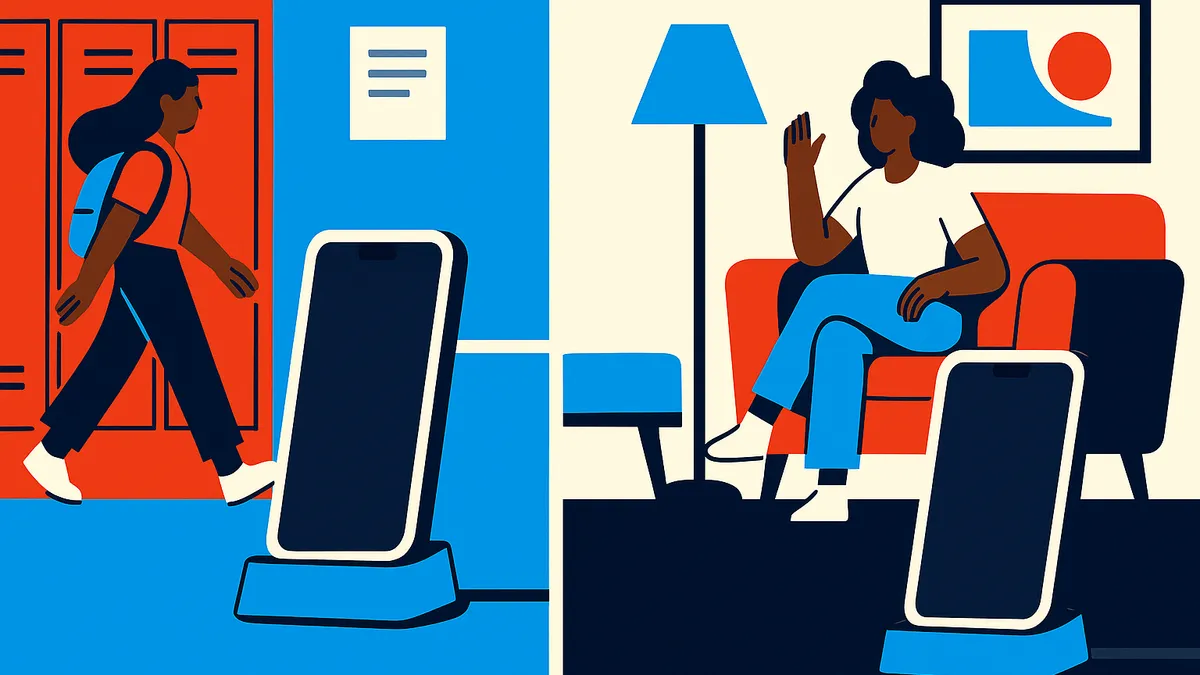
Picture a student who puts her phone in a pouch at 8:05 every morning without complaint. At 4:00 she is on the couch with it, and at 11:00 it is on her pillow. Nobody told her the school rule and the home rule were supposed to be the same idea. If you are an administrator fielding parent questions, phone rules at home for teenagers are now part of your job, whether you wanted them to be or not. This guide gives you language and a short rule set you can share with families, built on the evidence rather than on panic.
Why Mismatched Phone Rules Backfire
Mismatched rules teach teens that phone expectations depend on who is watching, not on what the skill actually requires. That is our reading of the pattern, not a finding from a single study, but the numbers show how wide the gap can be. Brookings surveyed nearly 1,100 adults and nearly 400 teens in 2026 and found that 98% of students attend schools with cellphone restrictions, and 76% of teens preferred some form of restriction during the school day (Brookings).
At home the picture is less consistent. Pew Research Center found that 47% of parents limit the amount of time their teen can be on a phone, while 48% do not (Pew Research Center). Schools set a clear standard during the day, while about half of parents set no time limit at home.
A fair caution comes from the same Brookings survey: most teens and their caretakers believe cellphone restrictions are not having major positive or negative effects on students. Rules alone are not the answer. That is why we teach the skill, not just the restriction. We have covered this before in phone bans are only half the answer, and the same applies at home.
Four Phone Rules at Home Most Families Can Use
Four rules cover most of what families need, and each one is easy to explain to a teen. These are practical suggestions we offer, and only the first two come directly from pediatric guidance.
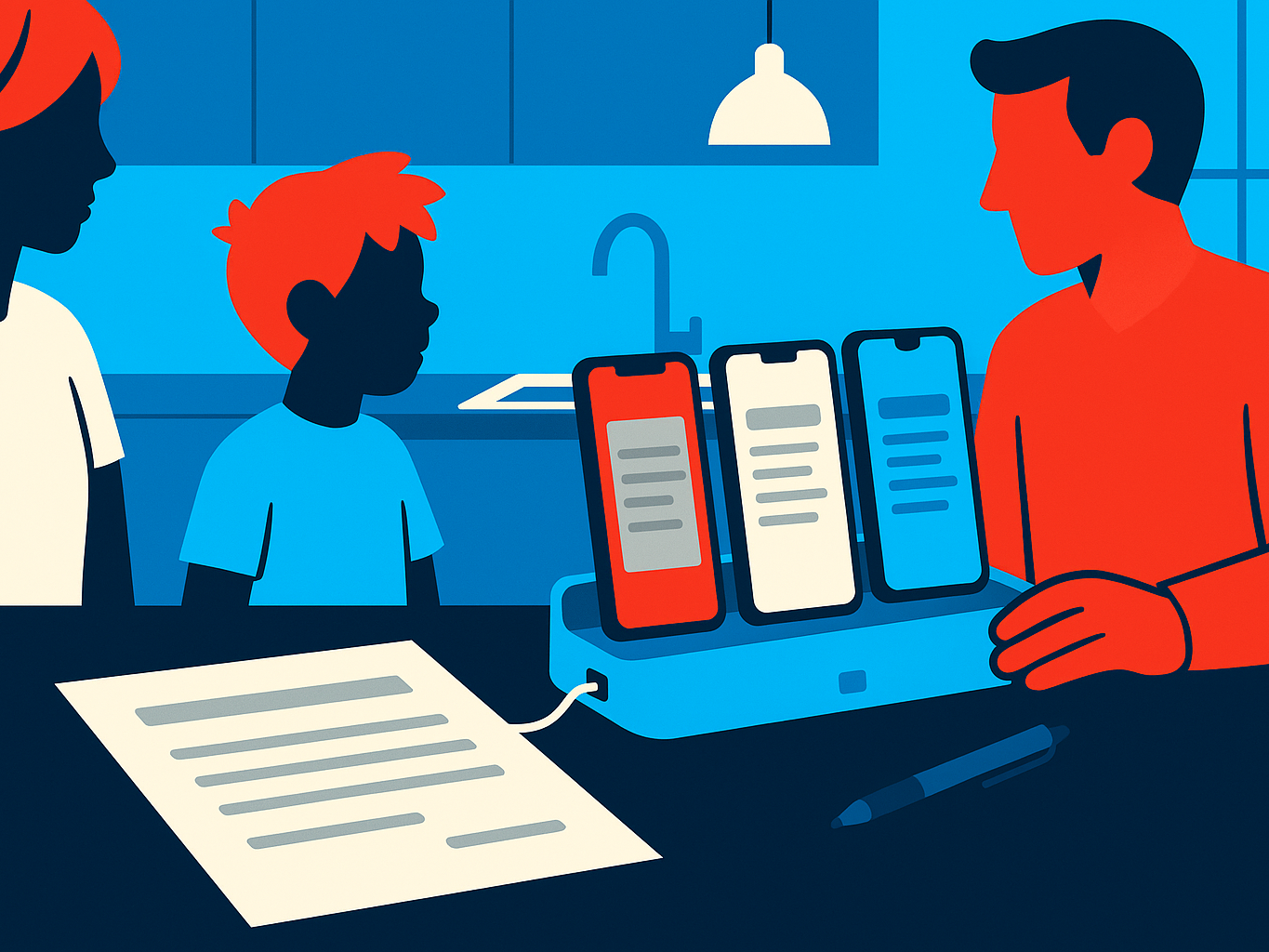
- Phones charge outside the bedroom overnight. The American Academy of Pediatrics advises families to "keep phones and screens out of your child's bedroom at night" (AAP). A shared charging station in the kitchen makes this the family's rule, not a punishment.
- A screen-free window before bed. The same AAP guidance says to avoid screens 1 hour before bed.
- Protected family time. Meals and shared activities are phone-free for everyone, adults included.
- A written agreement. One page, signed by parent and teen, that states the school expectation (phones away during class) and the home expectation in the same language.
Notice what is missing: a long list of apps, hours, and exceptions. The more complicated the rule set, the more room a teen has to negotiate it.

How to Introduce Phone Rules Without a Fight
Introduce the rules by explaining the why first and inviting the teen to help shape the details. We teach this order in our own classroom: students are more likely to engage when they understand how a skill connects to what they want from their lives [Internal: Boost Program Research Paper]. A teen who hears "because I said so" will push back. A teen who hears "this protects your sleep and your focus, so what do you think a fair version looks like?" has something to work with.
Expect the pushback to be about trust and autonomy, and take it seriously. Pew found that 62% of parents of 13- to 14-year-olds limit phone time, compared with 37% of parents of 15- to 17-year-olds (Pew Research Center). Families loosen the rules as teens get older, and that is reasonable. Say so up front: "These rules are the starting point, and you earn more room by showing you can handle it."
Coach before you punish. If a teen breaks an agreement, ask what got in the way and adjust the plan before reaching for a consequence. Our post on how to have the phone conversation with students walks through the language, and the same questions work for parents.

Modeling What You Ask For
Teens learn the phone rules mostly by watching adults follow them, or not. Pew found that 46% of teens say their parent is at least sometimes distracted by their phone when they are trying to talk to them, while only 31% of parents acknowledged doing it (Pew Research Center). That mismatch is worth sharing with parents gently, because they rarely see their own behavior the way their kids do.
One of our favorite images in the Boost curriculum fits here: "turn the lights out about you." When you enter a conversation, switch off your own agenda and give your full attention to the other person [Internal: Boost Brand Bible v2]. A parent who puts the phone face down at dinner is teaching exactly that skill, which is more persuasive than any rule on the refrigerator.
Parents also do not need to be perfect. Saying "I picked up my phone during dinner, and that is what I am working on too" is a model of the growth mindset we want students to adopt.
What Schools Can Share With Parents and When to Review the Rules
Schools can share three things: the school policy in plain words, the reasons for it, and a one-page template for a home agreement. You do not need to enforce anything at home. You only need to make the connection obvious, so families can choose to line up.
If your school teaches the skill directly, say what it covers. Week 5 of the Boost course, "You vs. Your Phone," looks at algorithms and distraction, sleep and focus, the effect of phones on people skills, and cyberbullying and personal brand, and it ends with each student building a personal phone-control plan [Internal: Boost Brand Bible v2]. In our small pilot of about 30 students, phone use was the skill students most wanted to keep working on, chosen by about 21 of them [Internal: Boost Brand Bible v2]. That is a small, self-reported group, not proof, but it suggests many teens know the problem and want a plan. Our look at how Boost teaches phone control without banning a single device explains the approach.
Finally, build in a review. Ask families to revisit the agreement each semester or at a birthday, loosening what the teen has earned and tightening what has slipped. If you want to see how a dedicated course could back up your parent communication, you can schedule a discovery call.

Frequently Asked Questions
What Phone Rules Work for Teens at Home?
Keep phones out of bedrooms overnight, set a screen-free window before bed, protect family time, and write a short agreement. The AAP advises keeping phones and screens out of a child's bedroom at night and avoiding screens 1 hour before bed.
How Do We Align Home Rules With School Policy?
Use the same language in both places. Share the school policy and its reasons with parents, and offer a one-page home agreement that states the school expectation and the home expectation together.
How Should Parents Handle Pushback?
Explain the why, invite the teen to shape the details, and coach before punishing. Pew found that parental limits drop from 62% for 13- to 14-year-olds to 37% for 15- to 17-year-olds, so plan to extend trust as teens show responsibility.
Do Parents Need to Follow the Rules Too?
Yes. 46% of teens say a parent is at least sometimes distracted by their phone during a conversation, so adult habits matter as much as the rule itself.
References
- Brookings: Survey on Parent and Teen Support for School Cellphone Bans
- Pew Research Center: How Teens and Parents Approach Screen Time
- American Academy of Pediatrics: Screen Time Affecting Sleep
- Phone Bans Are Spreading Across America, But They Are Only Half the Answer
- How to Have the Phone Conversation With Students That Actually Changes Behavior
- How Boost Teaches Phone Control Without Banning a Single Device
Ready to bring Boost to your school?
Schedule a discovery call to see how the Boost curriculum fits your students.
Schedule a Discovery Call