The Listening Gap: Why Students Can't Listen Anymore — and How to Actually Fix It
- Eighty-eight percent of teachers say student attention spans are getting shorter. Listening isn't just declining. It's being displaced by habits that reward rapid-fire input over sustained attention.
- Active listening is a skill with specific components. It can be taught, practiced, and improved. It is not a personality trait or a fixed capacity.
- Students who struggle to listen aren't being disrespectful. They're doing what their brains have been trained to do. The problem is structural, not moral.
- Listening is the foundation of every interpersonal skill. Students who can't listen can't ask good questions, give real empathy, or build the kind of relationships that carry weight after high school.
- Boost teaches "Asking Questions and Listening" as an explicit, named skill with specific techniques. Students practice it. And it changes how they show up in every conversation.
What Teachers Are Noticing
Something has shifted in the last several years. Teachers who have been in classrooms for a decade describe it consistently: students are harder to hold. Not harder to engage momentarily, but harder to sustain. They get the opening hook. They lose the thread by the third paragraph.
It isn't defiance. Most students genuinely want to be present. They just can't stay there.
The data backs up what teachers are experiencing. Eighty-eight percent of respondents in a 2025 international survey of more than 3,000 teachers said their students' attention spans are getting shorter. Seventy-five percent of K-2 teachers in the United States said attention spans dropped noticeably after the pandemic, when screen-based learning spread fast and students developed habits around short-form consumption that didn't get unlearned when the buildings reopened.
The listening gap isn't a rumor. It's a documented, measurable shift in how students process sustained input.
Why Listening Is Harder Than It Used to Be
Active listening requires more from the brain than people realize. It requires holding incoming information in working memory, filtering out distractions, tracking the speaker's emotional tone and body language, generating a response without interrupting, and suppressing the urge to interject. These are not passive activities. They are cognitive work.
Short-form content trains the brain to do the opposite. TikTok, YouTube Shorts, Instagram Reels: these platforms deliver stimulation in seven to thirty-second bursts, with a new hit available the instant one ends. The brain adapts. Over time, it becomes less comfortable with the slower pace and uncertainty of real-time conversation. Research published in a 2024 cross-sectional survey found that students who spent more time watching short-form videos had significantly higher rates of inattentive symptoms. The format trains impatience.
This doesn't mean students are damaged. It means they have developed habits optimized for one kind of environment that happen to work against them in another. That's fixable. But it requires explicit instruction, not just exposure.
The instinct many adults have, to just make students sit through more lectures and hope listening improves, doesn't work. Passive exposure to situations that require listening does not build listening as a skill. Practice does.

What Active Listening Actually Requires
The phrase "active listening" gets used a lot without being defined. That vagueness is part of the problem. Students can't practice a skill they can't describe.
Listening, done well, is made up of several observable behaviors:
Eye contact. Not a stare, but the kind of directed attention that signals: I'm here, I see you, what you're saying matters.
Body orientation. Facing the speaker. Not angled away. Not phone in hand or hand on phone in pocket. Full-body presence is a signal the other person reads whether the listener means to send it or not.
Non-interruption. Holding the response. This is harder than it sounds. Most people aren't listening during someone else's sentences. They're waiting for their turn. Real listening means staying with the speaker's words until they finish.
Reflection and questions. Demonstrating that what was said was received. "So you're saying that..." or "What made you decide to..." These moves show the speaker that they were actually heard.
At Boost, listening appears under the interpersonal skills category, paired with asking questions, because the two are inseparable. A student who listens well naturally asks better questions. A student who asks good questions creates the conditions for listening. The skills compound.
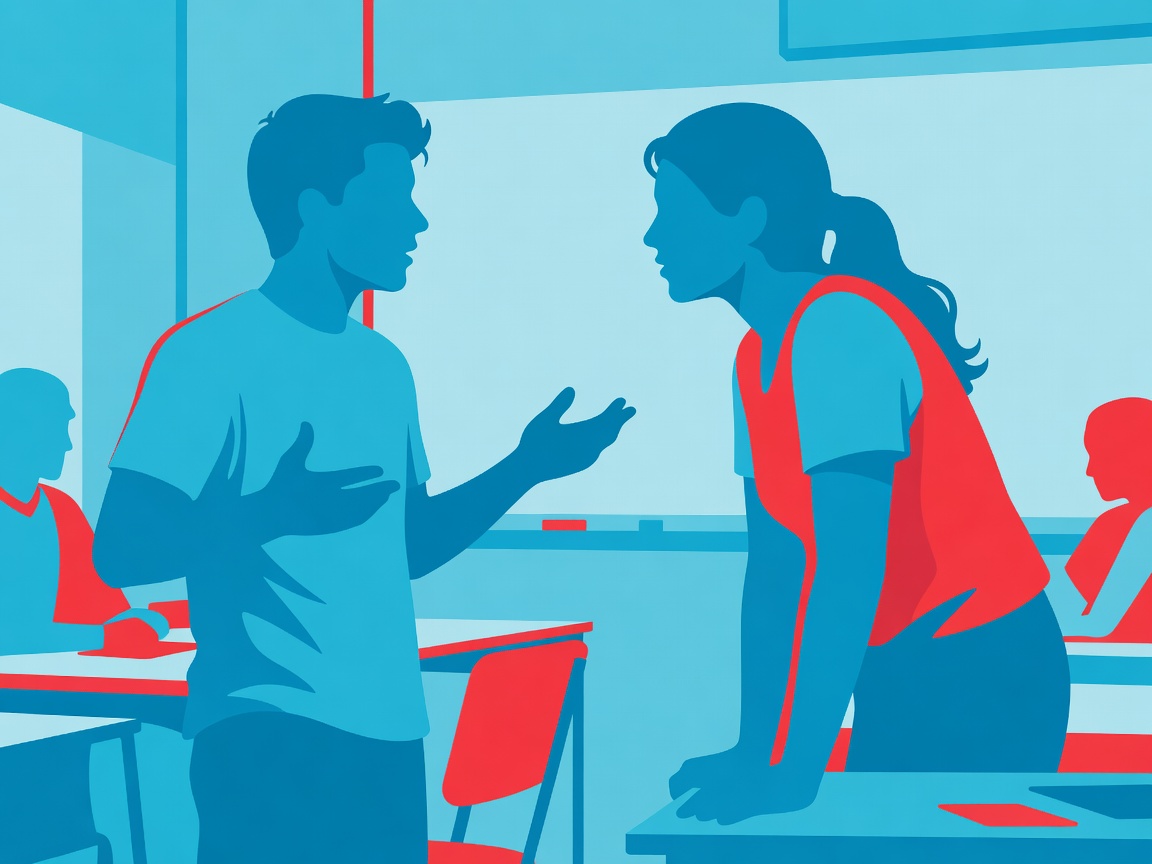
Four Classroom Practices That Rebuild It
The research on active listening training is encouraging: 8 to 10 hours of focused instruction has been shown to reduce miscommunication and interpersonal conflict significantly. You don't need a semester. You need intentional practice, repeated across sessions.
Here are four practices that work.
Named listening. Before a discussion or pair activity, name what you want students to do. Not "listen carefully" but: "Your job right now is to make eye contact, not interrupt, and at the end be ready to say back what your partner said in one sentence." Naming the specific behaviors changes what students pay attention to.
Listening pairs with reflection. Students pair up. One speaks for 90 seconds on a prompt. The other listens. Then the listener reflects back the substance of what they heard before the speaker confirms, corrects, or adds. Debrief: what was hard, what surprised you, where did your attention go. The debrief is where the skill-building actually happens.
Phone-away structured time. Set a block of classroom time where the specific instruction is: no phone, full presence, and here's why. Not a rule imposed but an experiment. Students track what they notice about their own attention. The data from their own experience is more convincing than any statistic.
Ask and listen as an assignment. Send students out with a simple instruction: have one conversation today where your only job is to listen and ask one follow-up question. No advice, no stories about yourself, no interruption. Report back on what happened and what it felt like. Students almost always come back with something. The skill makes itself visible in the real world quickly.
These practices don't require a Boost program to run. But they do require a teacher who treats listening as a teachable skill and builds in time for practice and reflection. That intentionality is the ingredient most classrooms are missing.
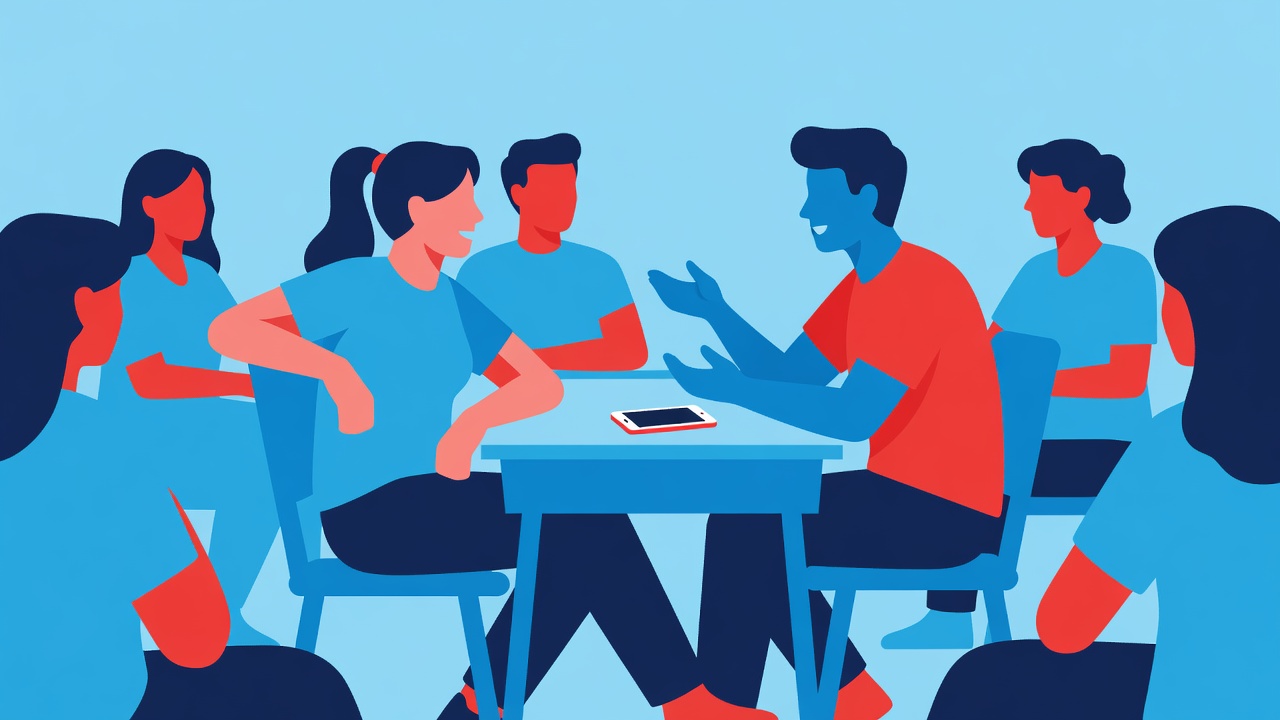
Why Listening Unlocks Every Other People Skill
Listening sits at the center of the interpersonal skills cluster because every other skill in that cluster depends on it.
Empathy. You cannot empathize with someone you haven't heard. Empathy requires taking in another person's experience accurately. That starts with listening.
Asking questions. The best follow-up questions are ones that emerge from what the other person said. Students who aren't listening are asking questions from their own agenda, not from the conversation in front of them.
Non-verbal communication. You can only read someone's body language if you're paying attention to them. A student who is half-present misses the signals that tell them how the conversation is actually going.
Conflict resolution. Almost every interpersonal conflict has a listening failure somewhere in it. Someone didn't feel heard. Someone assumed without checking. Someone stopped tracking what the other person was saying. Teaching listening is, in part, teaching conflict prevention.
This is why we don't just teach listening as a standalone skill. It connects. Students who develop it start to notice how many other situations it improves. That generalization, the recognition that one skill has effects they didn't expect, is a big part of what shifts the belief from "I'm just not a good listener" to "listening is something I'm building."
That belief shift is the whole game. Students who believe their listening can improve work on it. Students who believe it's fixed don't.
As we've written in our piece on the 14-24 brain window, the adolescent years are the best time to build habits like this. Listening practiced consistently during high school doesn't just improve conversations now. It shapes how students show up in every relationship and workplace for the next decade.
The listening gap is real. And it's closable. Not with more passive exposure, but with instruction, practice, and the consistent message that listening is a skill students can actually get better at.
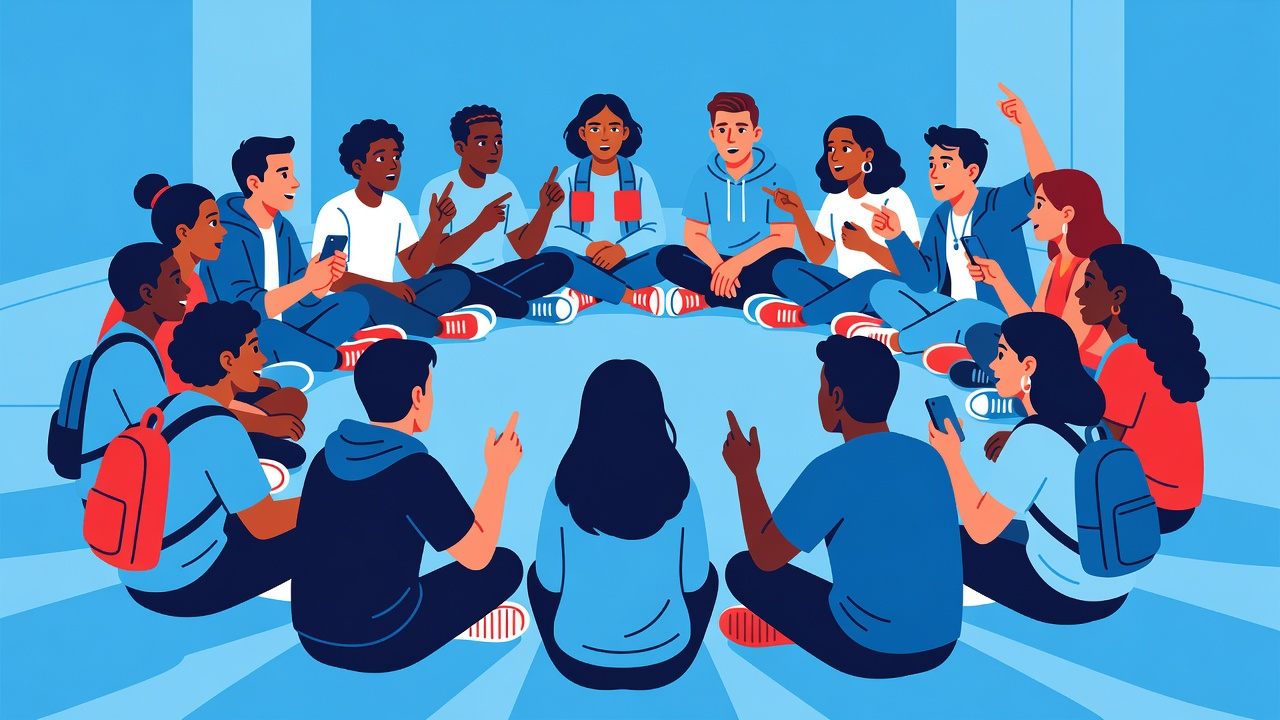
Frequently Asked Questions
Can active listening really be taught to teenagers, or is it a personality trait?
Active listening is a skill, not a trait. It is made up of specific, observable behaviors: eye contact, body orientation, not interrupting, reflecting back what you heard. Each of those can be named, practiced, and improved with feedback. Students who believe they are "bad listeners" have usually just never been taught what listening requires. Once they are, improvement follows quickly.
Why are students worse at listening than they used to be?
The most documented factor is short-form content consumption. Platforms optimized for seven-to-thirty-second content train the brain to process rapid stimulation rather than sustain attention. Students who spend hours daily on these platforms develop habits that work against them in conversations, classrooms, and any context that requires staying present. The habits can be changed, but not by ignoring them.
How much time does it take to meaningfully improve listening skills?
Research suggests 8 to 10 hours of intentional practice with feedback can produce measurable change. That doesn't have to happen in one block. Distributed across a semester, in the form of structured pair activities and reflection, it accumulates. The key is intentionality: naming the skill, building in practice time, and debriefing afterward.
How does listening connect to other soft skills?
Listening is foundational to most interpersonal skills: empathy requires hearing someone accurately, asking good questions requires following what the other person said, reading non-verbal cues requires being present enough to notice them. Students who improve their listening often find improvements in their relationships and conflict-handling without those being directly taught. The skill generalizes.
How does Boost teach listening?
Boost includes "Asking Questions and Listening" as an explicit, named skill in the interpersonal skills category. Students learn the specific components of listening, practice them in structured pair activities with a coach present, and get direct feedback. By the final day of the program, students can describe what active listening requires and demonstrate it. That's a different outcome than having heard a lecture about why listening matters.
References
- International teacher survey on student attention spans, 2025: https://hechingerreport.org/kids-attention-spans-teachers-are-trying-to-build-them-back-up/
- Short-form video and inattentive symptoms, 2024: https://www.ncbi.nlm.nih.gov/pmc/articles/PMC12230358/
- Active listening statistics and retention research: https://gitnux.org/active-listening-statistics/
- Phone Bans Are Spreading Across America, But They're Only Half the Answer
- The Real Reason Students Can't Hold a Conversation Anymore