A Practical Guide to Teaching Conflict Resolution in High School
- Conflict resolution is one of the most practically valuable skills a student can leave high school with, and one of the least taught. Most schools address conflict through discipline, not instruction.
- The skills required to resolve conflict professionally are learnable and specific: describing the problem without attacking, staying in a difficult conversation, and working toward a workable outcome.
- Role-play is the only instruction method that actually builds this skill. Students who understand conflict resolution conceptually but have never practiced it under simulated pressure are not prepared.
- The goal is not students who never have conflict. It's students who know what to do when they do.
- Schools that build conflict resolution into their curriculum reduce disciplinary incidents, build stronger peer relationships, and send graduates into the workforce with a skill most adults don't have.
Why This Has to Be Taught, Not Just Expected
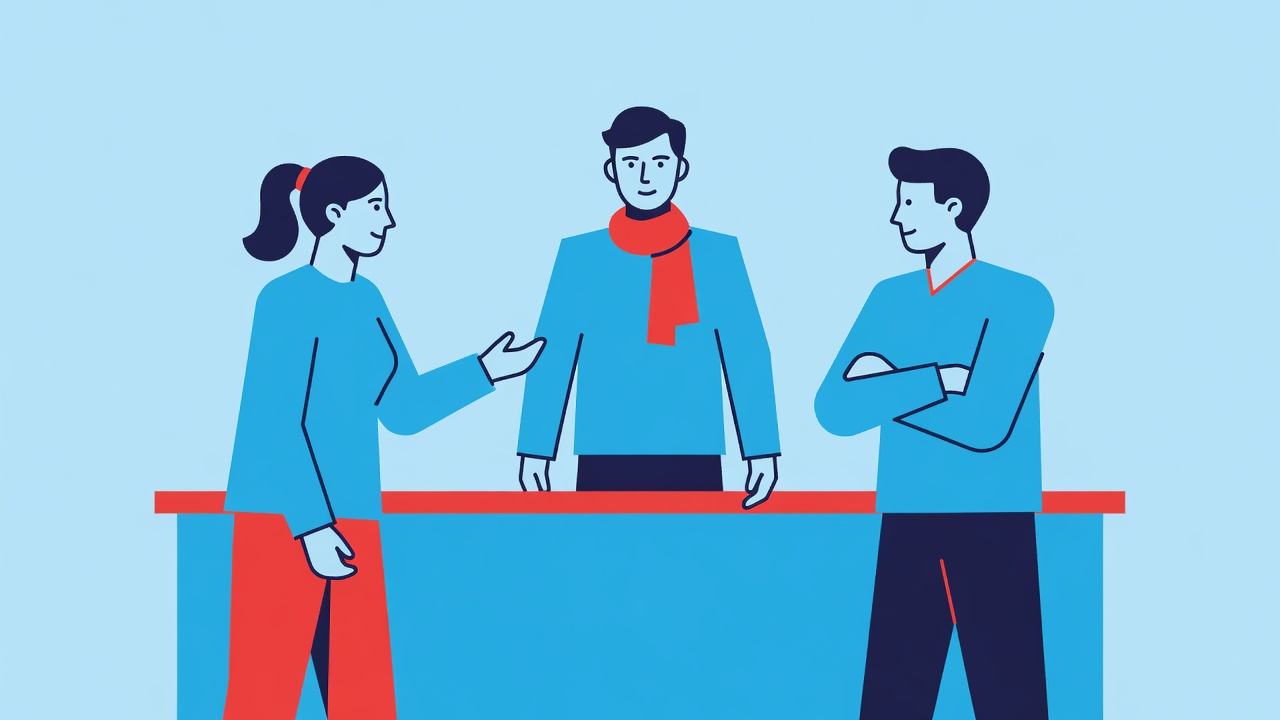
Schools expect students to handle conflict maturely without ever teaching them what that looks like. When conflict happens and the student handles it badly, the school's response is usually disciplinary. The consequence is real and the behavior is addressed. The skill gap that produced the behavior is untouched.
This is how schools end up with the same students in the office every semester. Not because the students are unusually difficult, but because they keep hitting the same situation with the same missing tools and getting the same outcome. The consequence produces compliance in the moment. It doesn't build the skill that changes the next moment.
Teaching conflict resolution explicitly changes this. Students who have been taught the specific steps of a direct, professional conflict conversation, and who have practiced those steps in scenarios where it was uncomfortable, have something to reach for the next time a conflict arises. They don't have to improvise. They have a process.
The Four Steps of a Conflict Resolution Conversation
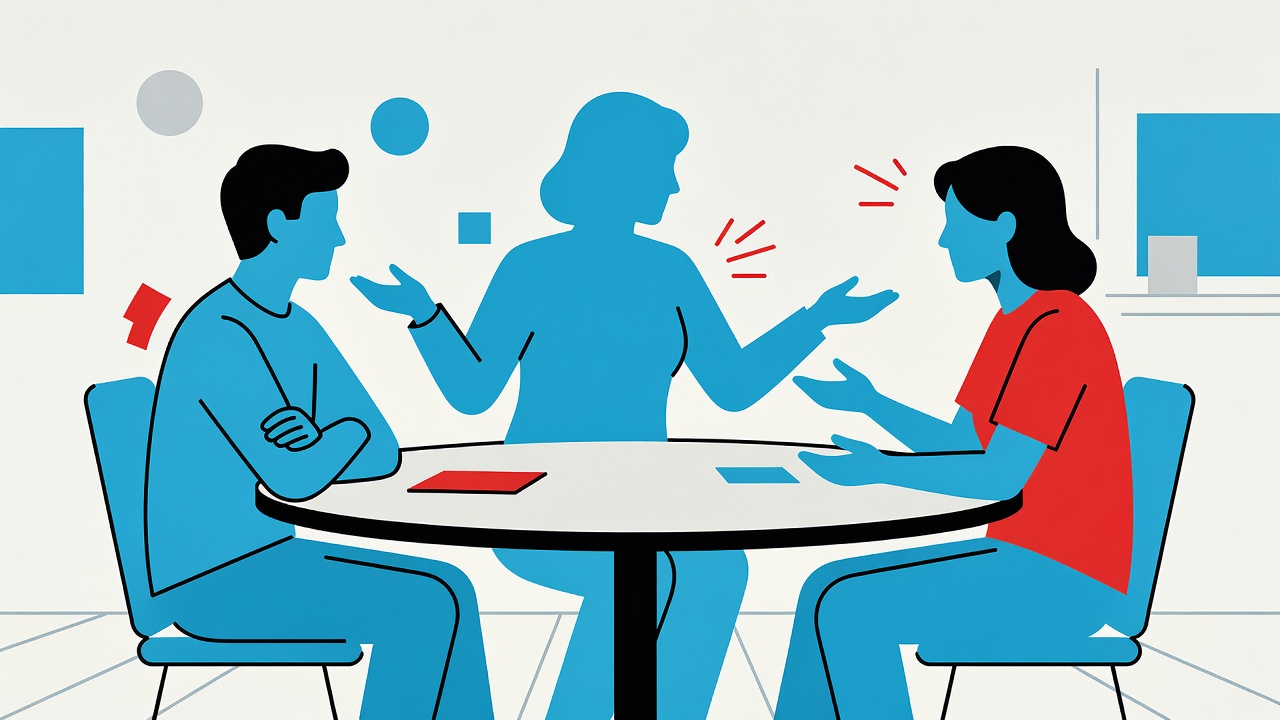
Effective conflict resolution follows a structure. Teaching the structure explicitly, then practicing it repeatedly, is how the structure becomes available under pressure.
Step 1: Choose the right time and place. Conflict conversations don't work in the hallway between classes, in front of peers, or immediately after an incident when emotions are still high. The first skill is recognizing when and where to have the conversation. Students practice identifying conditions that make a direct conversation possible: privacy, enough time, and some emotional distance from the immediate incident. Choosing to wait is not avoidance. It's timing.
Step 2: Describe the problem without attacking. The most common opening move in conflict conversations is a generalization or an attack: "You always," "You never," "You're so." None of these produce resolution. They produce defensiveness. Students learn a specific alternative: describe the specific behavior that created the problem, in the specific situation where it happened, and describe the impact on you. "When [X happened], I felt [Y]. I'd like to talk about how we handle it going forward." That structure is learnable and repeatable. Students who practice it have a tool. Students who don't improvise and almost always attack.
Step 3: Stay in the conversation when it gets hard. The hardest moment in a conflict resolution conversation is not the opening. It's when the other person gets defensive, emotional, or escalates. Most students respond to this by either escalating in return or shutting down and leaving. Both end the conversation without resolving the problem. The skill is staying: acknowledging the other person's reaction without abandoning the substance. "I hear that you're upset. I'm not trying to attack you. I'm trying to figure out how we move forward." This move can be practiced. Students who have practiced it have a much better chance of staying in a conversation that's gotten difficult.
Step 4: Work toward a workable outcome. A conflict conversation that ends with both people having expressed their feelings but no agreement about what changes is incomplete. The goal is a workable outcome: a specific agreement about how the situation will be handled going forward. Students practice articulating what they need and asking what the other person needs. The conversation ends not with feelings expressed but with an agreement made.
How to Teach It: The Role-Play Imperative
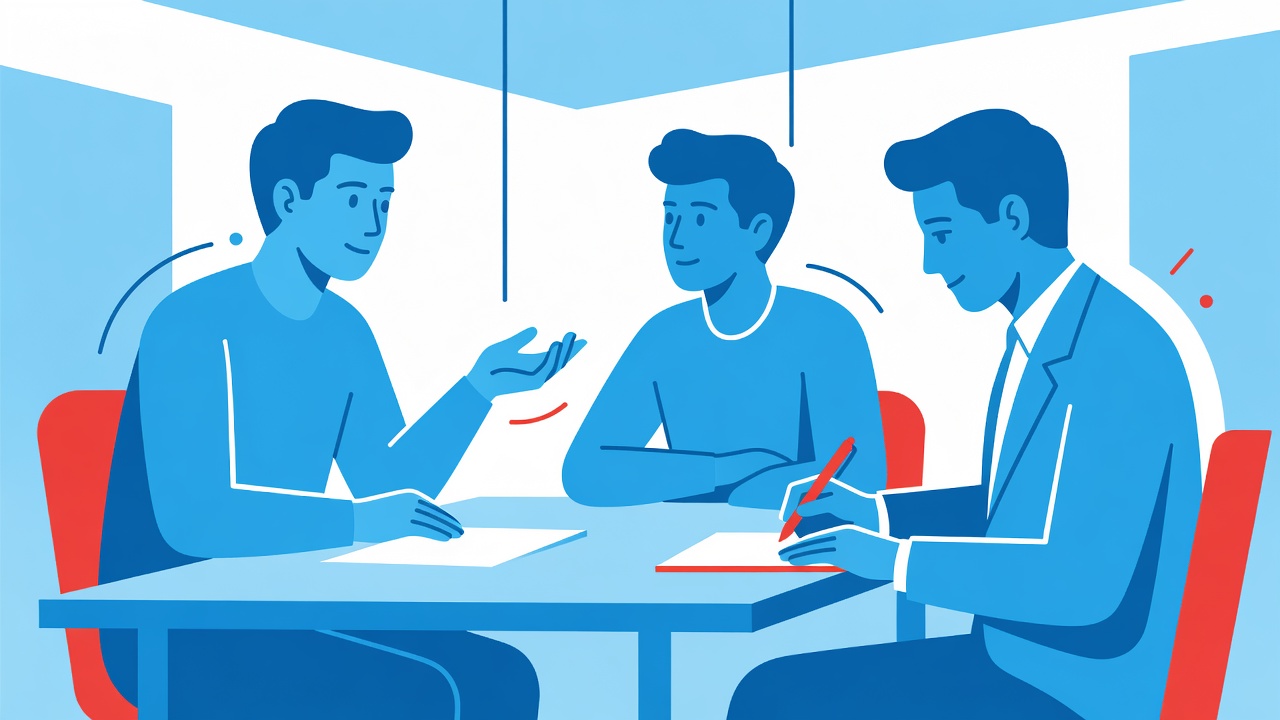
There is no substitute for role-play in teaching conflict resolution. Understanding the steps conceptually is the beginning. Performing them under simulated pressure is the skill.
Role-plays work best when they are:
Realistic. The scenario should be one students actually encounter: a friend who borrowed money and hasn't paid it back, a group project where one person isn't pulling their weight, a coworker who keeps interrupting. Abstract or implausible scenarios produce engagement with the exercise, not the skill.
Observed. A coach or teacher watches the role-play, takes notes, and gives specific feedback after. Not "good job," but "when you said 'you always do this,' the other person got defensive immediately, what could you have said instead?" Specific feedback is what builds the skill. General praise doesn't.
Repeated. A student who does a role-play once has tried the skill once. A student who does eight role-plays across the course of a program has practiced it enough that the steps are starting to become automatic. The repetition is where the skill gets built.
Debriefed. After each role-play, time is spent naming what worked, what didn't, and what the student would do differently. The debrief is where students develop the self-awareness to recognize their own patterns, the things they do reflexively under pressure that work against them.

What Gets Better When This Skill Is Taught
Schools that build conflict resolution instruction into their curriculum consistently report two things: fewer disciplinary incidents and better peer relationships. These are related. Students who can address problems directly when they're small don't let them build into incidents that require office referrals.
The effects extend beyond school. Students who leave with real conflict resolution skills bring them into their workplaces, their relationships, and their families. Most adults manage conflict through avoidance or aggression because no one ever taught them the alternative. Students who learn it at 16 have it at 26, at 36, for the rest of their working and relational lives. That is a long return on an eight-week investment.
Frequently Asked Questions
How do you teach conflict resolution to students who are resistant to the idea?
Start with the payoff, not the process. Students who are resistant to "conflict resolution" as a concept are often the ones for whom unresolved conflicts have cost the most, friendships lost, situations that escalated unnecessarily, consequences they didn't intend. Framing the skill as "how to get more of what you actually want from difficult situations" lands differently than framing it as "how to communicate better." The former speaks to self-interest. The latter sounds like a lesson.
How many practice sessions does it take for conflict resolution skills to stick?
Meaningful skill development requires six to eight practice opportunities at minimum, spaced over several weeks. One role-play produces awareness. Multiple role-plays with specific feedback and debriefing between them produce skill. The spacing matters: practicing once a week over eight weeks is more effective than practicing eight times in one intensive session.
What do you do when a student shuts down during a role-play?
Stop, debrief in the moment, and name what happened. "You just disengaged, that's a real pattern a lot of us have when conflict gets uncomfortable. Let's talk about what triggered it and then try again." The shutdown is itself a teaching moment. Students who can identify their own shutdown trigger have already made progress toward staying in the conversation.
Can conflict resolution be taught in a single lesson?
No. A single lesson can introduce the concept and the structure. Building the skill requires repeated practice. The distinction is important: schools that do one lesson on conflict resolution and treat it as covered have not developed the skill. They have introduced an idea. Skill requires practice over time.
How does conflict resolution connect to other soft skills?
Conflict resolution draws on nearly every other interpersonal and character skill. It requires empathy (to understand the other person's perspective), honesty (to say what's actually true), humility (to acknowledge your own role), listening (to stay with what the other person is saying), and emotional self-regulation (to stay calm when the conversation gets difficult). Schools that teach these underlying skills in parallel are developing the full foundation that makes conflict resolution possible.
References
- What Happens to Students Who Never Learn to Handle Conflict Professionally
- The Case for Teaching Emotional Intelligence in High School
- Research on school conflict programs: https://www.ncbi.nlm.nih.gov/pmc/articles/PMC5765847/