
Why Grit Alone Isn't Enough — The Three Skills Students Need Alongside It
- Grit is real and it matters. But grit alone produces a student who persists without adjusting, works hard without direction, and keeps trying the same thing that isn't working.
- The three skills that complete the picture are growth mindset (the belief that failure points to a skill gap, not a character limit), self-regulation (the ability to manage emotion and impulse under pressure), and social skills (the ability to build the relationships that make sustained effort possible).
- Students who have all four, grit plus the three, are genuinely equipped for the challenges of adulthood. Students who have grit alone often burn out or hit ceilings they don't know how to get through.
- The grit research has been widely applied but narrowly interpreted. Angela Duckworth's original work emphasized passion and perseverance together. Many school applications kept the perseverance and dropped the passion, and produced students who work hard without knowing why.
- The insight schools need is not to teach less grit. It's to teach grit alongside the skills that direct it.
What Grit Gets Right, and What It Misses
Angela Duckworth's research on grit produced one of the most cited findings in modern education: students who persist through difficulty outperform equally talented students who don't. This is true. Grit predicts academic performance, professional success, and long-term achievement in ways that raw aptitude doesn't fully explain.
The school adoption of grit research did something useful and something incomplete. The useful part: it shifted emphasis from fixed talent to developed persistence. Students are not born achievers or non-achievers. Their willingness to sustain effort through difficulty is something that can be developed. That framing was and is valuable.
The incomplete part: grit became the answer, rather than one component of a larger answer. Schools posted grit definitions on classroom walls and told students to work harder and not give up. This produced some benefit and some harm. The benefit: students who hadn't been exposed to a persistence ethic got one. The harm: students who were already pushing hard, without the skills to direct that effort or regulate themselves under pressure, were told the solution was to push harder. Some of them pushed in the wrong direction for a long time.

The First Missing Skill: Growth Mindset
Grit and growth mindset are often grouped together, but they are different and they work differently.
Grit is the willingness to sustain effort through difficulty. Growth mindset is the belief that ability develops through effort and that failure is informational rather than definitional. Both are necessary. Neither is sufficient without the other.
A student with grit but without a growth mindset persists past the point where persistence is useful. They keep doing what isn't working because stopping feels like giving up. They don't evaluate whether the strategy is right because evaluating is what non-gritty people do. The failure is interpreted as a signal to try harder rather than a signal to try differently.
A student with a growth mindset who can interpret failure as a skill gap rather than a capacity limit uses failure productively. They ask what specifically went wrong, what skill is missing, and what to try next. That analysis requires a belief that something can be tried differently. Grit gives them the energy to try again. Growth mindset gives them the direction.
Teaching both together, and explicitly, as Boost does, produces students who persist intelligently, not just persistently.
The Second Missing Skill: Self-Regulation
Grit is a long-game skill. It describes what happens across time: sustained effort through repeated difficulty. Self-regulation is what happens in the moment: the ability to manage emotion, impulse, and distraction well enough that the long game remains playable.
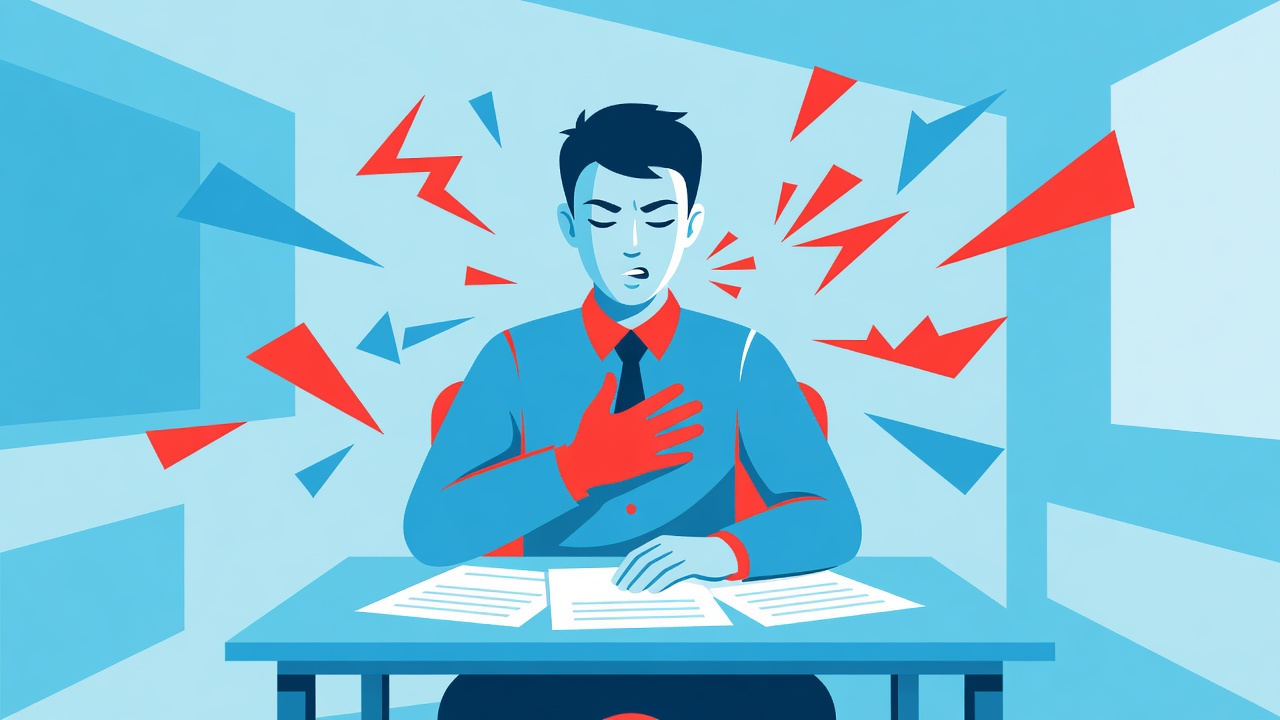
A student with grit but poor self-regulation has a high ceiling and a chaotic path to it. They care about the goal. They work hard when working hard is comfortable. When stress spikes, when the work gets genuinely difficult, when a conflict arises or a setback lands hard, their ability to stay in the effort collapses. The grit is there. The regulation isn't.
Boost teaches self-regulation through three wellbeing skills: "A Little Stress Is Okay" (the understanding that productive stress is a signal, not a warning), "Skills to Create Calm" (specific techniques for regulating the nervous system under pressure), and the phone management skills (which are, at their core, attention regulation skills). These are the infrastructure that makes grit sustainable. Without them, grit burns out.
Students who can regulate themselves under pressure stay in difficult tasks longer, recover faster from setbacks, and are available for learning even when the material is genuinely challenging. This is the skill that the grit research assumes but doesn't address.

The Third Missing Skill: Social Skills
Grit research is almost entirely individual. It describes what one person does in the face of difficulty. But almost no meaningful achievement is purely individual. It happens in teams, through relationships, with the support of mentors, colleagues, and communities.
Students who have grit but poor social skills hit a ceiling in collaborative environments. They can sustain individual effort. They struggle to contribute to a team in a way that makes the team better. They can work hard on their own piece. They can't adapt their communication, manage conflict with a coworker, or build the kind of trust that makes someone a person others want to work with.
This matters more than it used to. Most workplaces are organized around collaboration, not individual contribution. The isolated high-performer is a smaller slice of the professional landscape than it was a generation ago. Students who have only developed the individual component of achievement, sustained effort, without the interpersonal component are less prepared for the actual environments they'll enter.
The Boost interpersonal skills, listening, asking good questions, non-verbal communication, giving compliments, being friendly with a wide circle, are not soft additions to a hard curriculum. They are the specific skills that make grit function in social and professional contexts.
What All Four Together Looks Like
A student who has developed grit, growth mindset, self-regulation, and social skills is genuinely equipped. They can sustain effort over time. They can interpret setbacks productively. They can manage themselves under pressure without collapsing. And they can work with other people in ways that build rather than drain.
This student is not defined by talent. They are defined by a set of developed capabilities that they've built through instruction and practice. That's the whole point of "life is skill-based." Every one of these capabilities is learnable. The question schools face is whether to teach them or leave them to chance.
Frequently Asked Questions
What is the difference between grit and growth mindset?
Grit is persistence, the willingness to sustain effort through difficulty over time. Growth mindset is the belief that abilities develop through effort and that failure is informational rather than permanent. Both are necessary. Grit provides the energy to keep going. Growth mindset provides the direction, the ability to evaluate what went wrong and try a different approach. Students who have one without the other either push in the wrong direction or give up before they've found the right one.
Can grit cause harm if it's taught without the other skills?
Yes, in specific ways. Students with high grit but poor self-regulation are at risk for burnout, they sustain effort past the point of recovery. Students with high grit but a fixed mindset persist through failure by increasing effort rather than changing strategy, which can produce a long period of unproductive hard work. And students with high grit but poor social skills can become high individual performers who struggle in team environments. Grit is a valuable skill. It's most valuable in combination.
How does Boost teach self-regulation as a skill?
Through three named wellbeing skills: "A Little Stress Is Okay" teaches students to distinguish productive from overwhelming stress and to use the former as a performance signal. "Skills to Create Calm" teaches specific calming techniques (breathing, grounding, cognitive reframing) that can be accessed under real pressure. The phone management skills teach attention regulation, the ability to control where focus goes rather than following every pull. Together, these skills build the self-regulation infrastructure that makes sustained effort sustainable.
How does social skill development relate to long-term achievement?
Most sustained achievement happens in social contexts: professional teams, collaborative projects, mentoring relationships, communities of practice. Students who can't build trust, handle conflict, or communicate across difference hit collaborative ceilings that their individual effort alone can't get through. The most effective high achievers are almost always people who combine personal effort capacity with the social skills to direct that effort through relationships.
What should schools teach first, grit or the skills that support it?
The sequence matters. Boost teaches the belief foundation first ("life is skill-based") before introducing any individual skill. This is because students who don't believe their abilities can develop will resist practice. Once the belief is in place, the skills build on each other, with interpersonal and mindset skills developing in parallel so that grit has both the direction (growth mindset) and the infrastructure (self-regulation, social skills) to function effectively.
References
- Angela Duckworth's grit research: https://angeladuckworth.com/research/
- The Self-Improvement Paradox: Why Telling Students to Just Try Harder Backfires
- What Life Is Skill-Based Actually Means, and Why It Changes Everything for Students