Practice Beats Lecture: Designing Soft Skills Lessons Students Do, Not Just Hear
- A meta-analysis of 225 studies found that active learning raised exam performance by about half a letter grade compared with traditional lecture in college STEM courses.
- In a Harvard physics experiment, students felt they learned more from polished lectures but scored higher after active learning sessions.
- A practice-centered soft skills lesson has a short why, a model, supervised reps, specific feedback, and a reflection.
- Practice matters, but the research does not say that raw hours of practice explain skill, so quality of feedback is part of the design.
Picture a ninth grader who has sat through three assemblies on respect and can recite every slide. Ask her to introduce herself to a stranger and she stares at her shoes. She knows the material and has never done the skill. If you want to design soft skills lessons that change what students do, the answer is not a better lecture. It is a different lesson structure, one with practice in the middle of it. By soft skills we mean behaviors such as listening, greeting, and follow-through. This guide covers the design: the evidence, the lesson anatomy, role play, feedback, repetition, and how to check for change.
Why Lecture Alone Fails for Soft Skills
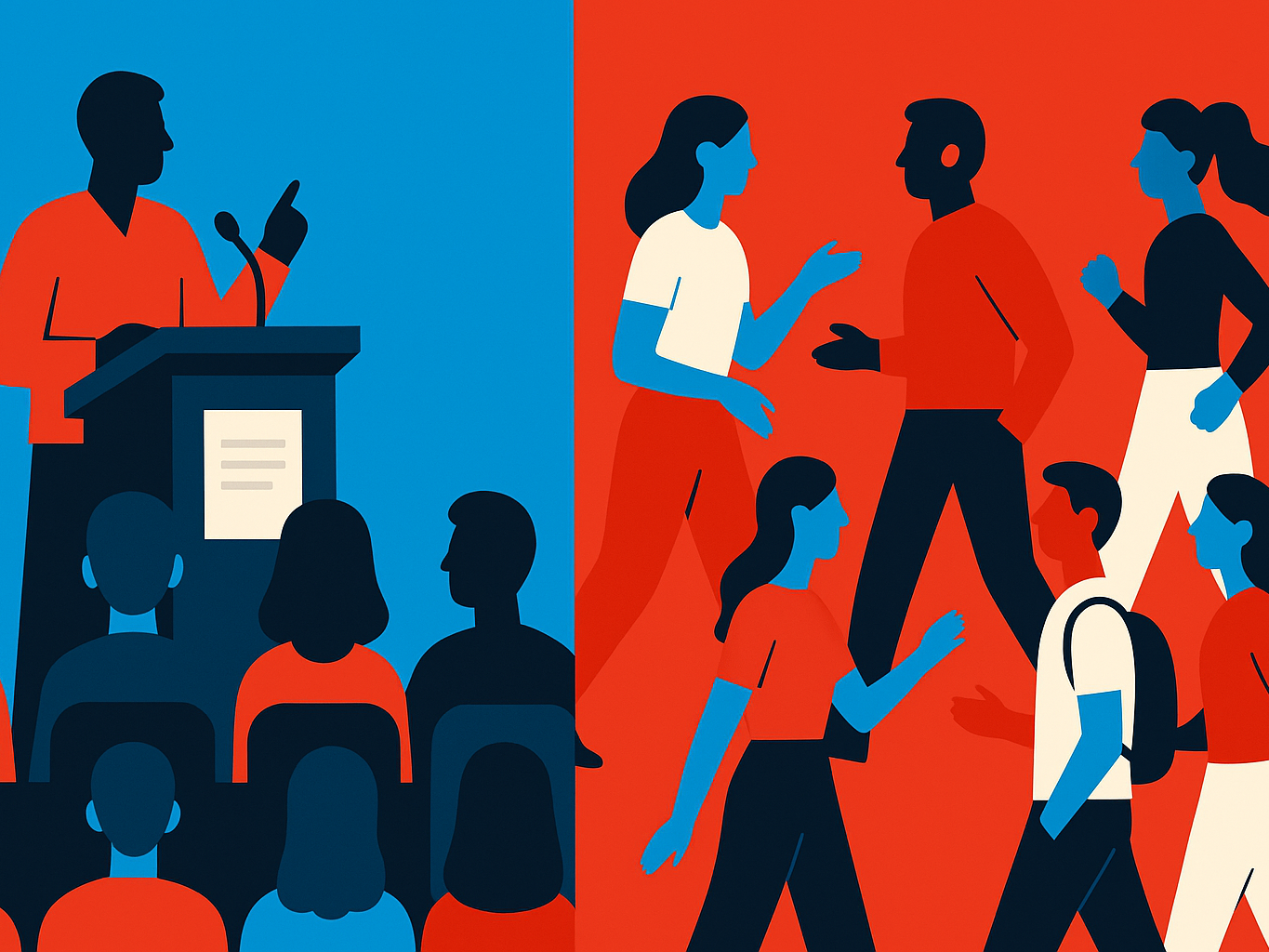
Lecture fails for skills because skills are behaviors, and behaviors are built by doing them, not by hearing them explained. We like to say that inspiration without instruction is just a concert ticket [Internal: Boost Bible], and you do not become a musician by attending one concert [Internal: Boost Messaging and Copy Bank].
The research on active learning points the same way, with an important limit. In a 2014 meta-analysis by Freeman and colleagues covering 225 studies, active learning produced exam gains equivalent to raising average grades by half a letter, and failure rates were 55% higher under traditional lecture. Those studies were in college science, engineering, and math, not soft skills in high school, so read them as evidence about how people learn, not as proof about any one curriculum.
A Harvard experiment adds a trap for administrators. Students were randomly assigned to active learning or polished lectures, and they felt they learned more from the lectures but scored higher after the active learning sessions. Lead researcher Louis Deslauriers said, "Actual learning and feeling of learning were strongly anticorrelated." According to the Harvard Gazette, Deslauriers added that "the effort involved in active learning can be misinterpreted as a sign of poor learning." If your students groan during role play, that may be the sound of learning.
How to Design Soft Skills Lessons Around Practice
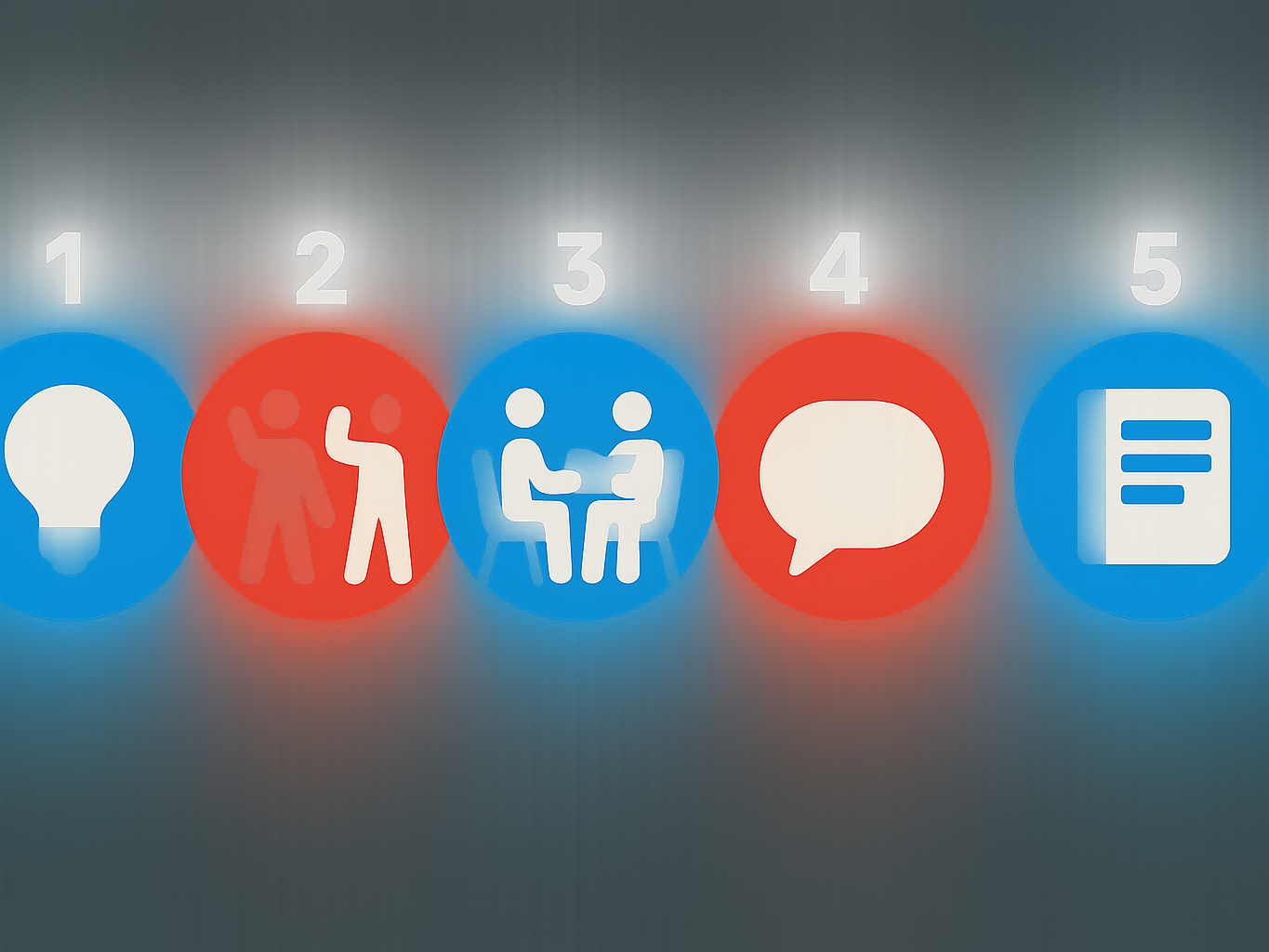
A practice-centered lesson has five parts: a short why, a model, supervised practice, specific feedback, and a reflection. The order matters, and the practice should take the largest share of the time.
At Boost we call the first move the 101: teach the why, so students buy in, and then practice. That matches how our materials describe the instructional model, with videos, discussion, worksheets, role play, and reflection [Internal: Boost Program Research Paper]. Here is one way to lay out a 50-minute class (a suggestion, not a Boost schedule):
- The why (5 minutes). Connect the skill to something students want, such as a job, a friendship, or respect.
- The model (5 minutes). Show the behavior done well and done poorly. Students laugh, and then they see the difference.
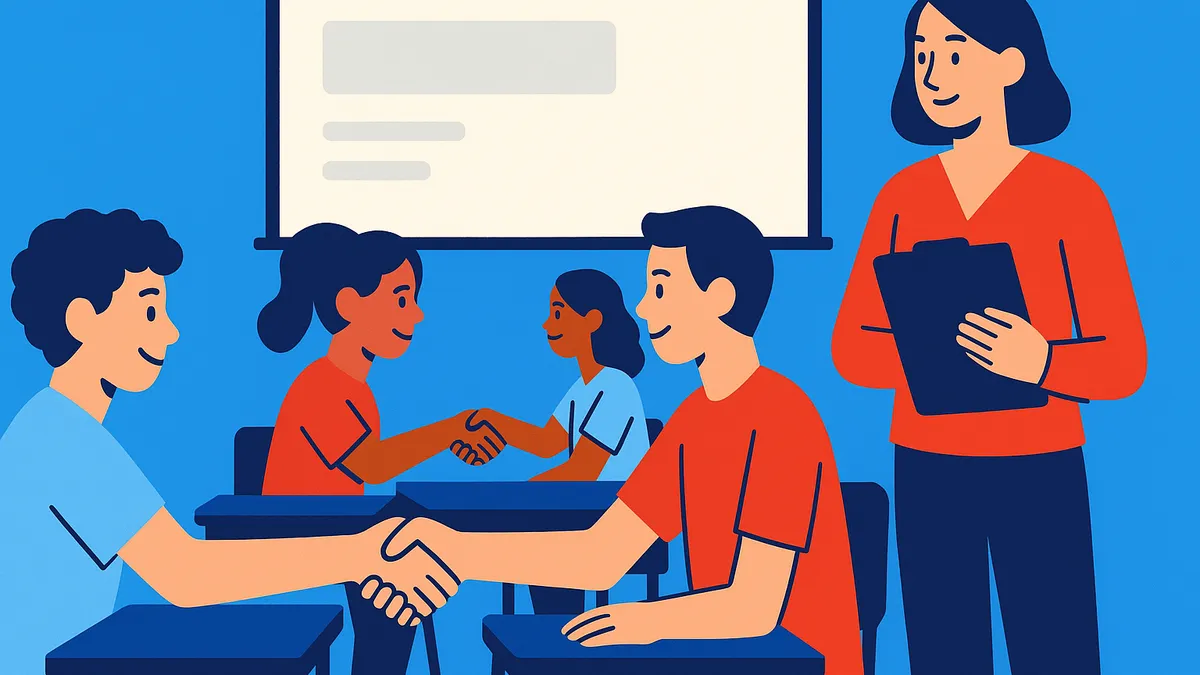
- Practice (20 minutes). Pairs or trios rehearse the skill with a clear scenario and a clear behavior to look for.
- Feedback (10 minutes). Partners and teacher name one strength and one next step.
- Reflection (5 minutes). Each student writes the one thing they will try today.
Notice that most of the class is students doing something. For a deeper look at the structure, see our guide to improving soft skills in high school students with a framework, not a lecture. The Durlak meta-analysis of 213 school-based programs also found that outcomes were influenced by the use of four recommended skill-development practices, which is a reminder that how a program teaches matters as much as what it teaches.
Role Play That Does Not Feel Forced
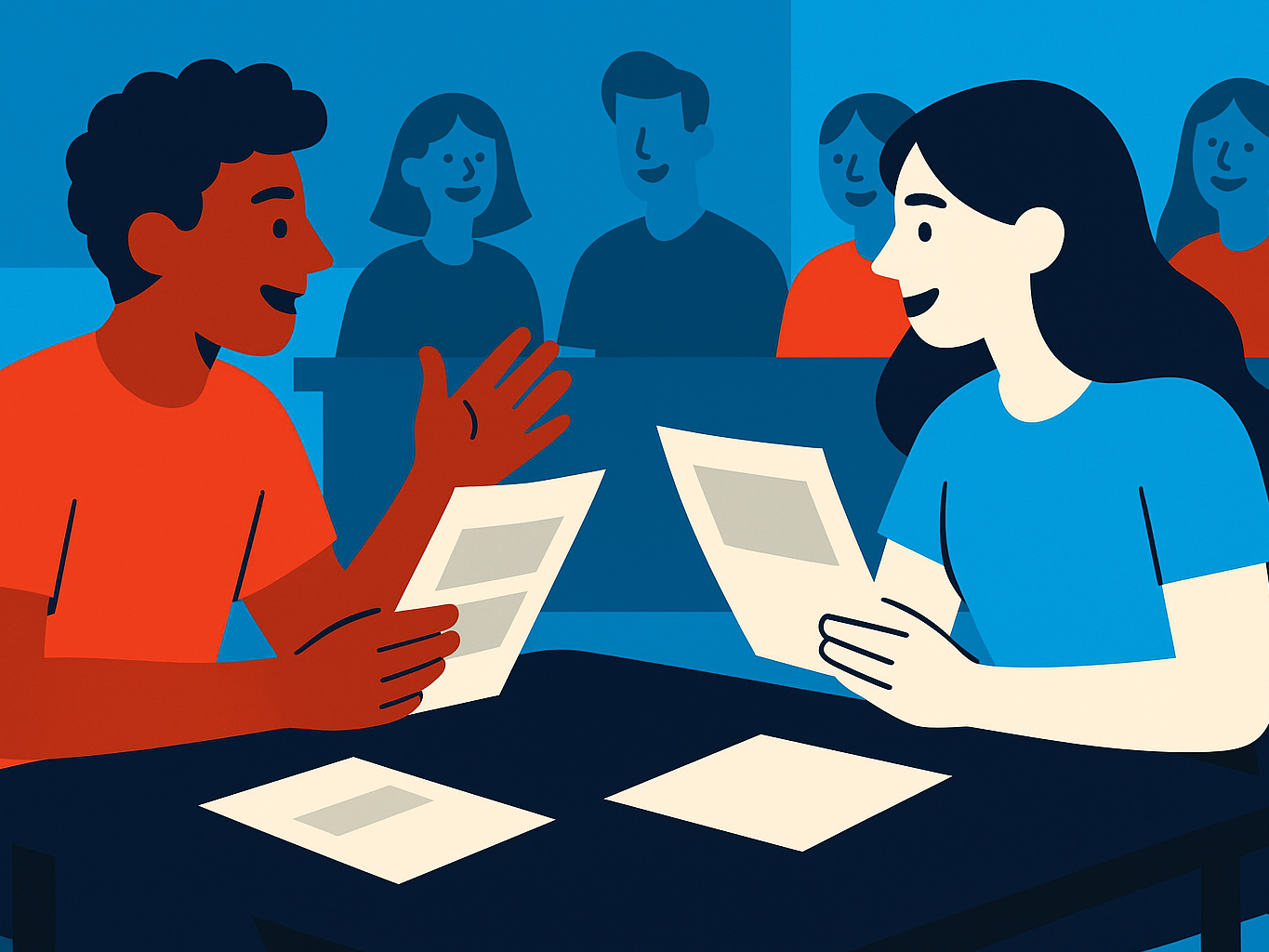
Role play feels forced when the scenario is vague, the stakes are high, or the whole class is watching. Fix those three things and most of the awkwardness disappears.
Start with small, specific scenes: greeting someone at the door, asking a follow-up question, giving a compliment, and saying thank you. Our materials ask students to practice realistic social scenarios, including greeting someone, asking questions, listening, and reading body language [Internal: Boost Program Research Paper]. Keep the first rounds in pairs, so nobody performs for an audience. Give each person a card with the scene and one behavior to watch for, such as eye contact.
Raise difficulty slowly. A greeting with a friend comes before a greeting with an adult, and that comes before a mock interview. The students themselves ask for this: when we ask what Boost could do better, the only consistent suggestion is more role plays and more time [Internal: Boost Bible]. That is self-reported feedback, but it is a useful sign that students want the rehearsal. For a conflict-heavy example, see our practical guide to teaching conflict resolution in high school.
Feedback in the Moment
Useful feedback is specific, observable, and given while the attempt is fresh. "Good job" teaches nothing. "You made eye contact and used her name, and next time pause before you answer" teaches two things.
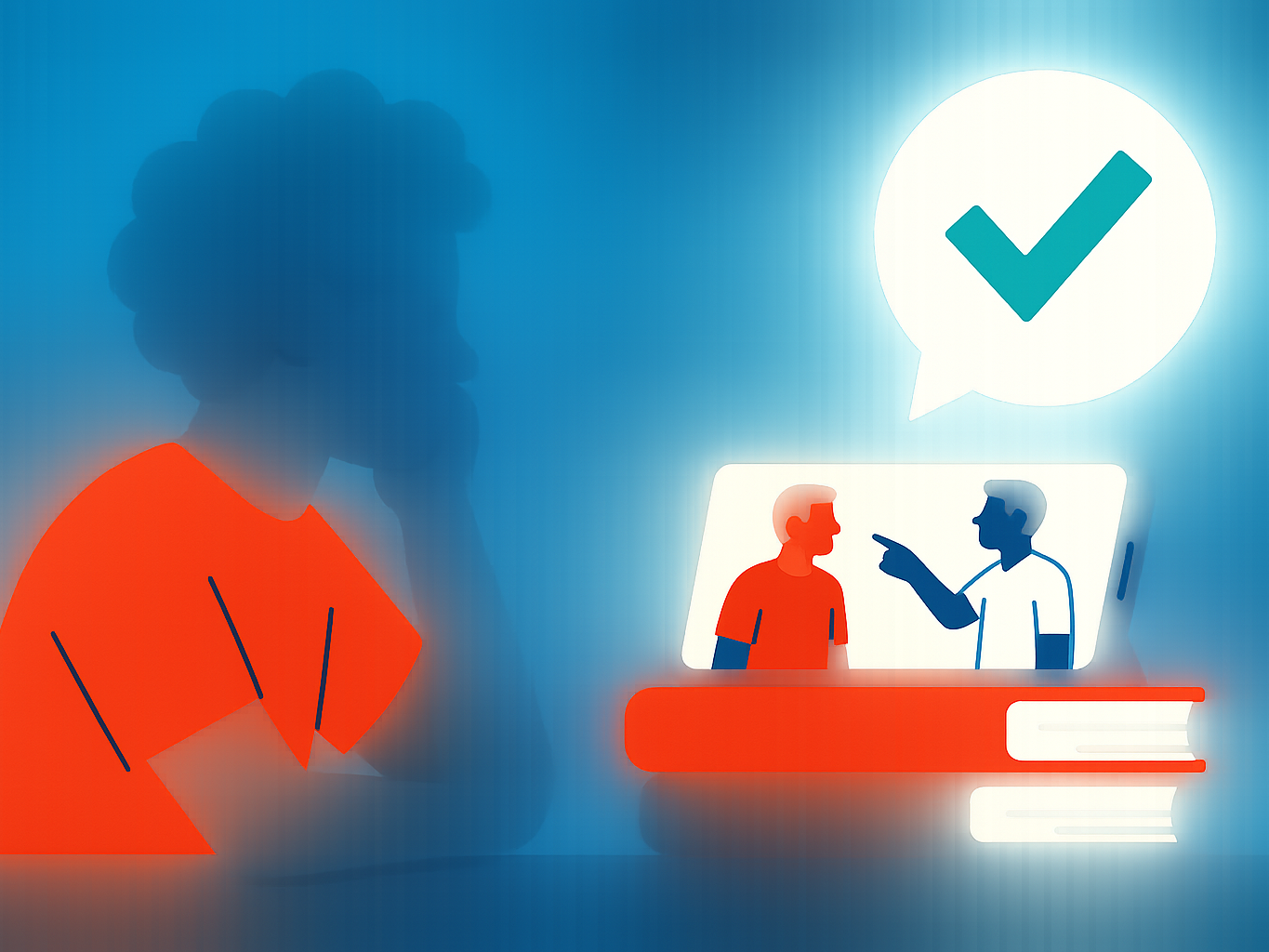
Use a simple formula: one strength, one next step, then try again. Peer coaching works well here because students can watch each other closely. In the Boost interview series, students pair up and video each other, then watch themselves back, and we have seen students fix in ten minutes what a coach could not fix in an hour of telling them [Internal: Boost Bible]. That is our observation, not a study. A phone propped on a book is enough to try it.
Be careful not to over-credit practice alone. Macnamara and Maitra's pre-registered replication of a famous deliberate practice study found that practice explained 26% of performance variance, compared with 48% in the original study. The authors wrote that this "is not an inconsequential amount" but does not show that performance is largely accounted for by practice amounts. Practice helps, and so does what happens inside it: the quality of the feedback and the match to each student.
Building Repetition In and Checking Whether Behavior Changed
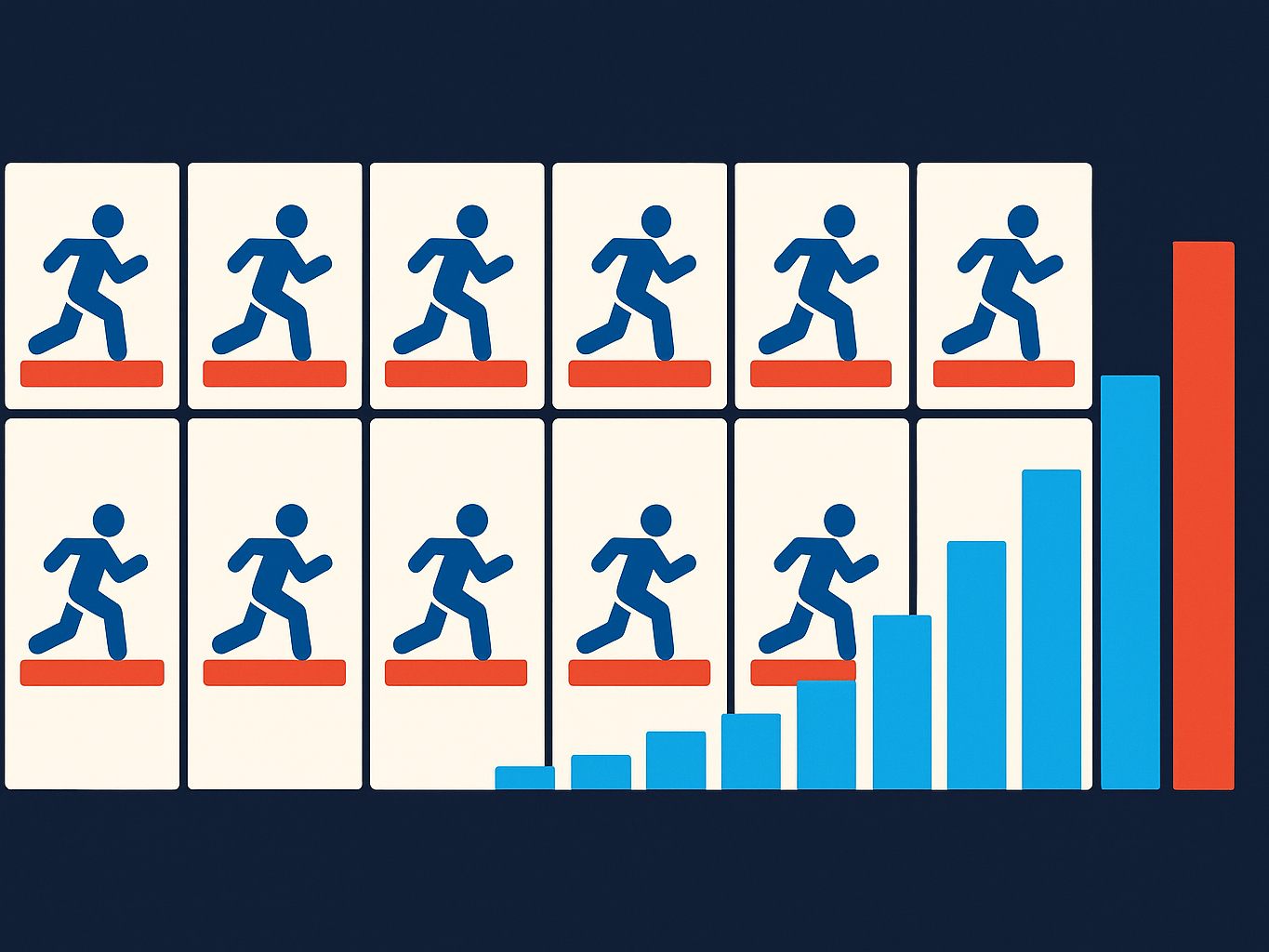
A skill needs repetition across the week, and you need a simple way to see whether behavior moved. A one-hour lesson on Monday that is never touched again is the school version of the single concert.
Build in small reps: a two-minute greeting at the door each day, a listening drill at the start of class, a quick reflection on Friday. Our full-semester model leans on heavy role play and repeated practice for this reason [Internal: Boost Brand Bible v2], and our write-up of the Boost formula for turning 26 skills into behavior change goes deeper on the cycle.
To check change, look at behavior, not opinions. Use a short rubric that an adult can observe, and keep it to the same few behaviors each week. Boost uses a pre and post self-assessment called Striving to 100, where the student and an adult sponsor both rate the student from 1 to 5 [Internal: Boost Brand Bible v2], and students color all 26 skills green, yellow, or red on the last day [Internal: Boost Bible]. In our small pilot of about 30 students, the share who checked "Absolutely" on a question about specific life skills went from 20% on day one to 87% on the last day [Internal: Boost Bible]. That is self-reported and small, so it is a directional signal, not proof.
If you want to see how an 8-week curriculum with 26 Boost Skills is built around this practice-first design, delivered by certified Boost coaches or trained staff, you can schedule a discovery call.
Frequently Asked Questions
Why Does Lecture Alone Fail for Soft Skills?
Soft skills are behaviors, and behaviors are built by doing them. In a Harvard experiment, students felt they learned more from lectures but scored higher after active learning.
What Does a Practice-Centered Soft Skills Lesson Look Like?
It has a short why, a model, supervised practice, specific feedback, and a reflection. Practice should take the largest share of the class time.
How Do Teachers Give Useful Feedback on Soft Skills?
Name one strength and one next step, tied to a behavior the teacher or a peer can observe, and let the student try again right away. Video playback can help students see it themselves.
How Do You Know Whether Student Behavior Changed?
Track a few observable behaviors with a short rubric and repeat it over time. A pre and post self-assessment completed by the student and an adult can add a second view.
References
- Freeman et al., Active Learning Increases Student Performance (summary, Harvard case resources)
- ScienceDaily, More Learning in Active Learning Classrooms, but Students Do Not Know It
- Harvard Gazette, Students Learn More in Active Learning Classrooms
- Durlak et al., The Impact of Enhancing Students' Social and Emotional Learning (ERIC)
- Macnamara and Maitra, The Role of Deliberate Practice in Expert Performance
- How to Improve Soft Skills in High School Students: A Framework, Not a Lecture
- A Practical Guide to Teaching Conflict Resolution in High School
- Inside the Boost Formula: How We Turn 26 Skills Into Behavior Change
Ready to bring Boost to your school?
Schedule a discovery call to see how the Boost curriculum fits your students.
Schedule a Discovery Call