
How to Run a Mock Interview Day Without a Big Budget
- New graduates rate their communication proficiency at 78.1%, while employers rate it at 53.5%, according to NACE (January 2025).
- A mock interview day lets students practice that gap in a safe room, with a real adult across the table, and it can run on volunteers, a simple rubric, and a space your school already has.
- The day works when students prepare first, interviewers are briefed, and the feedback is turned into one next step in class.
- This guide covers recruiting, preparation, logistics, a color-coded rubric, and follow-up.
Picture a school library at nine in the morning. Four tables, each with two chairs, a folder, and a volunteer in business clothes. A sophomore walks up, makes eye contact, and says the interviewer's name with a smile. Nobody had to buy anything for that moment. Here is how to run a mock interview day for high school students without a big budget, using volunteers from your community and a plan that fits in a school schedule. By soft skills we mean the behaviors, such as greeting, listening, and follow-through, that show up in the first minutes of any interview.

Why a Mock Interview Day Works for High School Students
A mock interview day works because it gives students a low-stakes rep at the one skill adults say they are missing most: communicating with a stranger under pressure. The NACE data shows the size of the perception gap. In its January 2025 analysis, students rated their communication proficiency at 78.1% while employers rated it at 53.5%, and for professionalism the numbers were 79.7% versus 50.3%.
Those figures describe college graduates, not high schoolers, so treat them as a direction, not a verdict. The direction is still clear. Students tend to think they are ready until a stranger tells them otherwise, and a mock interview is a kind way to hear it first. NACE's own advice to students is that they should list their skills so they have the opportunity to articulate them "during an interview" (NACE). The same page reports that more than two-thirds of employers seek verbal communication skills and nearly 80% seek teamwork.
At Boost we built a three-part Interview Program for this reason. Students sit across from a real adult who hires at their company, and the hiring managers who took part told us, "These students were better than most of the real interviews we do" [Internal: Boost Bible]. That is self-reported feedback from a small number of interviewers, not a study. It does show what a prepared student can do. Our piece on the 8 people skills every student needs before a first job interview lists the behaviors to practice.

How to Recruit and Brief Volunteer Interviewers
Recruit people who hire or manage in real jobs, because students respond differently to a real hiring voice than to a teacher in a blazer. Start with the people who already know your school: parents, alumni, local business owners, your advisory board, and the company contacts behind any internships.
Make the ask small and specific. Tell volunteers the date, the time window, that they will do short interviews, and that they will use a one-page rubric. Most professionals can say yes to a morning. Then send a short brief before the day that covers three things:
- Role. Interview like it is a real entry-level role, but be warm and curious, not intimidating.
- Rubric. Rate each student on the same skills and give two pieces of feedback: one strength and one next step.
- Candor. Tell students the truth kindly. A student who hears "you looked down when you answered" can fix it by Friday.
In the Boost mock interview design, we use four interviewers across Sales, Operations, Finance, and HR, each tied to a known company, so students see how different roles ask different questions [Internal: Boost Brand Bible v2]. You can borrow the idea: even with volunteers, give each one a role and a company to represent. It makes preparation more concrete for students, and interviewers have a character to play.

How to Prepare Students for a Mock Interview Day
Students should arrive having done real work: they know what the company does, what the interviewer is likely to want, and what questions they will ask. In the Boost model, students research the company and the person beforehand, and they learn to flip the script and walk in ready to interview the employer as well as be interviewed [Internal: Boost Bible].
Teach a short list of behaviors, not a long list of tips. The Boost Interview Program teaches seven:
- Real smile
- Eye contact
- Enthusiastic greeting
- Using the interviewer's name
- Asking great questions and listening
- Reading body language
- Giving a sincere compliment
These matter because impressions form fast. We often say they form in the first 5 to 10 seconds [Internal: Boost Messaging and Copy Bank], so the greeting is worth the most practice time. Run a practice round in class first. In our program, students pair up and video each other doing practice interviews, then watch themselves back, and in our experience students fix in ten minutes what a coach could not fix in an hour of telling them [Internal: Boost Bible]. A phone propped on a stack of books is all the equipment you need.
Students who struggle to start conversations will need extra reps. We have written about why students cannot hold a conversation anymore, and practice is the answer there too.
Day-of Logistics and Flow
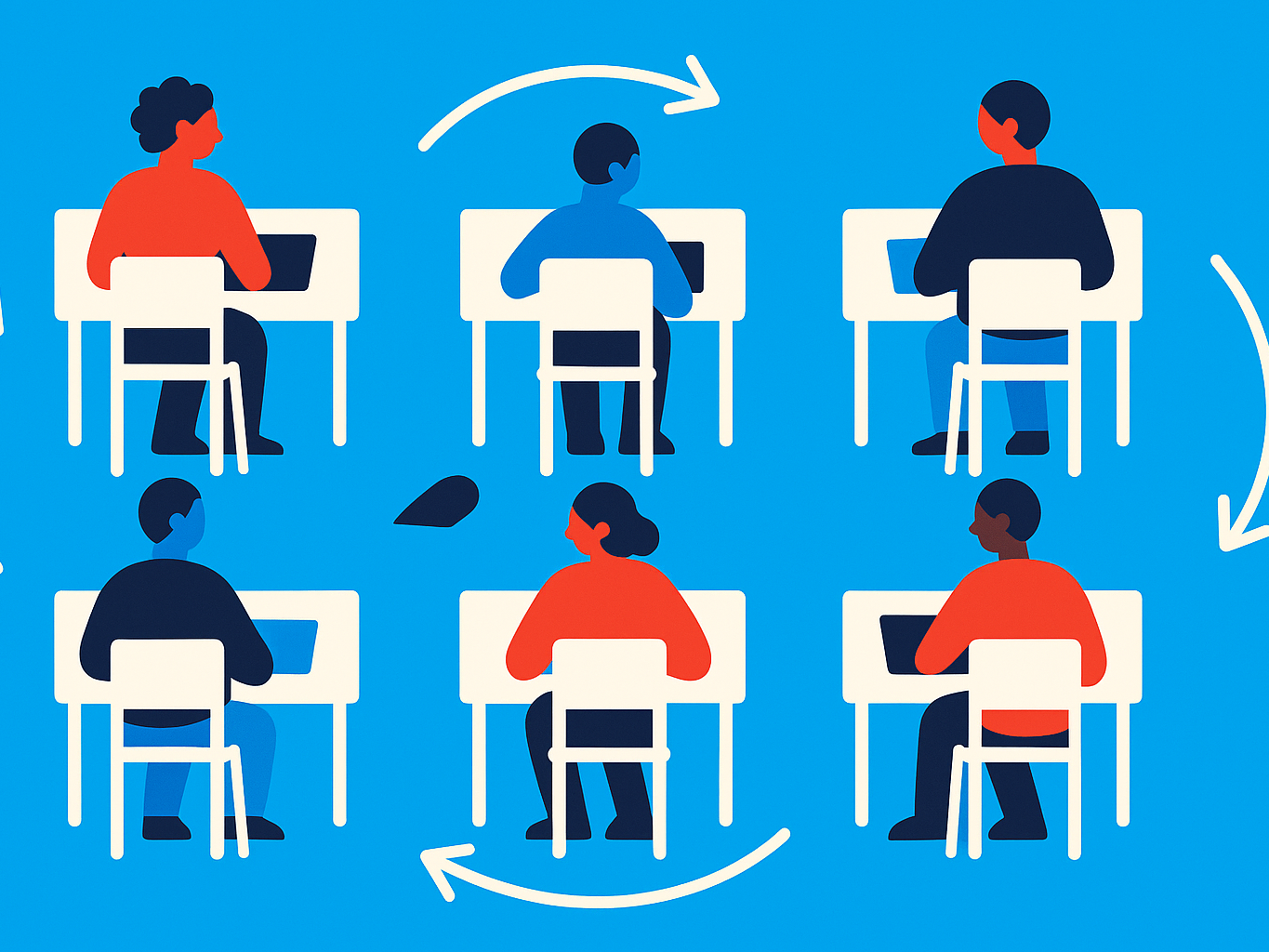
The simplest flow is a rotation: students move through short interviews in a room your school already owns, such as the library, cafeteria, or a row of classrooms. Keep the setup plain. Two chairs and a table per interviewer, a number card for each student, and a sign-in sheet at the door.
Here is a sample flow you can adjust to your bell schedule:
- Arrival. Volunteers check in, get a rubric and a name tag, and meet the student lead.
- Interview. One student, one interviewer, about 10 to 15 minutes.
- Feedback. The interviewer fills out the rubric and tells the student one strength and one next step.
- Rotate. Students either repeat with a second interviewer or return to class.
A few practical details prevent most problems. Brief students on dress and arrival time ahead of time. Give volunteers a printed list of interview questions in case they freeze. Have a staff member stay in the room to troubleshoot, and send a thank-you to each volunteer the same afternoon. Nothing about this requires a catering budget.
If building the whole day from scratch is too much, Boost runs its Interview Program as a turnkey option for schools: an assembly, peer practice, and mock interviews with real professionals over three weeks [Internal: Boost Brand Bible v2].
A Simple Rubric and Following Up in Class
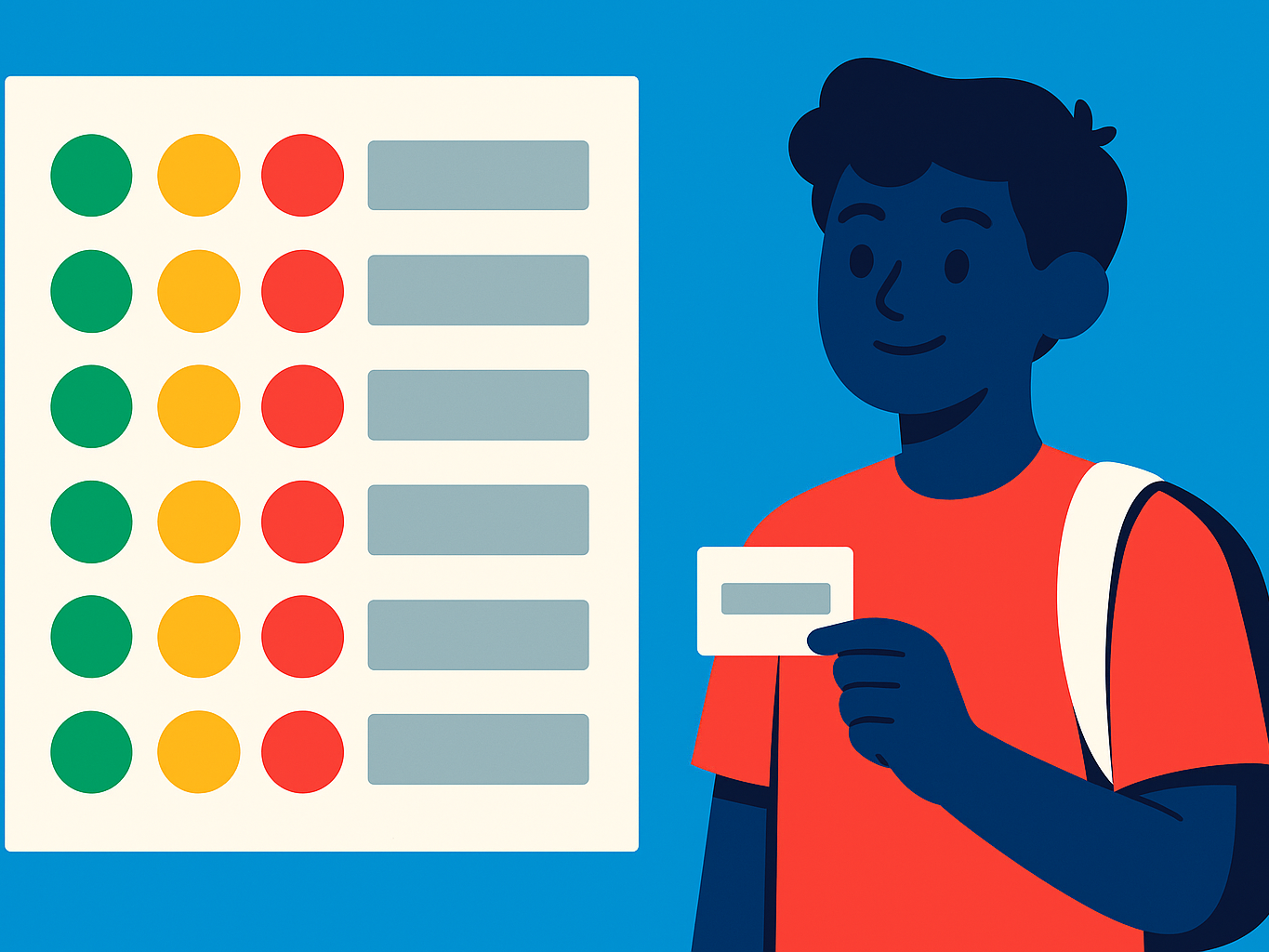
A good rubric is short, uses plain behaviors, and scores each one with a color. Adapt the seven skills above into a one-page sheet and mark each green (strong), yellow (okay but can improve), or red (needs work). Boost uses the same three colors on the final-day rating worksheet that students complete across all 26 skills, so the language is already familiar to our students [Internal: Boost Bible].
The follow-up is where the day pays off. Within two days, run a class debrief:
- Return each student's rubric and have them circle one skill to work on.
- Have students write a short thank-you note to their interviewer, which is itself a real skill in the first week after an interview.
- Ask students to name one thing they would do differently and practice it in pairs.
- Collect themes from the rubrics and share them with teachers who can reinforce them.
Keep the focus on one next step per student. Our look at why so many high school interns struggle with basic workplace skills shows what happens when these habits are never practiced.
If you would like help designing a day like this, or want to see how our 8-week curriculum teaches 26 Boost Skills across People Skills, Character, and Healthy Mindset, you can schedule a discovery call.

Frequently Asked Questions
How Do You Run a Mock Interview Day on a Small Budget?
Use volunteers from your community, a space your school already owns, and a one-page rubric. The main costs are staff time and printing.
How Do You Recruit Volunteer Interviewers for Students?
Ask parents, alumni, local business owners, and internship partners for one morning, and give them a role, a time window, and a short brief. Specific requests get more yeses.
What Should Students Prepare Before a Mock Interview?
Research the company and the interviewer, write two or three questions to ask, and practice a greeting with eye contact. A practice round in class with a phone camera helps.
How Do You Use the Feedback After a Mock Interview?
Return the rubric within two days, have each student choose one skill to work on, and practice it in pairs. One next step per student works better than a long list.
References
- NACE, The Gap in Perceptions of New Grads' Competency Proficiency
- NACE, What Are Employers Looking for When Reviewing College Students' Resumes?
- The 8 People Skills Every Student Needs Before Their First Job Interview
- The Real Reason Students Can't Hold a Conversation Anymore
- Why So Many High School Interns Struggle With Basic Workplace Skills
Ready to bring Boost to your school?
Schedule a discovery call to see how the Boost curriculum fits your students.
Schedule a Discovery Call