Soft Skills vs. Hard Skills: The Distinction That's Holding Schools Back
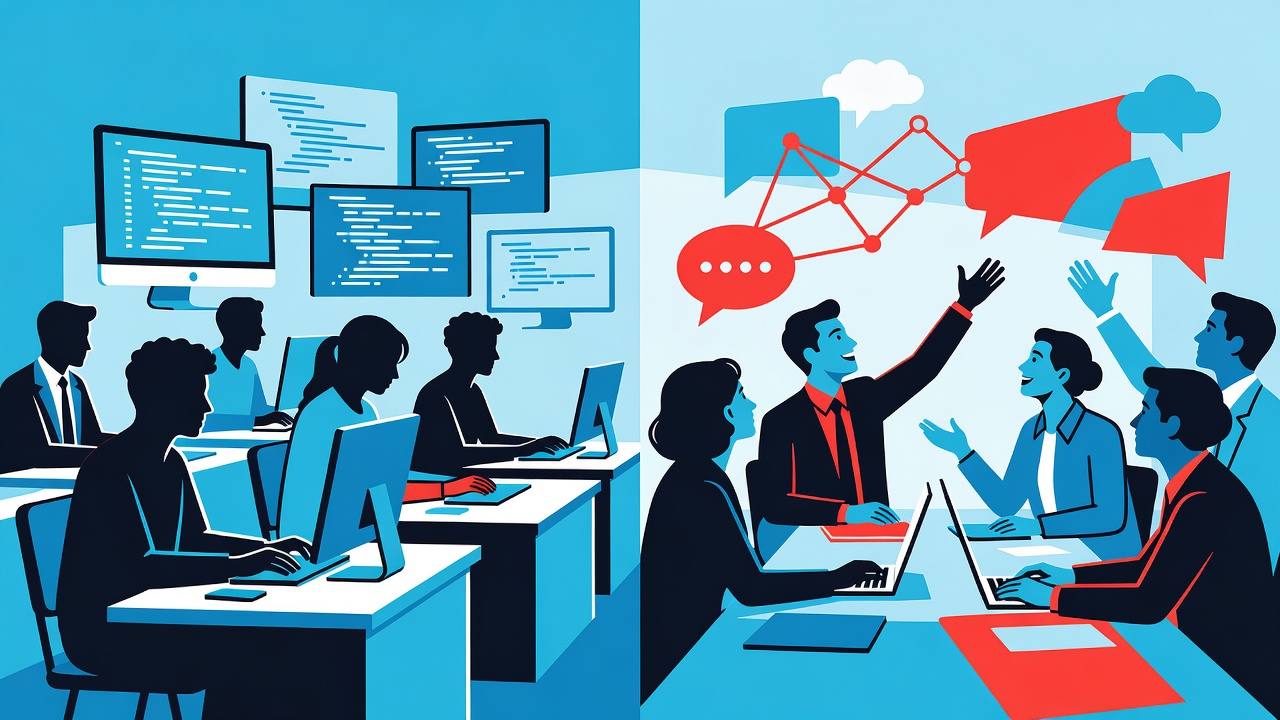
- Hard skills get students the interview. Soft skills determine whether they get the job, keep it, and advance in it.
- Schools invest disproportionately in hard skills because they're easier to measure. That imbalance has a cost most administrators don't see until students are in the workforce.
- Soft skills aren't the opposite of hard skills. They're the multiplier. A student with strong technical skills and weak interpersonal skills will consistently underperform a student with both.
- Eighty-five percent of hiring managers say soft skills matter as much as or more than technical skills when evaluating candidates.
- The distinction between hard and soft skills is useful for conversation. The mistake is treating it as a division of educational responsibility, where hard skills belong in school and soft skills get learned "along the way."
The Distinction Schools Actually Need to Make
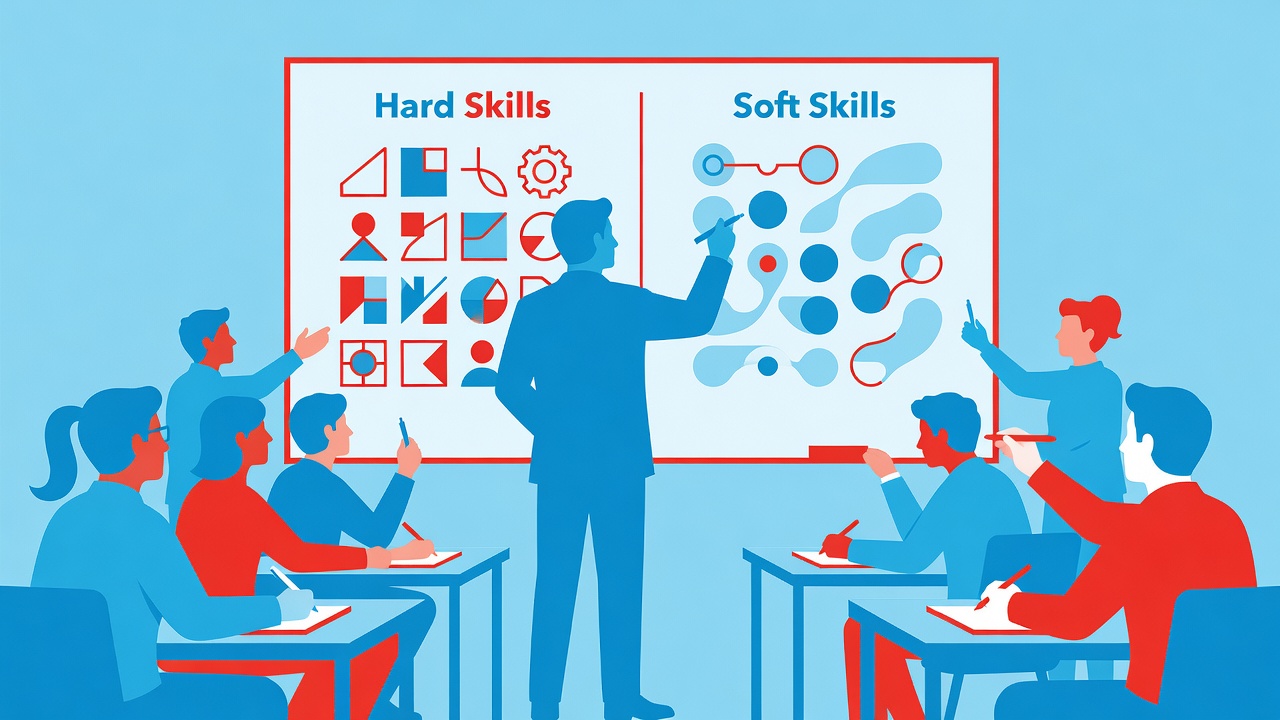
Hard skills are teachable, measurable, and task-specific. A student either knows how to calculate compound interest or they don't. They can write a grammatically correct sentence or they can't. The output is observable. The gap is diagnosable.
Soft skills are also teachable and measurable. The difference is that schools have largely treated them as background conditions rather than foreground curriculum. The assumption has been that students absorb communication, empathy, and resilience from their environment, from family, from peers, from growing up. The research says that assumption is wrong for a large and growing share of students.
That's the distinction worth making. Not hard vs. soft as permanent categories, but deliberate instruction vs. assumption. Schools deliberate on hard skills. They assume soft skills.
Why Soft Skills Compound Differently
Hard skills depreciate. The coding language a student learns today may be obsolete in eight years. The specific accounting software they master may be replaced. Technical skills require ongoing updating to remain relevant.
Soft skills appreciate. A student who develops strong listening skills at 16 is a better communicator at 26 and a better leader at 36. Every relationship they build, every team they're part of, every conflict they navigate adds to the base. The compounding works in the right direction.
This matters for how schools should allocate emphasis. Hard skills are required for a student's first job. Soft skills are required for every job after that. The career arc depends on both, but in different proportions at different stages. Schools that only develop one half leave students with a gap that gets more expensive the further into their career they go.
Eighty-five percent of hiring managers report that soft skills matter as much as or more than technical skills when making hiring decisions. That number doesn't mean hard skills don't matter. It means employers already assume some level of technical competence and are then differentiating on the skills most schools haven't taught.
What Holding Back Actually Looks Like
The phrase "holding back every curriculum" in the headline deserves specificity. Here's what it looks like in practice.
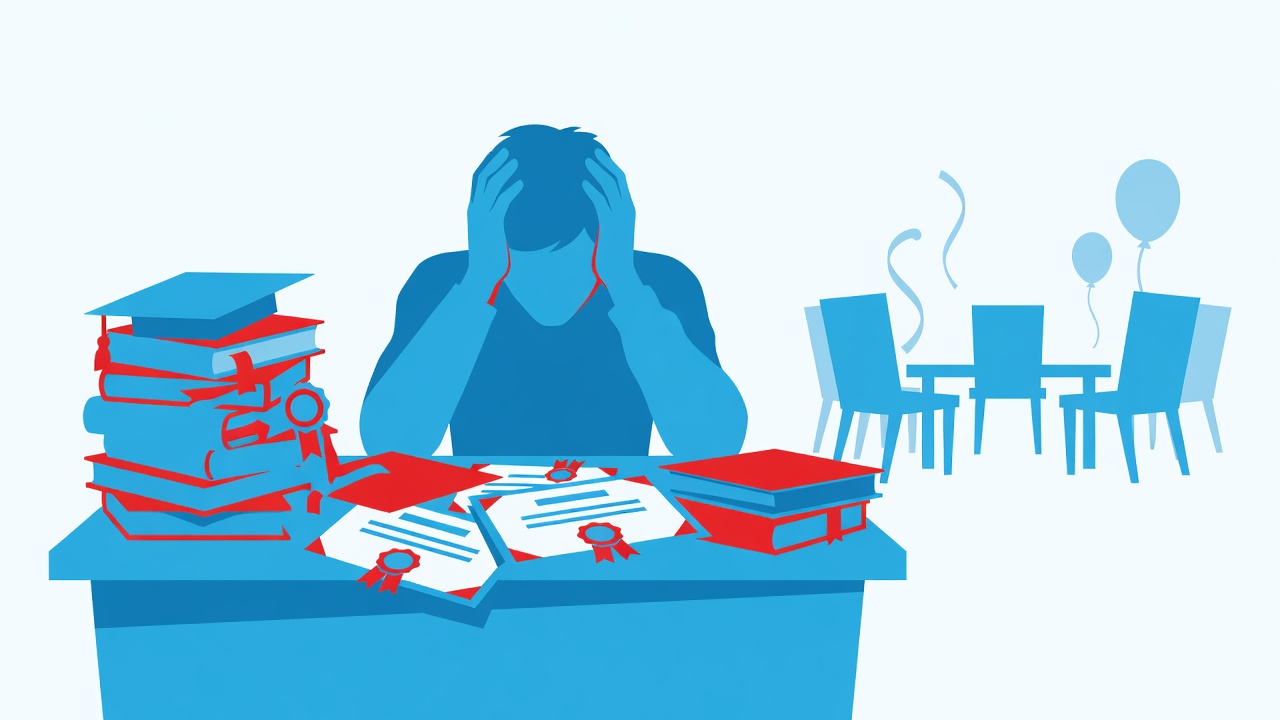
A student graduates with strong academic credentials and enters a workplace. They can do the technical work. But they can't take feedback without shutting down. They don't listen in meetings, they wait to talk. They avoid conflict by going around people instead of through the conversation. They can't read the room. Within six months, a supervisor is writing notes about "attitude" and "team fit" while the student's technical output is fine.
That student is not broken. They are untaught. The skills that would have prevented every one of those notes exist. They can be taught. They just weren't.
The curriculum held this student back not by failing to teach algebra, but by never treating interpersonal skills as curriculum at all.
The Measurement Problem, and Its Solution
The reason schools underinvest in soft skills comes down to measurement. Hard skills produce grades, scores, and test results. Soft skills produce... what exactly? That ambiguity has given administrators cover to deprioritize them.
The measurement problem is solvable. Boost uses a self-assessment model: students rate themselves on 26 specific skills, before and after the program. The movement on that rating is the data. A student who goes from a 3 to a 7 on active listening has measurable improvement on a measurable skill.
More compellingly, the belief data is clear: 20% of students say "Absolutely" to believing life is skill-based on day one of Boost. By the final day, that number is 87%. That's not a soft outcome. That's a 67-percentage-point shift in the foundational belief that makes all other skill development possible.
The argument that soft skills can't be measured doesn't hold up when programs actually try to measure them. The argument is really that soft skills haven't been measured, because they haven't been treated as curriculum worth measuring.
What a Balanced Curriculum Actually Looks Like
A curriculum that treats both hard and soft skills as deliberate instruction doesn't require dismantling what already works. It requires adding a dedicated course.
Not a homeroom. Not an advisory. Not a teacher who weaves soft skills into English class when time allows. A dedicated course with named skills, structured practice, and measurable outcomes. Eight weeks. One session per week. Twenty-six skills. A rating worksheet at the end.
That is the equivalent of treating soft skills the way schools treat hard skills, as required learning with a defined scope, a delivery mechanism, and a way to know whether students got there.
The schools that do this aren't replacing anything. They're completing the picture.
Frequently Asked Questions
What is the difference between hard skills and soft skills?
Hard skills are technical, task-specific capabilities that can be directly measured: coding, writing, math, operating equipment. Soft skills are interpersonal and behavioral capabilities: listening, conflict resolution, empathy, self-regulation, communication. Both are teachable. The difference is that schools have historically built deliberate curriculum around hard skills and assumed soft skills develop on their own.
Why do employers care so much about soft skills?
Employers can teach technical skills on the job more easily than they can teach interpersonal skills. They already filter for a minimum level of technical competence in the hiring process. What differentiates candidates, and what determines long-term performance and advancement, are the soft skills. Eighty-five percent of hiring managers say soft skills matter as much as or more than technical skills in their evaluations.
Can soft skills actually be taught in school, or are they personality traits?
Soft skills are learnable skills, not fixed traits. The distinction matters because personality-based framing suggests you either have them or you don't. Skill-based framing means they can be named, taught, practiced, and improved. The research backs this up: programs with explicit skill instruction, structured practice, and measurable self-assessment produce consistent gains.
How do you measure soft skills?
The most practical method is structured self-assessment: students rate themselves on specific named skills before and after a program. The change in rating across the program is the measurement. Supplementary methods include behavioral indicators, peer feedback, and attitude surveys. The key is treating measurement as a design requirement from the start, not an afterthought.
How does Boost address the hard skills vs. soft skills gap?
Boost is designed to sit alongside the academic curriculum, not replace it. It adds twenty-six explicitly named soft skills across five categories (interpersonal, character, mindset, wellbeing, and achievement), taught in an eight-week course with structured practice and a final self-assessment. Schools that run Boost aren't choosing soft skills over hard skills, they're finally teaching both.
References
- Employer soft skills survey: https://gitnux.org/active-listening-statistics/
- What Employers Actually Mean When They Say They Can't Find Good Workers
- 26 Skills Every High School Student Needs Before Graduation