
What Happens to Students Who Never Learn to Handle Conflict — And Why Schools Have to Step In
- Students who never learn to handle conflict professionally don't become adults who avoid conflict. They become adults who handle it badly: avoidance, blowups, gossip, and passive-aggression become their defaults.
- The skills involved in professional conflict resolution can be named and taught. They are not mystery qualities that some people have and others don't.
- Workplace conflict is one of the most cited reasons for termination, resignation, and underperformance. The cost shows up years after a student leaves the building.
- Schools that teach conflict resolution skills are not adding a "nice to have." They are preventing a pattern of professional failure that would otherwise be set in the 14-24 brain window.
- Conflict resolution is not conflict avoidance. The goal is students who can address a problem directly, honestly, and constructively, not students who smooth things over until they explode.
What "Never Learning" Actually Produces
Picture a student who is smart, hard-working, and technically capable. They get into college, they perform well academically, they land their first job. Then something goes wrong with a coworker. Maybe the coworker is taking credit for shared work. Maybe there's a disagreement about how to approach a project. The conflict is small enough to address directly. The student doesn't know how.
So they don't address it directly. Instead they go around the person. They complain to other coworkers. The conflict grows. Eventually a manager gets involved. Now there's documentation. The student is described as "difficult to work with." They had no idea this was how they were coming across.
This is not a character story. This student is not a bad person. They are an untaught person. No one ever taught them what a direct, professional conflict conversation looks like. So they did what their instincts and environment gave them: avoidance, venting, escalation.
The Patterns Set in Adolescence
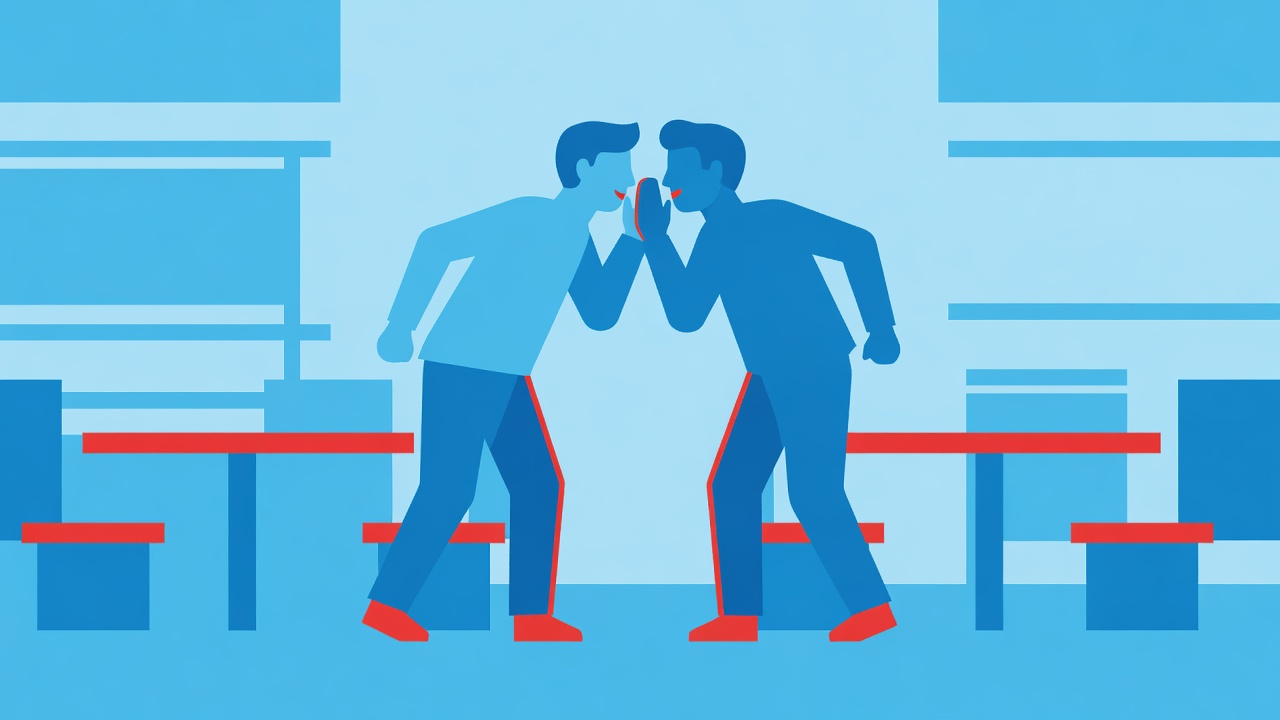
Adolescence is when conflict patterns get established. The way a student responds to being wronged, dismissed, or challenged during high school becomes the default they carry into their twenties. Not because the pattern is fixed, but because the brain's most efficient neural pathways form during this window, and patterns practiced repeatedly become automatic.
Students who grow up in environments where conflict is handled through avoidance learn avoidance. Students who grow up where conflict escalates to volume and aggression learn escalation. Students who are taught a third option, direct and respectful communication, have something different to practice. And what they practice becomes what they do automatically under stress.
This is why high school is the optimal time to teach conflict resolution. Not because it can't be learned later, but because the window when new patterns become defaults is open. Teaching it in a corporate onboarding at 27 is possible. Teaching it in a way that becomes automatic under pressure is much harder.

What the Skill Actually Requires
Conflict resolution is not one skill. It's a cluster of skills that work together.
The first is the ability to address a problem directly without letting it build. Most students' default is to let a conflict fester until it either explodes or the relationship quietly ends. Teaching students to address something small when it's small, rather than waiting until it becomes large, changes the entire trajectory of their conflicts.
The second is the ability to describe the problem without attacking the person. "You always interrupt me" is an attack. "In our last three meetings, I've noticed I keep getting cut off before I finish my point, and I'd like to figure out how to make sure both of us can finish a thought" is a description. The distinction is learnable. Students have to practice it, because the attack version comes naturally and the description version doesn't.
The third is staying in the conversation. The hardest moment in a conflict resolution conversation is not the opening. It's when the other person gets defensive. Most people respond to defensiveness by either escalating or shutting down. Staying present, acknowledging the other person's perspective, and continuing the conversation without backing down from the substance is a skill that takes real practice.
The fourth is resolution, not just venting. The goal is a workable outcome, not just the expression of grievance. Students who learn conflict resolution understand the difference between saying "here's how I feel" and "here's what I need going forward." Both matter. The second is what makes the conversation productive.
What Schools Can Do
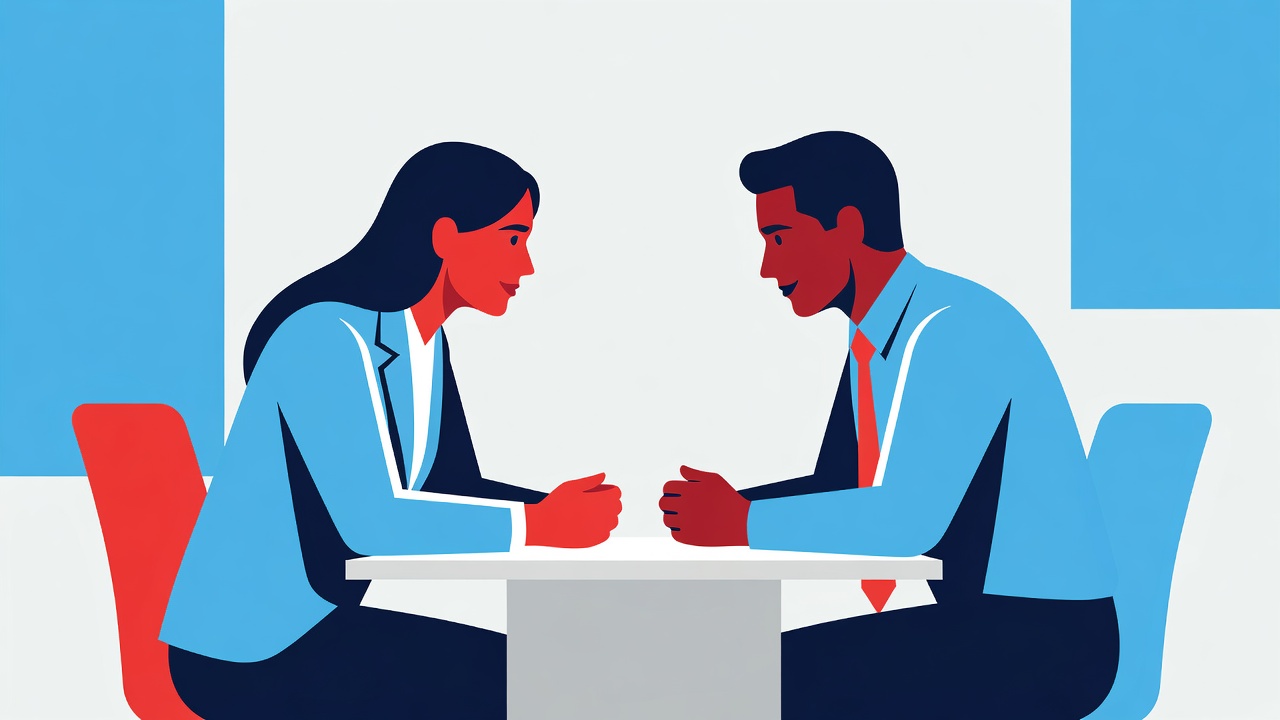
The first thing schools can do is stop treating conflict as a disciplinary event and start treating it as a teachable moment, and eventually as curriculum.
When a conflict happens between students and the school's only response is consequence, the students learn nothing about how to handle the next conflict better. The consequence addresses the behavior. It doesn't build the skill. Schools that add conflict resolution curriculum alongside their conduct policies are developing the skill rather than just enforcing the rule.
Teaching conflict resolution explicitly means: naming the skills, role-playing the scenarios, giving feedback on how the conversation went, and doing it repeatedly until students have real practice. Not one lesson. Not one conversation. A structured curriculum with sufficient practice to build a new default.
At Boost, conflict skills are woven into the interpersonal and character categories. Humility, empathy, honesty, and apologizing quickly and sincerely are all taught as discrete skills that combine into the ability to navigate conflict professionally. They don't emerge from a single lesson about "conflict resolution." They emerge from consistent skill-building across a multi-week program.
Frequently Asked Questions
What are the long-term consequences of not learning conflict resolution skills?
Students who don't learn conflict resolution skills typically develop avoidance or aggression as their defaults. In the workplace, this shows up as gossip instead of direct conversation, passive-aggression instead of clear feedback, abrupt resignation instead of addressing a solvable problem, and a pattern of short job tenure. These outcomes are expensive for employers and career-limiting for employees.
Can conflict resolution really be taught, or does it come down to personality?
Conflict resolution is a learnable skill set. The specific behaviors involved (describing a problem without attacking, staying in a difficult conversation, working toward a resolution rather than just expressing grievance) can all be named, practiced, and improved with feedback. Treating it as a personality trait puts it outside the reach of education. Treating it as a skill puts it squarely in the curriculum where it belongs.
At what age should schools start teaching conflict resolution?
Some foundational skills can and should be introduced earlier, but the most durable instruction happens during the 14-24 window, when the adolescent brain is actively forming behavioral defaults. High school is the optimal entry point for conflict resolution curriculum that is sophisticated enough to apply to real workplace and relationship contexts.
How is conflict resolution different from conflict avoidance?
Conflict avoidance keeps the peace in the short term and builds resentment in the long term. Conflict resolution addresses the problem directly, at an appropriate level of formality for the relationship, before it grows into something harder to fix. Teaching students to resolve conflict is not teaching them to be confrontational. It's teaching them to be honest and direct in a way that preserves the relationship.
How does Boost teach students to handle conflict?
Boost addresses conflict through several overlapping skills: Honesty and Integrity (the commitment to say what is true rather than what is comfortable), Empathy (the ability to understand the other person's perspective before pressing your own), Humble (the willingness to acknowledge your own role in a problem), and Apologize Quickly and Sincerely (the capacity to take responsibility without defensiveness). Together, these skills form the foundation for conflict resolution that holds up under real pressure.
References
- Workplace conflict and turnover research: https://www.shrm.org/topics-tools/news/employee-relations/the-real-cost-of-conflict
- What Life Is Skill-Based Actually Means, and Why It Changes Everything for Students
- The Real Reason Students Can't Hold a Conversation Anymore