Why Adding One More Program Won't Fix Student Behavior
- Our opinion: when student behavior does not improve, the usual instinct is to add another program. We think the better move is to replace scattered efforts with one dedicated course that students actually practice.
- Leaders at 72% of schools with an SEL curriculum told a February 2024 federal survey (1,700 schools) that time was the biggest limit on carrying it out.
- A 2025 Yale meta-analysis of 40 evaluations found programs lasting more than four months gained over 8 percentile points on academics, about double the average.
- In EdWeek Research Center surveys, about a quarter of educators said SEL had no impact at the 2024 peak, while a majority saw a positive effect. The evidence says SEL can work, but delivery decides it.
Here is our blunt take on why SEL isn't working in schools that have already tried it: the content is rarely the problem, and the scatter is. A poster here, an assembly there, a ten-minute advisory slot on Fridays, a hope that every teacher will weave it into algebra. Each piece is well meant. Together they add up to a lot of effort and very little practice. By soft skills we mean the behaviors, such as listening, reliability, and handling feedback, that determine how a student applies what they know. We think those behaviors have to be taught like skills, and that means giving them a home. This piece is opinion, built on the best recent evidence we could find and our own experience, and we flag where it runs out.
Why SEL Isn't Working in Schools: The Scatter Problem
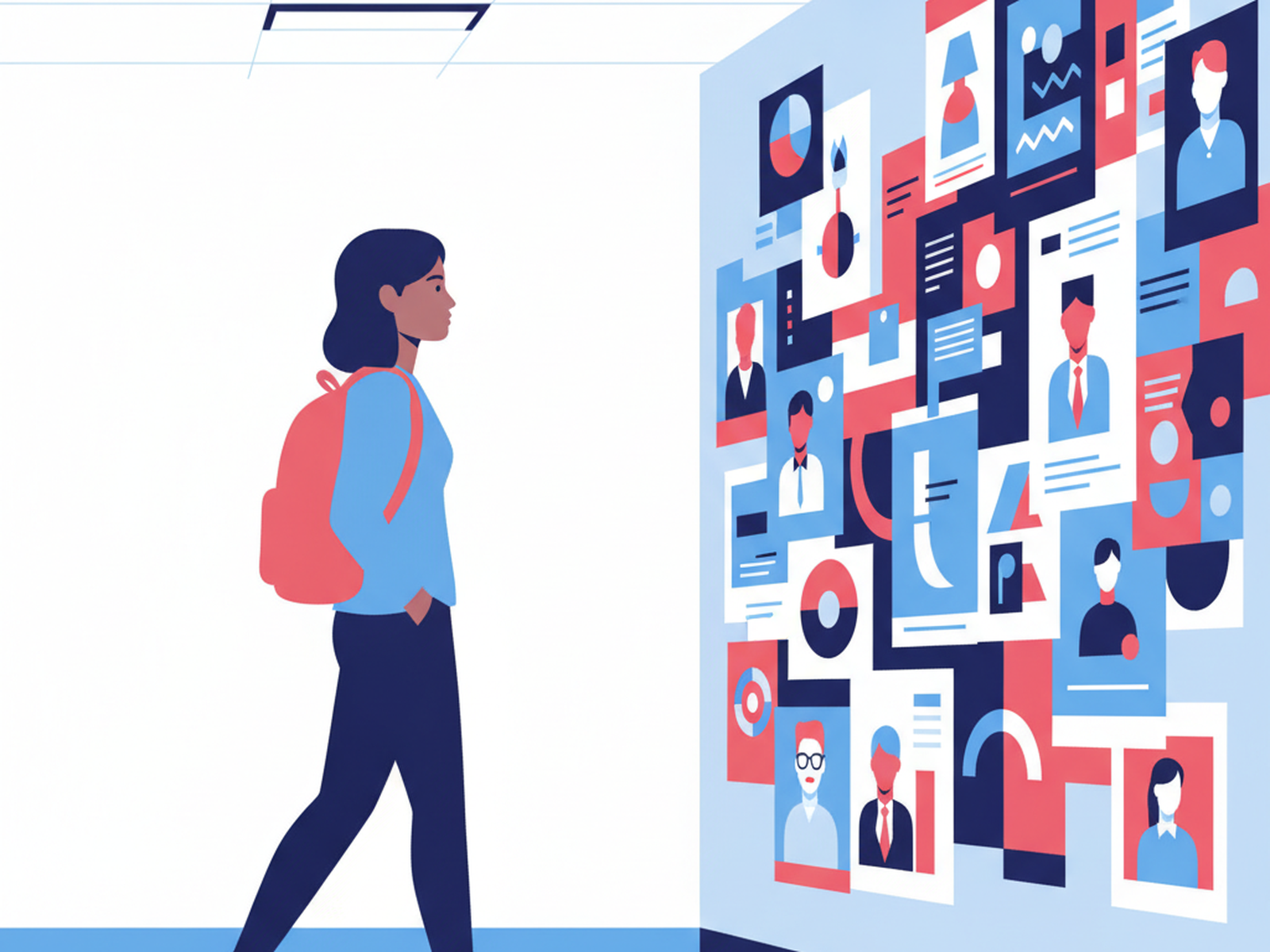
SEL often disappoints because it is spread so thin that no student gets enough repetition of any skill. When we talk with administrators, the pattern is familiar. The school has a character theme of the month, an advisory curriculum, a counselor's lunch group, an SEL block in the elementary feeder, and a poster campaign. Behavior referrals do not budge, and someone concludes that students are unmotivated.
We would put it differently. Students are not broken, they are untaught. Many of the behaviors that get labeled "unmotivated" or "disrespectful" are skills nobody practiced with them [Internal: Boost Brand Bible v2]. A student who does not know how to apologize, disagree calmly, or ask for help will not learn it from a slogan on a wall.
This is why we wrote earlier that SEL is struggling in most schools. The gap between how much SEL schools report and how much behavior changes is a delivery gap.

What the Data Says About Time and Initiative Overload
Schools are not short on SEL activity, they are short on time to do any of it well. In February 2024, the federal School Pulse survey reached 1,700 public schools. Among leaders at schools with an SEL curriculum, 72% said time most limited how well they could carry it out, as Education Week reported. CASEL's Sherrie Raven put it this way: "Most often, these are barriers of time."
Adoption is not the issue. A September 2024 RAND report funded by CASEL found that 83% of principals said their schools used an SEL curriculum in 2023 to 2024, up from 76% two years earlier, per the RAND report page.
Educators describe the pile-up themselves. Alison Mello, a longtime curriculum director and assistant superintendent, argued in a September 2024 Education Week opinion column that stacking adoptions keeps teachers from getting proficient at any of them. Her advice was short: "Less is more." We agree, and we would extend it to soft skills. Fewer efforts, with a clear owner, beat many efforts with none.

What the Best Evidence Points To: Dedicated, Sustained Instruction
The best recent evidence points toward sustained, separate lessons, not scattered exposure. In October 2025, a Yale team led by Christina Cipriano published a meta-analysis in Review of Educational Research covering 30 programs, 40 rigorous evaluations, and almost 34,000 students. As The Hechinger Report summarized it, students gained about 4 percentile points on grades and test scores on average, and programs lasting more than four months gained more than 8 points.
Every program studied was a separate, stand-alone set of lessons, and secondary programs typically ran 30 to 90 minutes, weekly or monthly. Nobody tested whether weaving SEL into academic classes works as well. That is the part we want you to notice. The model most schools are drifting toward, embedding everything everywhere, is the one without direct evidence.
Cipriano described the size of the effect to NPR as "the difference between a C and a B." That is modest and honest, and it is for academics, which these programs were not designed to move.
Why One More Program Fails Where a Course Can Work
Another add-on fails because it inherits the same problems as the last one: no owner, no protected time, and no practice. Take them one at a time.
No owner. When every adult is responsible, nobody is. Jerome Graham of Michigan State University noted in a July 2026 Education Week report that some teachers see SEL as someone else's job, because they came to teach math or literature. That is a reasonable reaction to an unfunded extra duty, not a character flaw.
No protected time. An assembly feels like action. It is one concert, and nobody becomes a musician by attending one concert [Internal: Boost Messaging and Copy Bank]. We explain the arithmetic in why one assembly cannot teach a soft skill.
No practice. Telling a teenager to make eye contact is not teaching it. Our program puts students in role plays and peer video practice, because students fix in ten minutes what a coach could not fix in an hour of telling them [Internal: Boost Bible]. Practice, not lectures, is the active ingredient.
A course also lets you teach the why first. When students connect a skill to the life they want, they lean in [Internal: Boost Bible]. It is also where sequence matters: our 26 skills are Level 1 foundations, like basic math before algebra, and the Level 2 skills employers name, such as conflict resolution and leadership, depend on them [Internal: Boost Brand Bible v2].
What This Argument Does Not Say
We are not claiming SEL fails everywhere, or that a course always beats other models. The EdWeek Research Center surveyed nationally representative groups of teachers, principals, and district leaders in 2022, December 2024, and December 2025 to January 2026. About half rated SEL's effects as "somewhat positive," a majority saw a positive impact, and the share saying SEL had no impact peaked at about a quarter in 2024, per Education Week's July 2026 report. Michael Petrilli of the Thomas B. Fordham Institute said the main takeaway was stability. Plenty of schools are getting value.
We also have no head-to-head trial of a course versus advisory versus embedding, and the Yale studies skew toward elementary grades. Our own pilot involved about 30 students, and about 87% said at the end they understood that life is skill-based, compared with 20% on day one [Internal: Boost Brand Bible v2]. It is small, self-reported, and not independent evidence of behavior change. The opinion in this piece is ours. The numbers are the numbers.
What to Do When SEL Isn't Working in Schools
Start by subtracting, then give what is left a real home. Here is the order we would use.
- List every soft skills effort running in your building. Include assemblies, posters, advisory lessons, and clubs. Write down who owns each and how many minutes students get.
- Retire what has no owner and no practice. This frees time, which is the barrier schools cite most.
- Pick one dedicated course with a named sequence of skills. Look for role plays, feedback, and a plan to measure growth, as we outline in our post on adding a curriculum without adding to teachers' plates.
- Let teachers reinforce, not carry, the teaching. A shared vocabulary in classrooms helps once students have been taught the skills somewhere.
We know this is easier to write than to schedule. If you want to think through what you could cut and where a course would fit, you can schedule a discovery call and we will work through it with you.
Frequently Asked Questions
Why Isn't SEL Working in My School?
Often because it is scattered across assemblies, posters, and short advisory slots with no owner and no practice. Time is the barrier leaders cite most, with 72% naming it in a 2024 federal survey of 1,700 schools.
Does SEL Work at All?
Some of it does. A 2025 Yale meta-analysis of 40 evaluations found academic gains of about 4 percentile points on average, and more than 8 points for programs lasting over four months. The effects are modest and the studies skew toward younger students.
Should We Drop Our Current SEL Efforts?
Not all at once. Inventory them, keep what has an owner, protected time, and real practice, and retire the rest to free up the schedule.
Is a Dedicated Course Better Than Embedded SEL?
We think so for high school, but no study compares them directly. The Yale analysis covered only stand-alone programs and did not test embedding.
What Should Administrators Do First?
Count what is already running and how many minutes students actually get. That one list usually shows where the scatter is.
References
- Education Week: What's Really Holding Schools Back From Implementing SEL?
- RAND: Social and Emotional Learning in U.S. Schools
- The Hechinger Report: Some Social Emotional Lessons Improve How Kids Do at School, Yale Study Finds
- Education Week: Support for Teaching SEL Skills Remains Steady Despite Political Pushback
- Education Week Opinion: 14 Things Schools Should Stop Doing Now
- NPR: Research Shows Social Emotional Learning Can Boost Grades and Test Scores
- Why SEL Isn't Working in Most Schools (And What Actually Does)
- Why One Assembly Can't Teach a Soft Skill
- How to Add a Soft Skills Curriculum Without Adding to Your Teachers' Plates
Ready to bring Boost to your school?
Schedule a discovery call to see how the Boost curriculum fits your students.
Schedule a Discovery Call