The Boost Program: Every Question School Administrators Ask Us, Answered in One Place
- The Boost Program is an 8-week course that teaches high school and young adult students 26 Boost Skills across three pillars: People Skills, Character, and Healthy Mindset.
- Certified Boost coaches can lead it on-site, or your own staff can be certified to teach it.
- Only 42% of employers screened candidates by GPA in 2026, down from 73% in 2019, according to NACE, which is why administrators keep asking how to teach the skills a transcript misses.
- Our only outcome data is a small, self-reported pilot of about 30 students, and we treat it as a signal, not proof.
Picture an assistant principal with a stack of vendor emails, a board meeting on Thursday, and a simple question: what exactly is this program, who teaches it, and what will it ask of my staff? We wrote this page for that person. These are the Boost Program frequently asked questions we hear most from school administrators, answered in one place and grouped by the order in which the questions usually come up.
What Is The Boost Program and Who Is It For?
The Boost Program is a structured, 8-week course that teaches students 26 practical soft skills, built on the idea that life is skill-based [Internal: Boost Bible]. The skills sit in three pillars: People Skills (eye contact, listening, asking questions), Character (honesty, empathy, humility), and Healthy Mindset (growth mindset, grit, goal setting) [Internal: Boost Program Research Paper].
It is designed for high school and young adult students, and it can run in schools, youth organizations, and workforce programs. Founder Rob Heller first built it for his own teenage son after failing to find an existing program that taught these skills [Internal: Boost Program Website Knowledge Base]. We start from a simple belief: students are not broken, they are untaught.
Boost is not therapy, and Boost Certified Coaches are not therapists or mental-health professionals [Internal: Boost Messaging and Copy Bank]. If you have seen other programs that share the name, our guide to everything else named Boost sorts them out, and our full program overview goes deeper.
How Is the Boost Program Delivered and Who Teaches It?
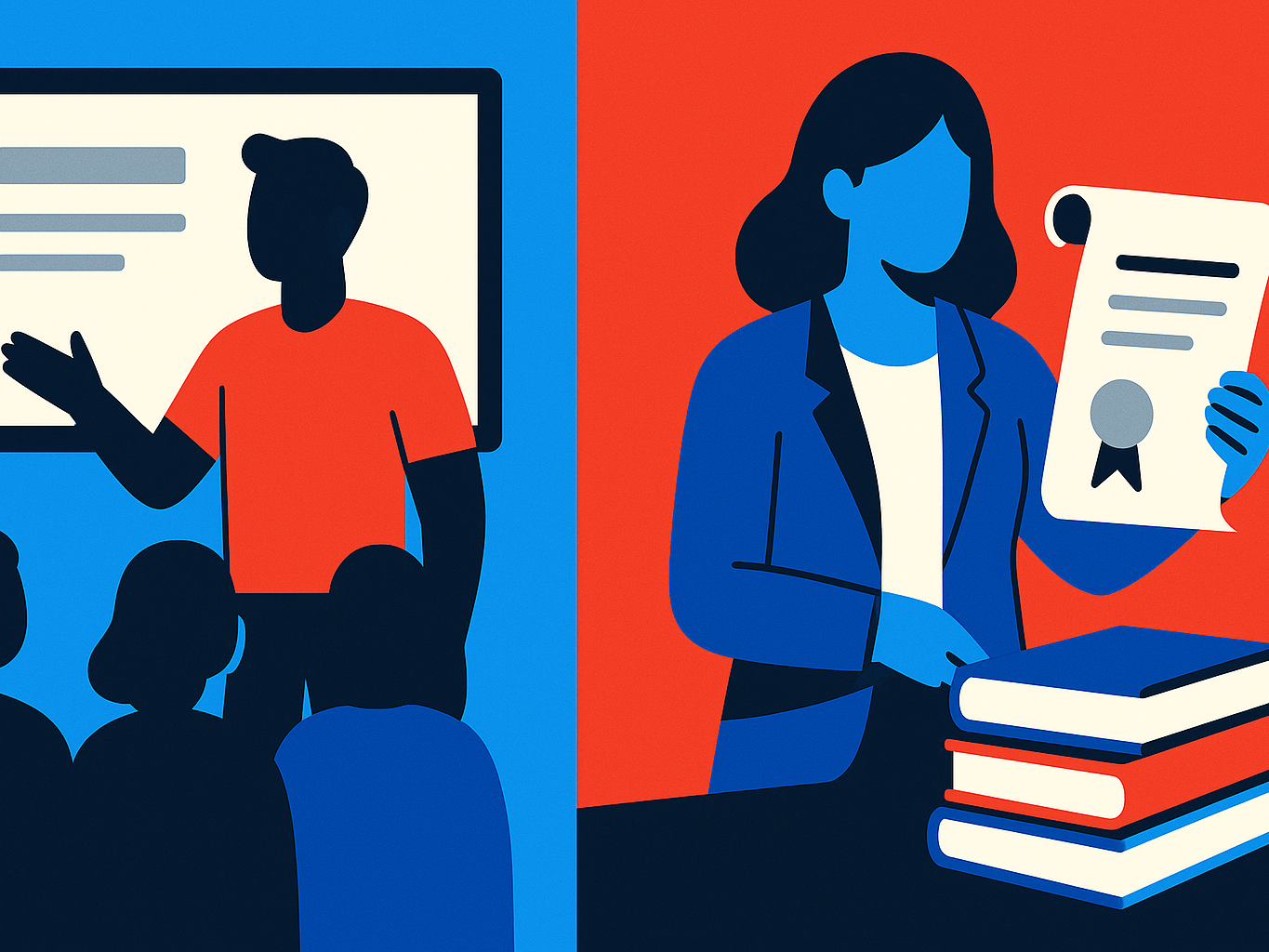
You have two ways to deliver Boost: bring in a certified Boost coach, or certify one of your own staff members to teach it [Internal: Boost Program Website Knowledge Base]. With the first option, certified instructors come on-site and lead the program for students and staff, in school-day sessions, workshops, or multi-week formats. With the second, educators, coaches, or youth leaders are trained in person or virtually, receive the videos, workbooks, and full curriculum, and get ongoing support from the Boost team.
Sessions are active, not lecture-based. The program materials describe videos, discussion, worksheets, role-play, and reflection, and the role-play is where students practice skills such as greeting someone or reading body language [Internal: Boost Program Research Paper]. There is no new software or tech platform to adopt. If staff time is your first concern, we wrote about adding a soft skills curriculum without adding to teachers' plates.
How Long Is the Boost Program and What Does Each Week Cover?
The core program runs 8 weeks, with one session each week [Internal: Boost Bible]. Week 1 helps students picture the life they want. Week 2 covers becoming likeable, and Week 3 covers the skills that earn respect. Week 4 covers the skills that power growth, and Week 5 is You vs. Your Phone. Weeks 6 and 7 teach students to manage their thinking and create calm, and Week 8 is a personal plan called My Boost Blueprint [Internal: Boost Brand Bible v2].
Progress is tracked two ways. Students and a sponsor (an adult mentor) rate the student on a 1 to 5 scale in a "Striving to 100" assessment at the start and again at the end [Internal: Boost Program Research Paper]. On the last day, students color each of the 26 skills green, yellow, or red and choose where to focus next [Internal: Boost Bible]. A longer semester option, Boost Applied, covers the same 26 skills with more practice [Internal: Boost Messaging and Copy Bank].
How Does the Boost Program Fit With the SEL We Already Do?
Boost works best as an addition to your existing social-emotional work, not a replacement for it. CASEL reports that 83% of principals said their schools used an SEL curriculum in 2023 to 2024, up from 46% in 2017 to 2018, so most schools are already doing something CASEL. The open question is whether students in grades 9 to 12 get a dedicated, practiced version.
The research on what makes programs work is useful here. A meta-analysis of 213 school-based programs and 270,034 students found an 11-percentile-point gain in academic achievement overall, and programs that were sequenced, active, focused, and explicit (SAFE) produced significant effects on all six outcomes, while programs without those traits did so on only three (Durlak et al., Child Development). Boost uses a weekly sequence, role-play, a defined skill list, and explicit teaching of the why. That is our own reading of the design, not an independent rating.
What Results Has the Boost Program Produced?
We have one small pilot, and it is self-reported. In a pilot of about 30 students, students answered the same question on day one and on the last day: "After the Boost sessions I now feel more than ever that there is a set of specific skills that allows me to obtain all I want in life." On day one, 20% answered "Absolutely"; on the last day, 87% did [Internal: Boost Bible]. Roughly 21 of the 30 students named phone use as the skill they most wanted to keep working on [Internal: Boost Brand Bible v2].
Treat that as an early signal about understanding, not as proof of behavior change. The program has no independent or third-party outcome data yet, and the Boost research paper says so directly [Internal: Boost Program Research Paper]. What we can say is that the target is real: NACE found only 42% of employers screened by GPA in 2026 versus 73% in 2019, and 70% now report using skills-based hiring (NACE). Ask any vendor, including us, what evidence sits behind the claims.
What Does the Boost Program Cost and How Do You Get Started?
Cost depends on which delivery option you choose: coach-led, staff certification, or a multi-school arrangement. We quote it on a discovery call rather than print a number here that may be out of date. For ideas on budget lines and approval steps, see our superintendent's guide to funding and approving a soft skills curriculum.
Getting started is short. Tell us your grade levels, group sizes, and whether you prefer to bring in a coach or train your own staff. You can schedule a discovery call and bring every question on your list, including the ones this page missed.

Frequently Asked Questions
What Is the Boost Program?
It is an 8-week course teaching 26 Boost Skills across People Skills, Character, and Healthy Mindset. It is built for high school and young adult students and delivered by certified Boost coaches or trained staff.
Who Teaches the Boost Program Curriculum?
Certified Boost coaches teach on-site, or a staff member you certify teaches it. Certification includes the videos, workbooks, and full curriculum, plus ongoing support.
How Long Is the Boost Program?
The core course is 8 weeks, with one session per week. A longer semester option, Boost Applied, covers the same 26 skills with deeper practice.
How Much Does the Boost Program Cost?
It depends on whether you choose coach-led delivery, staff certification, or a multi-school arrangement. We provide pricing on a discovery call.
Is the Boost Program Therapy?
No. Boost teaches practical skills, and Boost Certified Coaches are not therapists or mental-health professionals.
References
- NACE: Employer Use of Skills-Based Hiring Practices Grows (January 2026)
- CASEL: More Than 8 Out of 10 U.S. Schools Implement SEL
- Durlak et al., The Impact of Enhancing Students' Social and Emotional Learning (Child Development, 2011)
- What Is The Boost Program?
- Boost Program vs. Everything Else Named Boost
- How to Add a Soft Skills Curriculum Without Adding to Your Teachers' Plates
- A Superintendent's Guide to Funding and Approving a Soft Skills Curriculum
Ready to bring Boost to your school?
Schedule a discovery call to see how the Boost curriculum fits your students.
Schedule a Discovery Call