Is The Boost Program a Nonprofit, a Curriculum, or a Coaching Company? Here's the Clear Answer
- The Boost Program is a for-profit curriculum and coaching-delivery company (legal entity: Boost Program for Kids, LLC), not a nonprofit, not a government program, and not a generic business-coaching brand.
- It delivers a structured, 8-week (or full-semester) course teaching 26 Boost Skills across three pillars: People Skills, Character, and Healthy Mindset, taught in schools by certified Boost coaches.
- Several unrelated organizations use some version of the word "Boost," including Maryland's state-run BOOST tuition-voucher program and Experian Boost, a free credit-score feature; none of them are affiliated with The Boost Program.
- Founder Rob Heller built the curriculum after being unable to find an existing third-party program to teach his own son foundational life skills.
- Schools, or a funder acting on a school's behalf, pay The Boost Program directly for delivery; there's a related membership body, the Boost Youth Alliance, but the program itself is not a 501(c)(3).
A principal we talked to last spring put it plainly during a first call: "Before I bring this to my superintendent, I need to know what you actually are." Fair question. It's also one we get often enough that it's worth answering in one place, clearly, instead of leaving it scattered across a homepage and a sales deck.
If you searched something like "is the Boost Program a nonprofit" and landed here, you're probably trying to sort out one of three things: what kind of entity you'd be signing a contract with, whether a name you saw somewhere is even the same organization, or how to describe us accurately in a board packet. All three questions have the same starting point, so let's start there.
What The Boost Program Is, Plainly Stated (Not a Nonprofit)
The Boost Program is a for-profit curriculum provider, and that's the direct answer to the question most people ask first: is the Boost Program a nonprofit? No. We are structured as a company (Boost Program for Kids, LLC), we sell a service, and schools or their funders pay us for it, the same way they'd pay any vendor delivering a program, a platform, or professional development.
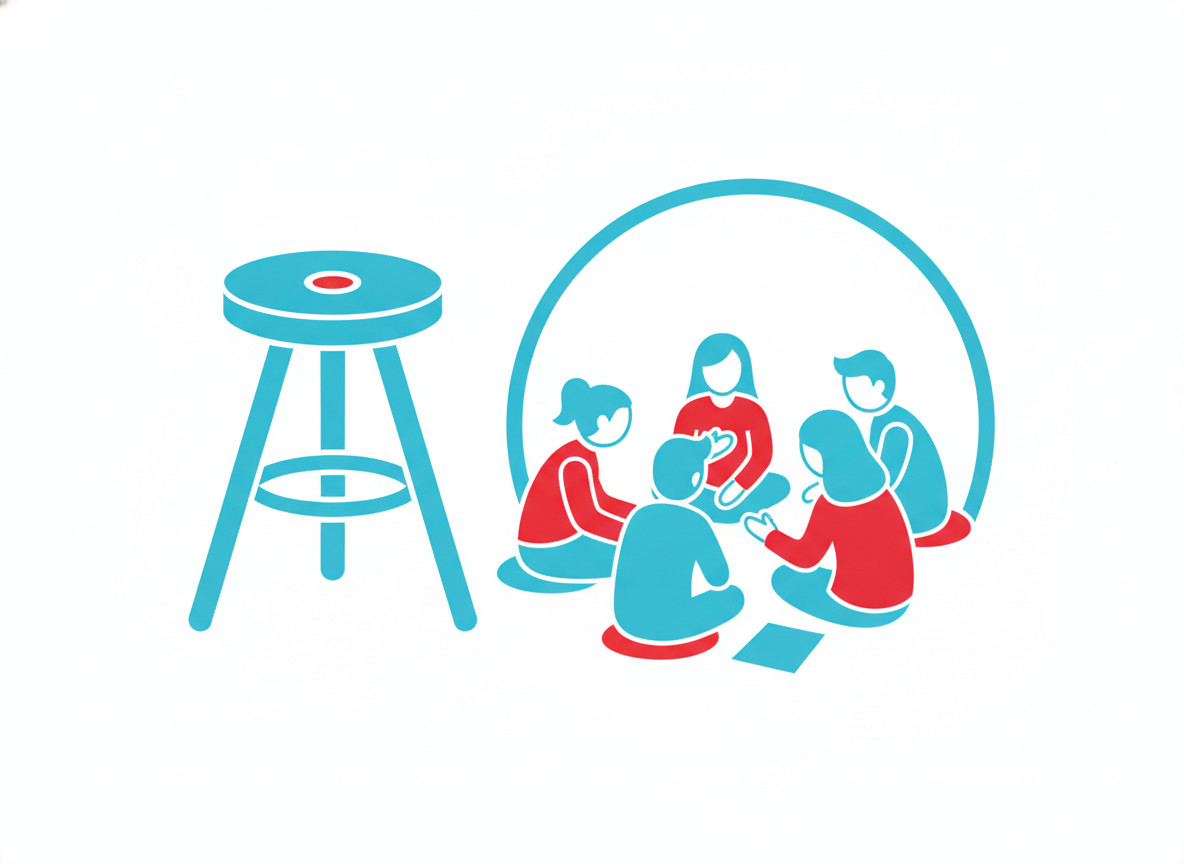
What we sell is specific: an 8-week course (or a full-semester version called Boost Applied) that explicitly teaches 26 Boost Skills, organized under three pillars we call the Three Legs of the Stool: People Skills, Character, and Healthy Mindset. Some schools call this territory "soft skills." Others call it "social-emotional learning." Whatever the label, the idea underneath it is the same one we build the whole course around: life is skill-based. The things that determine whether a young person thrives, relationships, respect, resilience, career, aren't fixed traits or luck. They're learnable, and most students are never explicitly taught them. Growth gets tracked with a simple pre/post self-assessment we call Striving to 100, where a student and an adult mentor each rate progress across the 26 skills at the start and end of the course.
Delivery happens one of three ways: a certified Boost coach comes on-site and runs the sessions, a school staff member gets certified to lead it themselves, or a school joins the Boost Youth Alliance and runs the curriculum with its own team using our materials. All three teach the same 26 skills. The difference is who's in the room and how much support comes with it.
That's the whole shape of the thing. It's a course, delivered by trained people, sold to schools. 83% of U.S. schools now report implementing some kind of SEL curriculum, up from 46% just a few years ago, according to CASEL's 2024 Year in Review, so administrators are fielding a lot of pitches that sound similar. Ours is a dedicated class, not something folded into every teacher's lesson plan, and it's built for high school and young-adult students specifically, a group most SEL programs still don't reach well.
What It Is Not, With the Other Boost-Named Programs Named Clearly
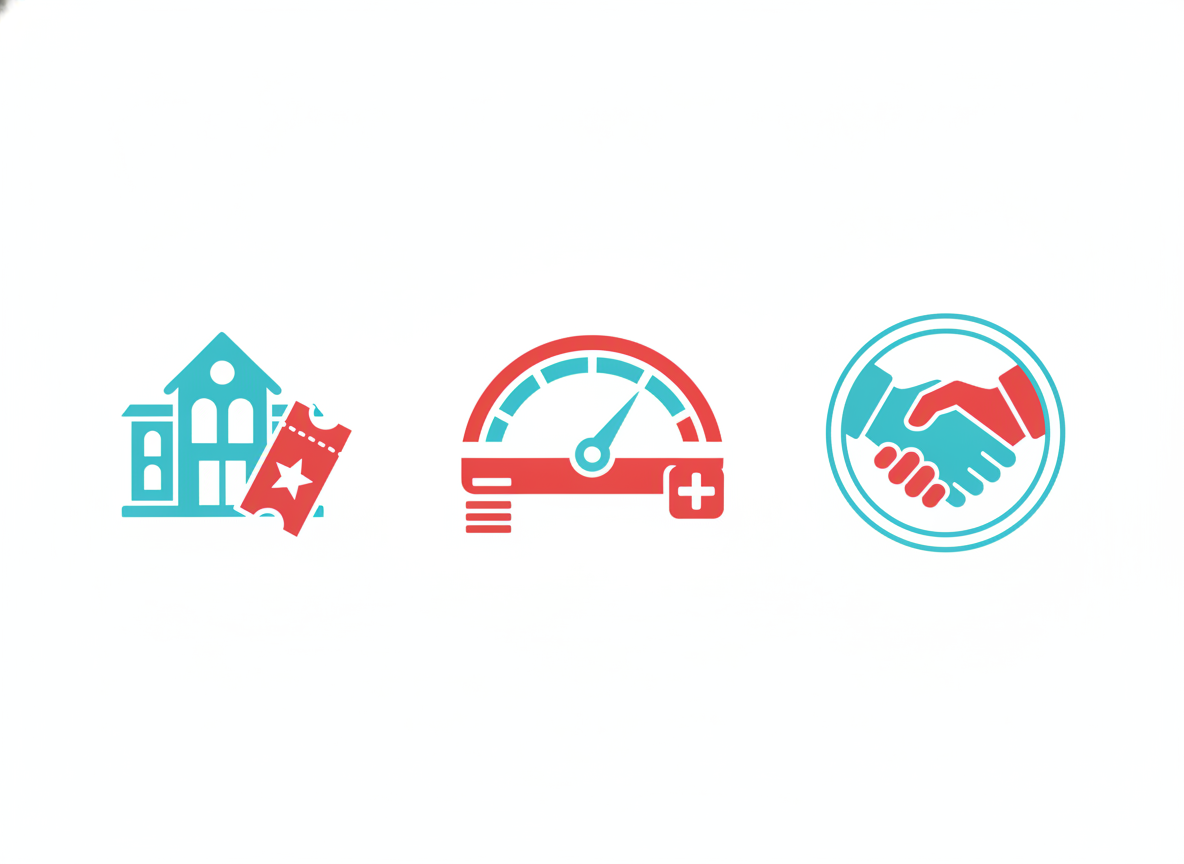
The Boost Program is not a state agency, not a fintech feature, and not one of the many unrelated businesses that happen to share its name. "Boost" is a common word, and at least a few real organizations have landed on it independently, which is where most of the confusion starts, and it's not really our fault or yours.
Maryland's BOOST program (Broadening Options and Opportunities for Students Today) is a state government initiative, not a company and not a curriculum. It's a tuition-voucher program administered by the Maryland State Department of Education, helping lower-income families afford private-school tuition. According to EdChoice, it served roughly 2,403 students in 2024-25 on a $9 million legislative budget for 2025-26. It teaches nothing itself. It's a funding mechanism, run by a state agency, with zero connection to The Boost Program.
Experian Boost isn't an organization at all. It's a free feature inside Experian's consumer credit product line that lets people add on-time utility, phone, and streaming payments to their credit file, a tool for raising a FICO score, according to Experian's own explanation. Different industry, different audience, different everything except four letters.
Then there's a long tail of business-coaching brands that use "Boost" in their name, executive coaches, sales-training outfits, small consultancies, most of them one or two people working with adults in corporate settings. That's a legitimate line of work. It just isn't what we do. We're not coaches working one-on-one with adults on leadership or sales technique. We're a curriculum company delivering a structured course to teenagers, inside schools, with a defined scope and a defined outcome.
A name isn't a monopoly, and shared letters don't mean shared ownership, funding, or purpose. The only way to actually tell these apart is to look at what each one delivers, who delivers it, and who's accountable for it, which is exactly what the next section covers for us specifically. (We wrote a longer, side-by-side version of this comparison too, if you want the fuller list: Boost Program vs. Everything Else Named Boost.)
Who Founded It and How It's Delivered
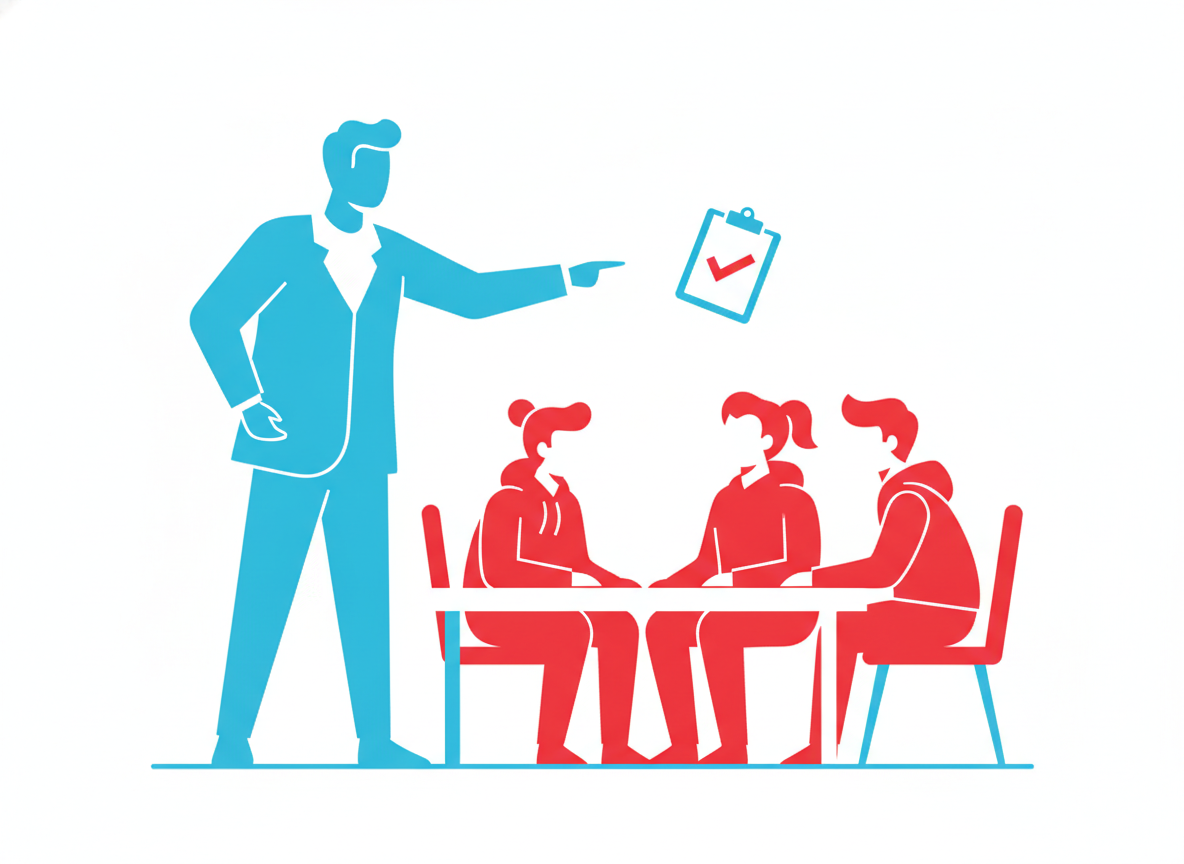
Rob Heller started The Boost Program after searching for a third-party program to teach his own son foundational life skills during his teenage years, and coming up empty. He built the curriculum himself, tested it, and turned it into what schools now bring in. He's the owner and VP of Sales, and he's blunt about the goal: "It's really not career readiness Boost is doing, it's young-adult readiness." That framing matters, because it's part of why the program doesn't fit neatly into "coaching." Coaching, especially the business-coaching sense of the word, tends to be open-ended and personalized. Boost is a fixed, sequenced curriculum with a start and an end.
Delivery is built to be light for schools. The program needs about one hour per week, run by a Boost Certified Coach (BCC) or a trained staff member, using workshop-style sessions, discussion, and role-play rather than lectures. Coaches are explicitly not therapists or mental-health professionals, and we say so directly to every school before day one; this is skill instruction, not counseling.
A pilot cohort of about 30 students ran the full 8-week Foundation program, and 87% finished able to clearly articulate that there's a specific, learnable set of skills behind getting what they want in life, up from a small handful who understood that going in. It's self-reported data from one cohort, not an independent study, and we say that plainly rather than dress it up, because a research field this early deserves honesty about its limits. That caution runs both ways: the widely repeated claim that "soft skills drive 85% of career success" traces back to Charles Riborg Mann's 1918 engineering-education study, not to Harvard or Stanford as it's often misattributed, according to the National Soft Skills Association. We use that number too, but we try to source it correctly.
Where does the money go? Schools pay The Boost Program directly, or a corporate sponsor or foundation pays on the school's behalf, structured as a straightforward vendor relationship: we deliver, the school hosts, the funds go where the delivery happens. There's a related membership organization, the Boost Youth Alliance, for schools and youth organizations that want the same 26 skills without hiring a coach. It's a separate structure built for a different need, not a rebrand of the for-profit company, and not the thing you're paying for when you bring in a Boost Coach.
So, to close the loop on the search that probably brought you here: The Boost Program is a company, it sells a course, the course has a name (26 Boost Skills) and a shape (8 weeks or a semester), and it has nothing to do with a Maryland voucher, a credit-score app, or the dozen coaching firms that happen to share four letters with us. If you want the fuller picture of what the program covers week by week, we've laid that out separately in what The Boost Program is.
Frequently Asked Questions
Is The Boost Program a Nonprofit?
No. The Boost Program (legal entity: Boost Program for Kids, LLC) is a for-profit curriculum and coaching-delivery company. Schools pay for the program directly, or funders/sponsors pay on a school's behalf. There is a related membership body, the Boost Youth Alliance, but the program itself is not a 501(c)(3).
What Is The Boost Program?
It's a structured, 8-week (or full-semester) life-skills course for high school and young-adult students, teaching 26 foundational Boost Skills across three pillars, People Skills, Character, and Healthy Mindset, delivered in schools by certified Boost coaches or trained staff.
Who Founded The Boost Program?
Rob Heller founded it after being unable to find an existing third-party program to teach his own son foundational life skills, then built the curriculum himself. He now serves as owner and VP of Sales.
Is The Boost Program the Same as the Maryland BOOST Voucher Program?
No. Maryland's BOOST (Broadening Options and Opportunities for Students Today) is a state-run, publicly funded tuition-voucher program administered by the Maryland State Department of Education. It has no connection to The Boost Program's curriculum.
Is The Boost Program a Coaching Company?
Not in the generic business-coaching sense. Boost delivers a specific, structured curriculum, 26 skills across an 8-week or semester format, through certified Boost coaches. It's closer to a licensed course-delivery model than open-ended executive or life coaching.
References
- CASEL, 2024 Social and Emotional Learning Year in Review
- EdChoice, Maryland BOOST Program overview
- Experian, What Is Experian Boost?
- National Soft Skills Association, Where Did This Come From?
- Boost Program vs. Everything Else Named Boost
- What "Life Is Skill-Based" Actually Means
- What The Boost Program Is