
How Boost Handles Students Who Resist: Buy-In Without Bribes
- In Gallup's 2025 Voices of Gen Z survey of 1,687 U.S. students (ages 13 to 18), 65% said teachers make schoolwork feel important and 78% said at least one teacher makes them excited about the future.
- Students with five or more engaging classroom experiences were far more likely to feel prepared for the future (69%) than those with four or fewer (35%). This is a correlation, not proof of cause.
- A 2025 study of 2,300+ Singapore secondary students linked teacher and parent autonomy support to more self-determined motivation.
- Boost handles resistance by teaching the why first: every student pictures the life they want, then sees that every version of it runs on the same skills [Internal: Boost Bible].
- We have no controlled data on resistant students specifically. Our pilot is small and self-reported.
A soft skills program for high school students lives or dies on the first ten minutes. Teenagers can smell an adult lecture, and a student who has decided "this is not for me" will not be moved by a poster, a pizza party, or a stricter tone. We hear the same question from administrators: what happens when students roll their eyes? This is how our curriculum approaches it, what the outside evidence supports, and where we would be overstating if we said more. Soft skills here means the behaviors, such as listening, honesty, and reliability, that decide how a person applies what they know.

Why Students Resist a Soft Skills Program
Most resistance is a reasonable response to a lesson that does not feel like it is about them. When a student hears "today we are learning about respect," the unspoken question is: why should I care? If no one answers it, the student supplies their own answer, and it is usually "I shouldn't."
Our view is that these students are not broken. They are untaught, and often they have sat through earlier programs that promised much and delivered little. Administrators we talk with have watched the same pattern. The labels follow: "unmotivated," "checked out," "not resilient." Those labels describe the behavior, but they skip the more useful question of whether anyone gave the student a reason to try.
Gallup's data shows the gap is real. In its 2025 Voices of Gen Z study, fielded May 16 to 27, 2025 with 1,687 U.S. students in grades 6 to 12, about half did not feel their coursework lets them do what they do best, and just over one in three had not learned anything interesting in the past seven days.
The Why-First Approach in a Soft Skills Program for High School Students
Boost teaches the reason before the skill. Our research summary describes the method this way: students are more likely to engage when they understand how skills connect to friendship, respect, career opportunity, and long-term success, and teenagers tend to resist what feels like an adult lecture [Internal: Boost Program Research Paper].
The foundation is one idea: life is skill-based, which means the things people admire in others, like likability, respect, and resilience, are skills that can be learned, not traits people are born with [Internal: Boost Brand Bible v2]. For a skeptical student, that is a different message than "behave better." It says: the thing you want is learnable, and you have not been shown how yet.
We lay out that logic in our post on why Boost teaches the why before the how. The point for administrators is sequencing. Students hear the reason first, then the technique, then they practice.

Picture Your Dream: Why Students' Own Goals Beat Outside Pressure
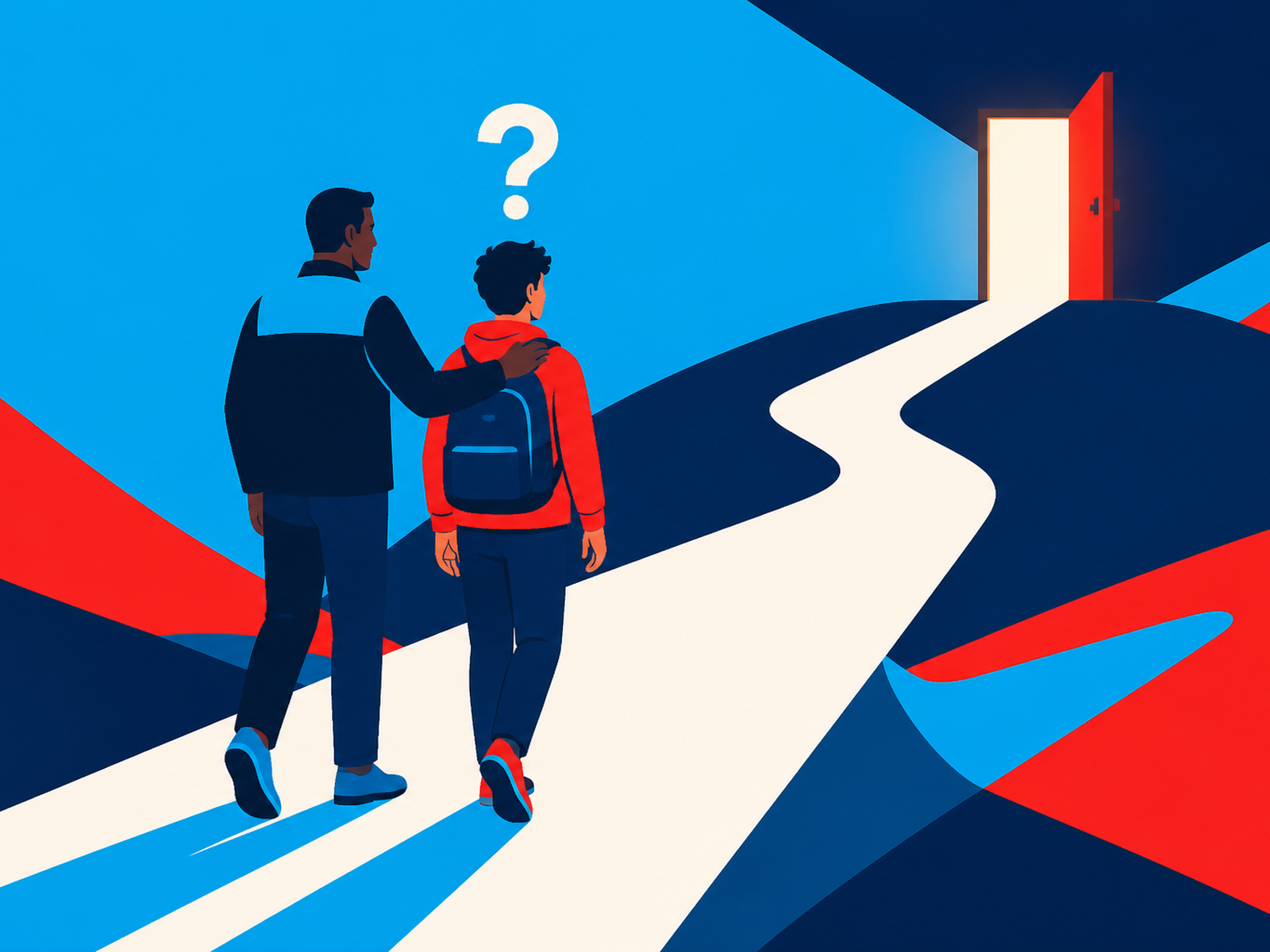
Before Boost teaches a single skill, it asks every student to picture what they want their life to look like. Their picture, their dream. Then we show that whatever the picture is, athlete, artist, business owner, parent, it requires the same skills [Internal: Boost Bible].
Our line for this is: "When a teenager connects a life skill to their own dream, they lean in. Every time." [Internal: Boost Bible]. That is a marketing line from our own materials, and we treat it as our observation, not a research finding.
Why would it work? The skeptic's objection is usually "this is not relevant to me." The dream exercise removes the objection without arguing. Nobody can tell a student their own picture is wrong. Nobody is asked to pretend to care about someone else's goals. The student sets the stake, and the skills become a means to it.
Outside research is consistent with this direction, though it does not test Boost. A 2025 study from Singapore's National Institute of Education community, covering more than 2,300 secondary students surveyed twice in one year, found that autonomy support from teachers and parents was positively associated with self-determined and intrinsic motivation for learning mathematics. The finding is summarized on the NIE DREAMS blog. Its associations with external pressure were negative or non-significant.
A 2025 paper in Frontiers in Psychology, studying 416 university students in China, reported that teacher autonomy support was positively associated with academic engagement, with motivation acting as a pathway.
Together these suggest that students engage more when they feel they have some say and a reason that is their own. That is the logic of the dream exercise. But both studies are correlational and self-reported, one is about math, and the second is about university students in one region. Treat them as supportive, not conclusive.
Practice Turns Buy-In Into Skill
Buy-in is not the finish line. Boost's lessons combine teaching, practice, and discussion in every session [Internal: Boost Bible], because a student who agrees a skill matters still cannot do it yet. Role-play, repetition, and peer feedback do that work, which is why we wrote about how practice beats lecture.
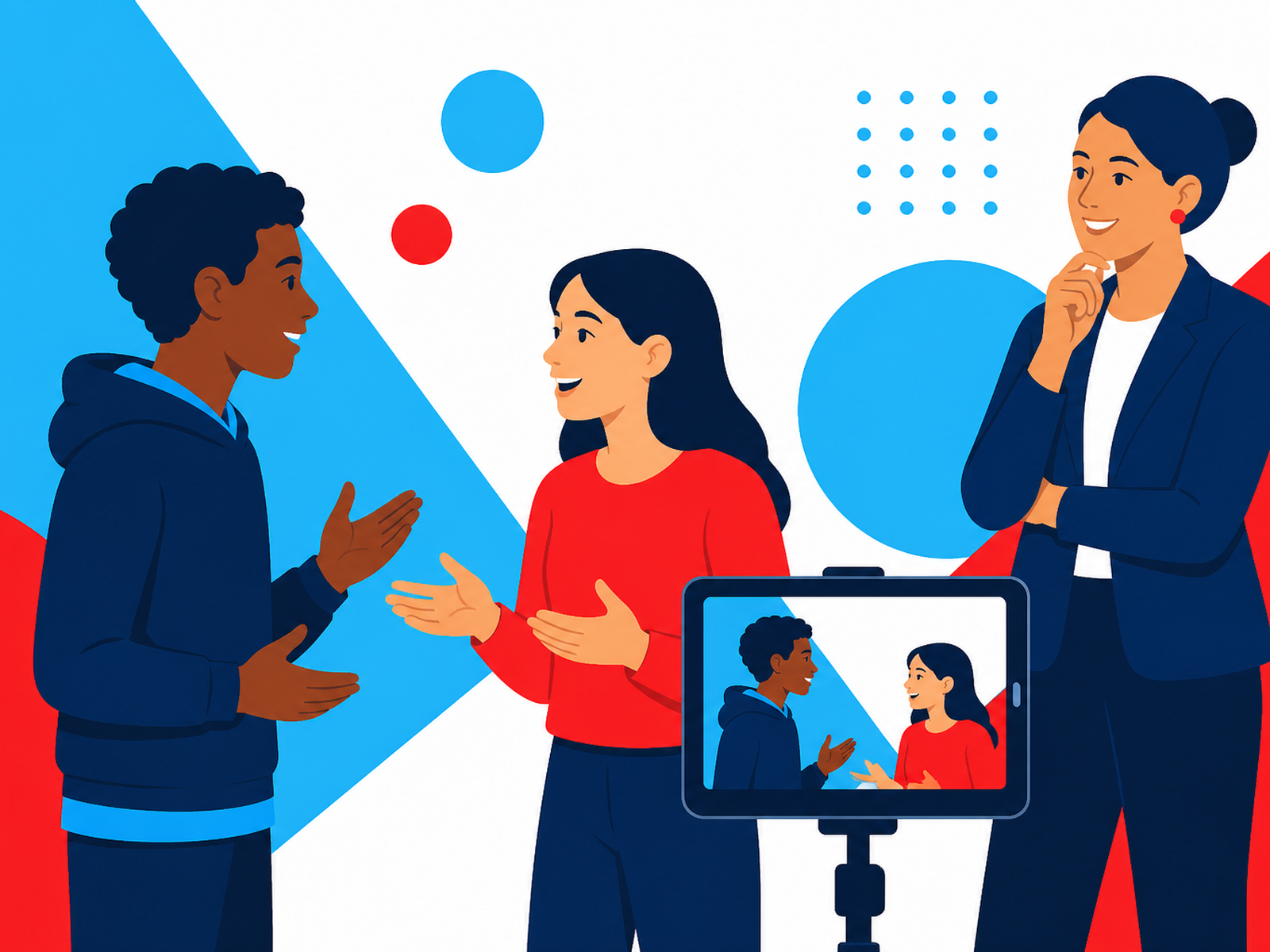
Resistance often softens during practice, not before it. In our peer-to-peer practice, students pair up, video each other, and watch themselves back. The program describes this as the most powerful part: students fix in 10 minutes what a coach could not fix in an hour of telling them [Internal: Boost Bible]. A student who rolls their eyes at the idea can rarely dismiss their own video.
By the last day, each student rates all 26 skills green, yellow, or red and picks a small next step. They decide where they stand. No one assigns it [Internal: Boost Bible].

What This Evidence Does Not Say
We cannot show that why-first teaching converts resistant students. Boost's pilot included about 30 students, and the result is self-reported: 87% ended the program saying they understood that a specific set of skills lets a person get what they want in life, up from 20% on day one [Internal: Boost Bible]. That is a shift in understanding in a small group, not a measured change in the behavior of skeptics.
Gallup's engagement numbers are correlations. Students who report more engaging experiences also report feeling more prepared and more likely to be thriving (65% versus 38%), but the survey cannot say which causes which.
We also do not claim that rewards never work, or that every student will lean in. Some will stay guarded for weeks. Our claim is narrower: start with the student's own reason, then give them reps, and you have given resistance something real to answer.

What Administrators Can Do Before Launch
Prepare your staff for the skeptic's question, then let the curriculum answer it. A few steps help.
- Expect eye rolls in week one. Treat them as a question, not an offense.
- Use the same language everywhere. Tell students and parents the aim is skills that help them get what they want. Our guide to choosing language your whole community will back covers the wording.
- Keep practice central. If a session drifts toward lecture, bring the role-play back.
- Watch behavior over time. Short pre and post self-assessments, and adult observation, tell you more than a single survey.
If you want to talk through what a launch would look like at your school, you can schedule a discovery call and we will go through it with you.

Frequently Asked Questions
How Does Boost Handle Students Who Resist?
Boost starts with why. Students picture the life they want, then see that every version of it depends on the same skills, so the program is about their goals, not an adult's agenda.
Does Boost Use Rewards to Get Students to Participate?
Our materials describe engagement through the why and through practice. They do not describe a reward system, and we do not claim that rewards never work.
Is There Proof That This Works With Reluctant Students?
Not specifically. Our pilot of about 30 students was small and self-reported, and the outside motivation research is correlational.
Why Teach the Why Before the Skill?
Teenagers tend to resist lessons that feel like adult lectures. Connecting each skill to a student's own future gives them a reason to care before they practice.
What Happens After Students Buy In?
They practice. Sessions combine lessons, role-play, and discussion, and students finish by rating their own 26 skills and choosing a next step.
References
- Gallup: Gen Z Students More Engaged in School, Ready for the Future (2025)
- NIE DREAMS: How Parents and Teachers Shape Students' Motivation Through Autonomy Support
- Frontiers in Psychology (2025): Autonomy Support and University Students' Academic Engagement
- The 101/201 Framework: Why Boost Teaches the Why Before the How
- Practice Beats Lecture: Designing Soft Skills Lessons
- Choosing Language for Soft Skills Instruction
Ready to bring Boost to your school?
Schedule a discovery call to see how the Boost curriculum fits your students.
Schedule a Discovery Call